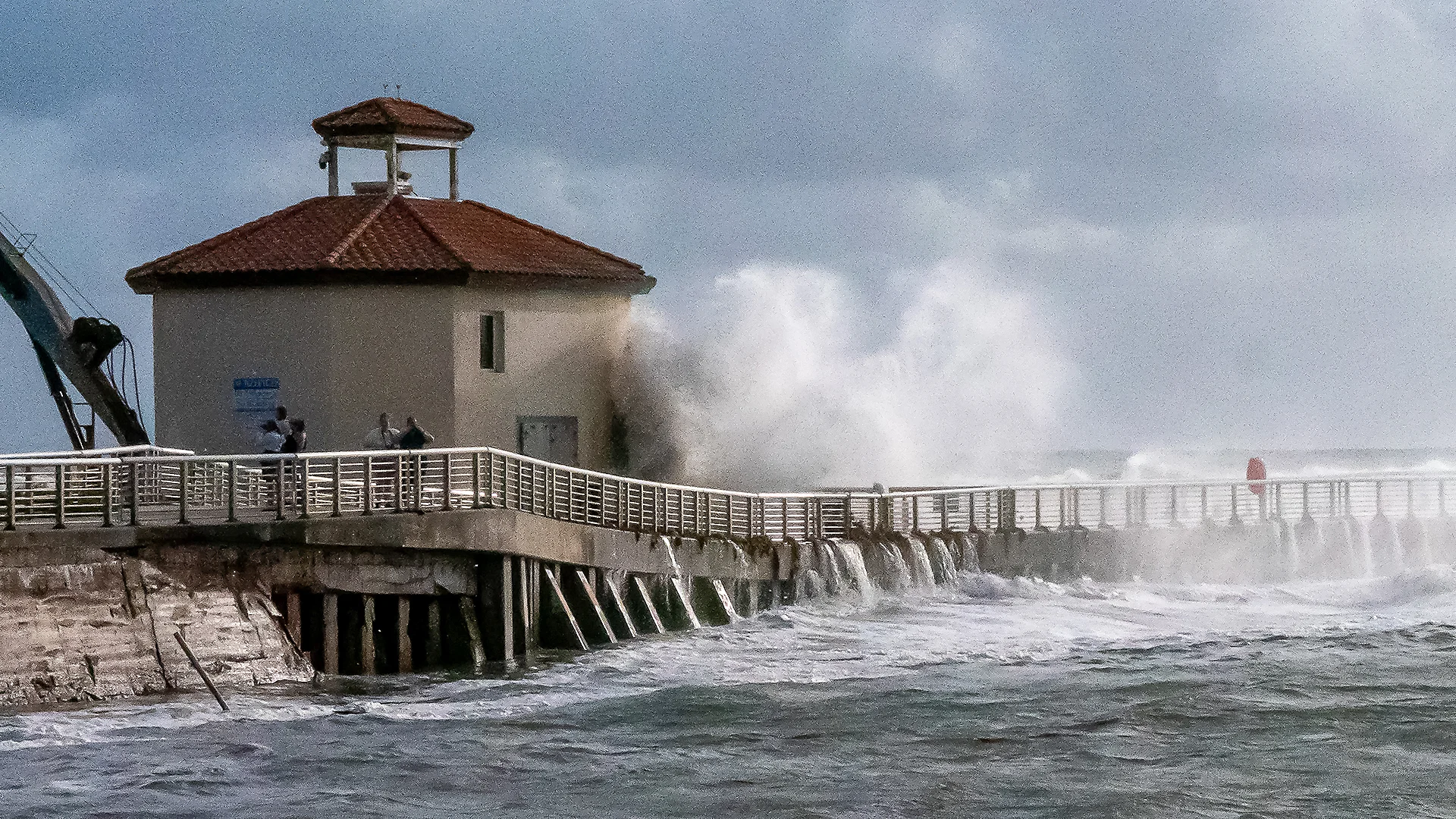
Throughout the last week of October, intense tides caused record-high water levels across the Southern California coast. Ocean water flooded the Redondo Beach boardwalk. Tide levels in San Diego topped 8 feet above baseline. Water level readings were among the highest in more than a century, according to the National Oceanic and Atmospheric Administration.
This year’s record-hot Super El Niño helped push those water levels to the extreme. But El Niño also combined with a natural phenomenon called king tides. More king tides later this year are expected to bring even more intense, damaging flooding to the coast.
And working underneath both of these events is climate change, which has caused sea level rise and intense marine heat waves.
All these factors are compounding and overlapping, experts say, in a way that will likely make this a dangerous winter for those along the coast. Here’s why that’s happening.
King tides aren’t a new phenomenon. “We’re used to these every year,” says Marc Alessi, a climate scientist with the Union of Concerned Scientists.
The term refers to exceptionally high tides, which bring water levels above what an average high tide would be. They occur normally along the coastline, often causing flooding.
King tides form because of the way the sun, moon, and Earth align, and when the moon is at its closest to the Earth. That certain alignment of the three heightens the gravitational pull on the ocean. As gravity pulls more on that water, it raises tidal heights.
Because king tides are affected by that celestial alignment, they can be predicted.
Source link