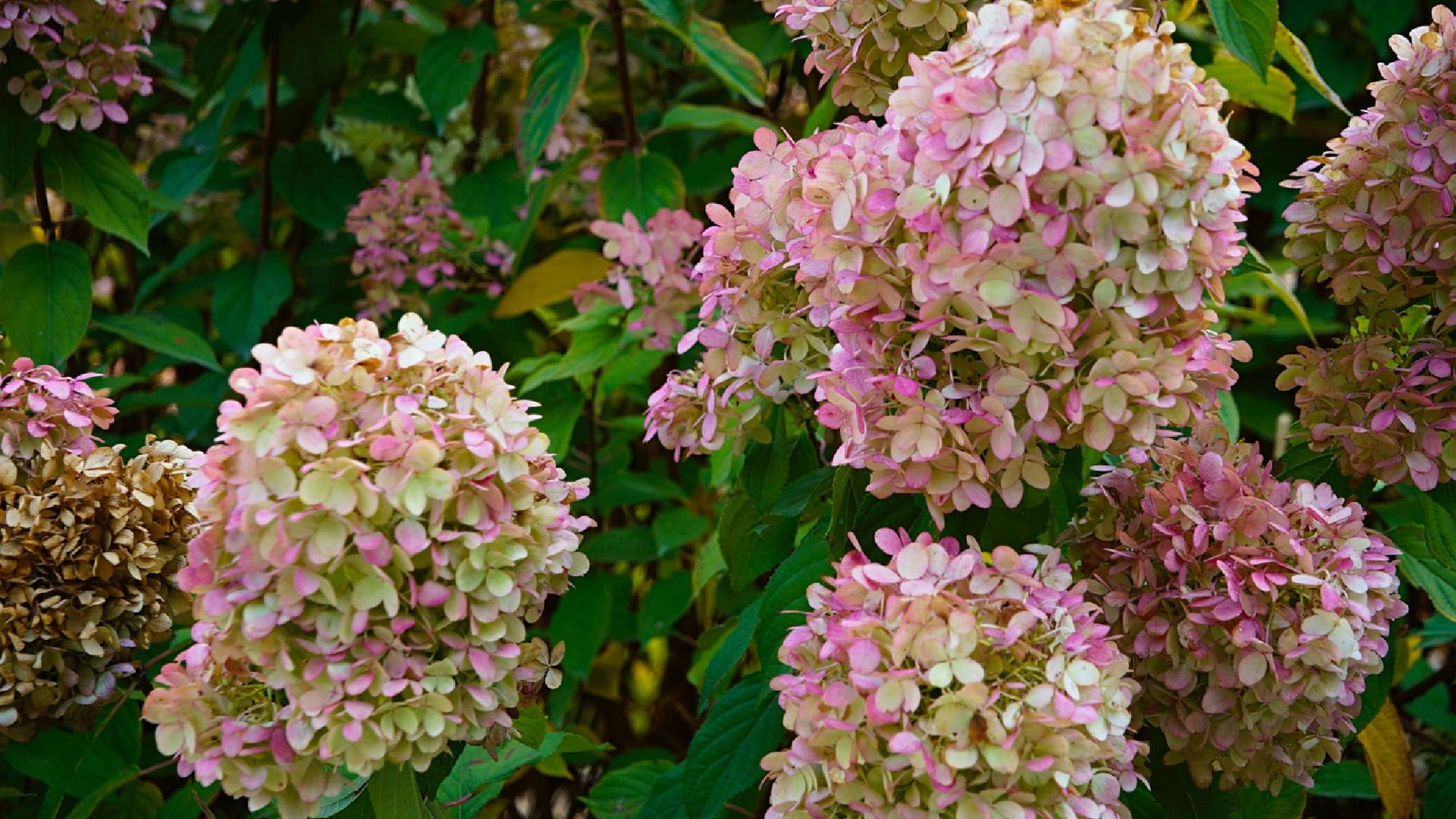
Few shrubs bring as much joy to the garden as hydrangeas. With their blousy, oversized blooms and lush foliage, they provide incredible color from early summer straight through to the crisp days of fall.
But as those vibrant flowerheads dry into muted papery tones, it is natural to want to give your bushes a tidy haircut before winter sets in. Before you reach for your pruning shears, however, step back.
Cutting back hydrangeas in October is one of the most common fall gardening mistakes. Before you touch those shears, here is why leaving your hydrangeas alone this month guarantees better blooms next spring.
Faded hydrangea blooms might look unsightly, but those dry, papery flowerheads act as a built-in umbrella. They shelter vulnerable young stems and developing buds from harsh frosts, biting winds, and even snow.
Trimming stems in October can also trigger a burst of tender new growth right when the plant should be entering winter dormancy. When the first hard freeze hits, those soft shoots will freeze and die, leaving the shrub weak and susceptible to disease.
Even worse, popular varieties like mophead, lacecap, and oakleaf hydrangeas set their buds on "old wood" during late summer. Cutting those stems back now removes next year's flower buds entirely, guaranteeing a barren bush come summer.
Knowing which variety you grow is key to avoiding accidental damage, as pruning rules depend entirely on how the plant flowers.
These varieties form next year’s buds on old wood (growth from the current summer). Leave their faded flowerheads intact all through fall and winter .
Source link