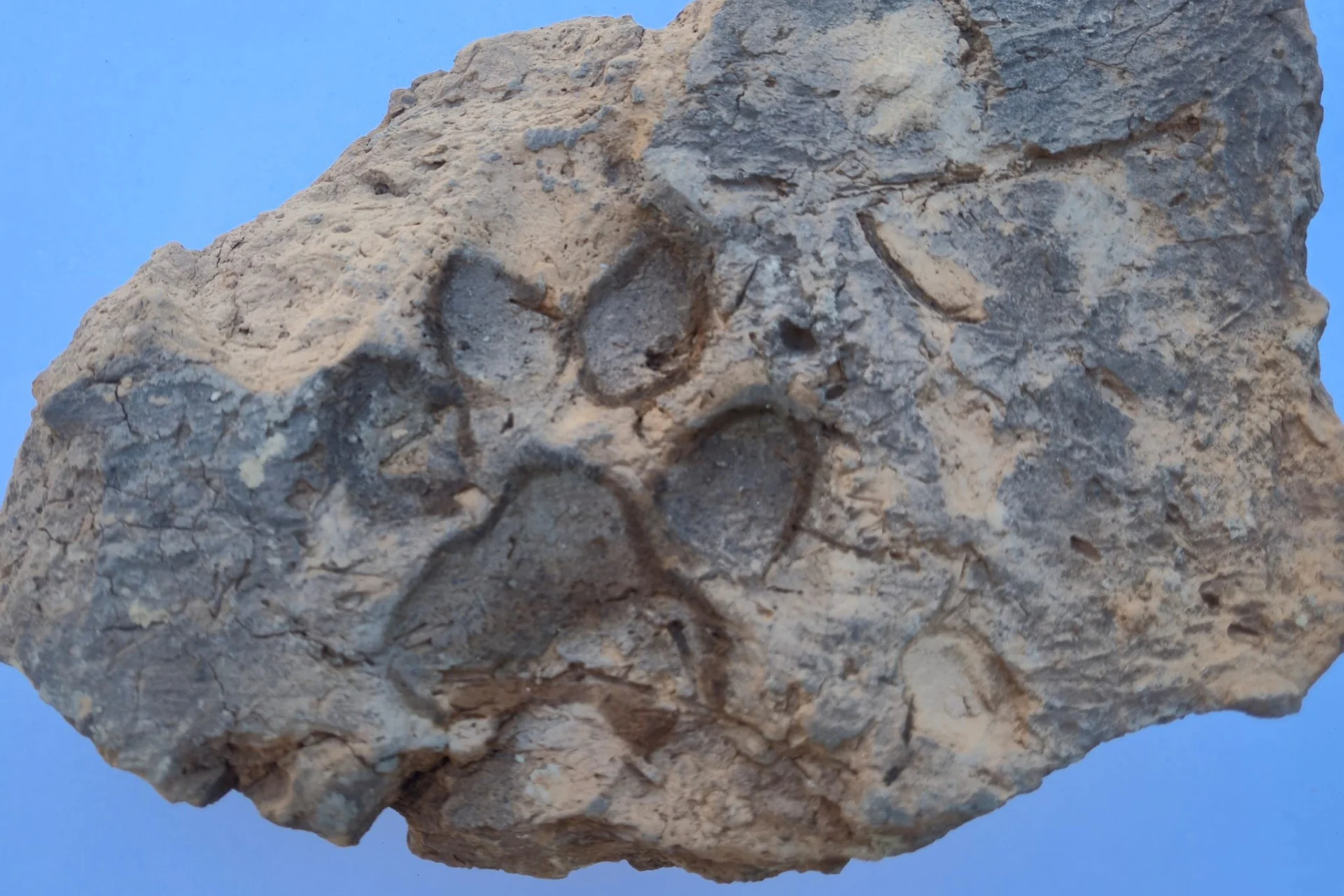
We probably have a lot more in common with ancient societies than we realize—like, for example, furry friends that bring small joy in our daily lives.
In a social media post yesterday, Türkiye’s minister of culture and tourism, Mehmet Nuri Ersoy, shared photos of dog paw prints left on a mudbrick at the archaeological site of Tavşanlı Höyük. The prints are believed to be roughly 4,000 years old, and the brick was likely part of a Bronze Age building. Ersoy’s post does not specify how many paw prints were discovered nor the details of the excavation, although he mentioned that a research team led by archaeologist Erkan Fidan at Bilecik Şeyh Edebali University had been working at the site since 2021.
“At Tavşanlı Höyük, one of the largest Bronze Age settlements in Western Anatolia, we are uncovering not only structures and artifacts but also such small and unexpected traces of life,” Ersoy wrote in his post (translated via Google).
Earlier this summer, Fidan’s team shared details of their excavation in a study for the Coğrafya Dergisi Journal of Geography. According to this paper, the settlement of Tavşanlı Höyük covers an area of roughly 111 acres (45 hectares), and previous surface and excavation studies have found evidence of human occupation dating back to the 3rd millennium BCE.
Again, Ersoy’s post doesn’t share too much detail on the archaeological context of the footprints. But the earlier paper does allude to certain aspects of the site that may be of relevance. For example, the team identified multiple boreholes consisting of “abundant ceramics, adobe, bone, burnt wood, flint, and other organic/refined materials,” according to the paper.
Source link