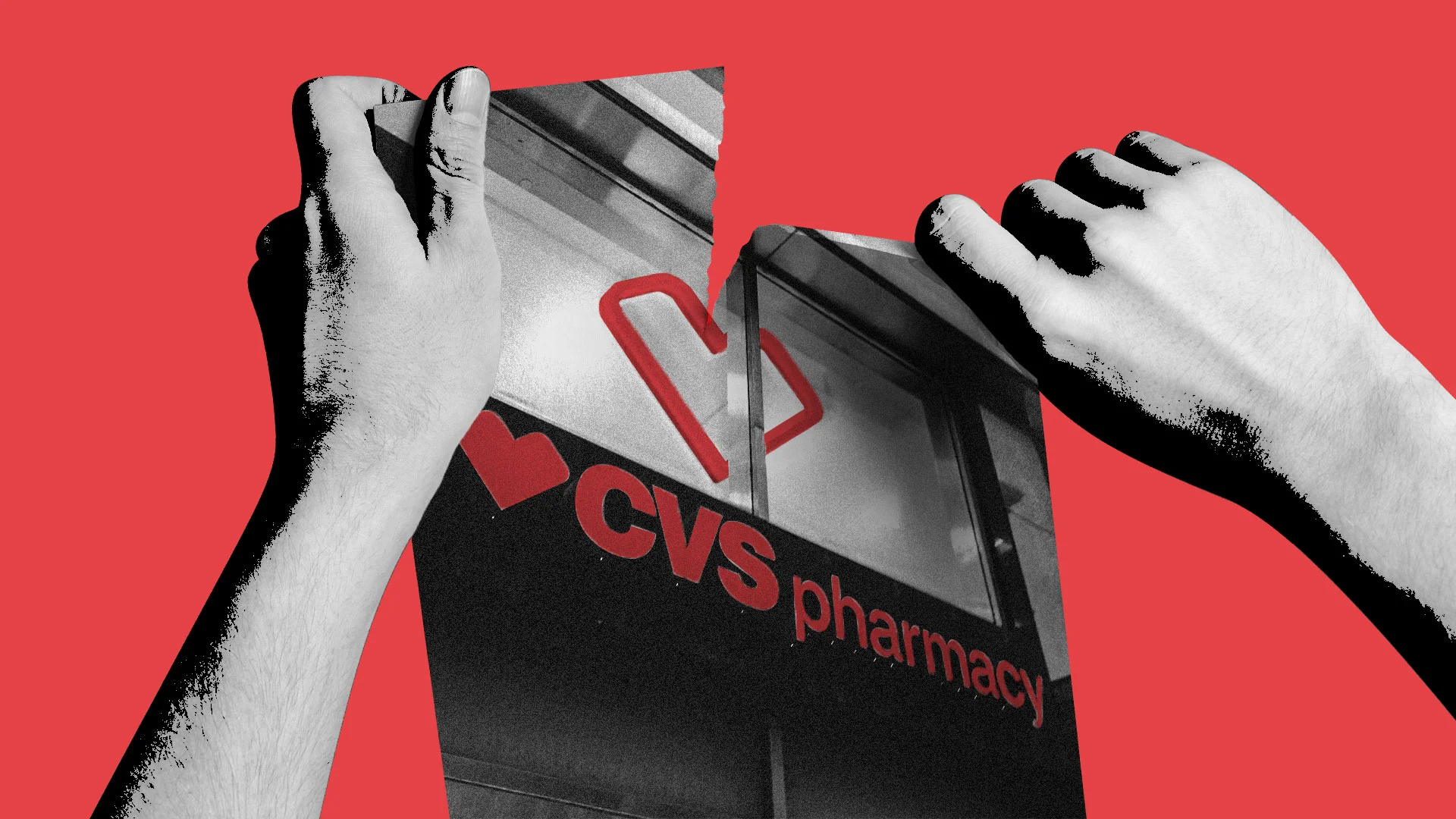
On Wednesday, the healthcare giant announced plans to split into two separate, independent companies, and both will be publicly traded.
The two companies will form a “leading healthcare solutions company” called CVS Health, and will encompass Aetna, CVS Caremark, CVS Specialty, Oak Street Health, and Signify Health.
The second company, dubbed CVS Pharmacy, will be made up of roughly 9,000 CVS pharmacies, mail pharmacy, MinuteClinic, and the Health100 tech services business.
The company also announced that current CVS Health chair and CEO David Joyner will serve as CEO of the “new” CVS Health, and Prem Shah, current Group President of CVS Health, will be the CEO of the “new” CVS Pharmacy.
“Our history is defined by proactively evolving to stay ahead of what’s next in healthcare, and in today’s environment, that means delivering more affordability, greater access, and a simpler experience,” said Joyner in a statement. “From a position of strength, and a focus on the long term, we plan to create two focused companies to improve consumer engagement, affordability, and care coordination.”
Notably, the move effectively reverses, in some respects, the 2018 merger between CVS Health and Aetna.
According to company leadership, two smaller companies would be able to be more efficient and nimble than one single, larger one. When the dust settles, CVS Pharmacy will basically be a pharmacy company, while CVS Health will be focused on insurance and other services.
Regulatory concerns may also be at play. For example, The New York Times reports that some states, such as Arkansas and Tennessee, have passed laws in recent years that prevent large conglomerates from managing prescription benefits while simultaneously running retail and mail-order pharmacy services.
Source link