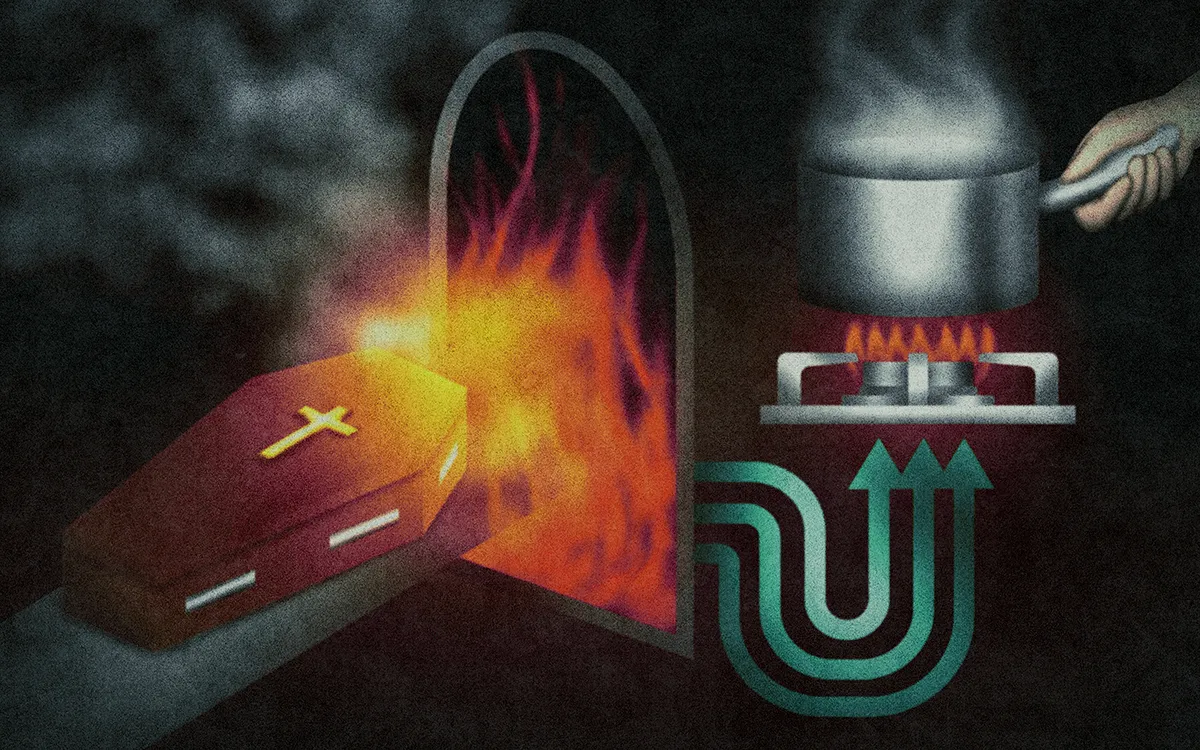
In 2011, Redditch Borough Council in England tried something that hardly anyone in the UK had heard of before. Staff announced they were going to warm the local swimming pool with heat from a nearby crematorium.
A public firestorm ensued. The plans were met with international headlines, and a labor union official branded them “sick and an insult to residents.” (A spokesman for the union, Unison, says this was not—and is not currently—the organization’s official position.)
“All you’re doing is basically heating a radiator and sending the heat down a tube,” says Guy Revans, of Redditch and Bromsgrove Councils, just south of Birmingham. “But death is always an emotive subject, isn’t it?”
Eventually, the relentless press coverage faded away. The project won a green award, and the crematorium has warmed Redditch’s swimming pool since 2013.
Although extremely rare in North America, European countries have been harvesting warmth from crematoria for years. The total volume of heat available from crematoria is modest, but as people search for ways of reducing the environmental impact of funeral rites, utilizing crematoria waste heat provides a way to lower their carbon intensity.
Roughly 1,200 cremations are carried out every year in Redditch. A heat exchanger captures heat from flue gases emitted by the facility’s two gas-fired ovens as part of a process to remove vaporized mercury from dental fillings, before venting the remaining gas into the atmosphere.
That’s a common process at many crematoria. In other words, excess heat is often captured by default, meaning the next question is, does it make sense to waste the heat—or use it?
Source link