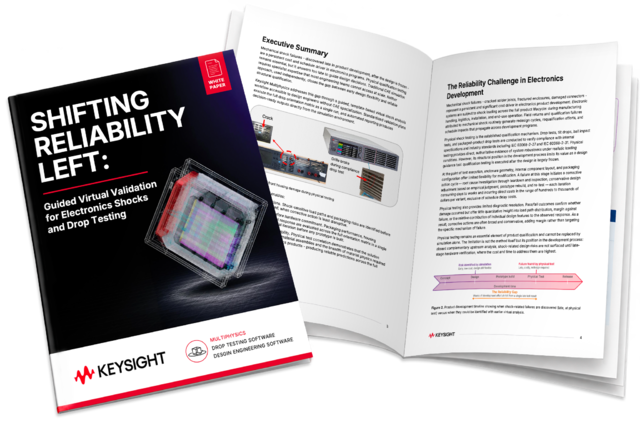
Learn how guided virtual shock and drop analysis helps engineering teams identify reliability risks before physical testing, reduce qualification iterations, optimize packaging designs, and accelerate electronics product development.
Why shock failures found during physical qualification are costly, and how coupled electrical, mechanical, thermal, and packaging effects make them hard to predict.
How physical drop testing and traditional simulation each leave gaps in timing, expertise, setup effort, and diagnostic detail.
How guided, template-based virtual workflows model tilt drops, ball impacts, and packaged drops using IEC 60068-2-27 and IEC 60068-2-31 profiles.
How running the full drop orientation matrix as one validation plan supports packaging optimization, and how correlation with physical tests builds confidence before hardware is committed.
Source link