After a disaster like a landslide, an earthquake, or a major fire, rescue workers have to locate survivors as soon as possible, and they are increasingly using drones for this critical task—especially ultra-compact drones that can fit into the crevices of a collapsed structure. There are, however, some serious limitations to the technology.
Weighing less than a stick of butter, ultra-compact drones don’t have as much compute or power capacity as larger models, and this restricts the power of their sensors. That means if a building is filled with smoke or the disaster happens at night, the drone’s cameras and lidar will cease to function. Even a clear pane of glass can be an obstacle the drone might not sense.
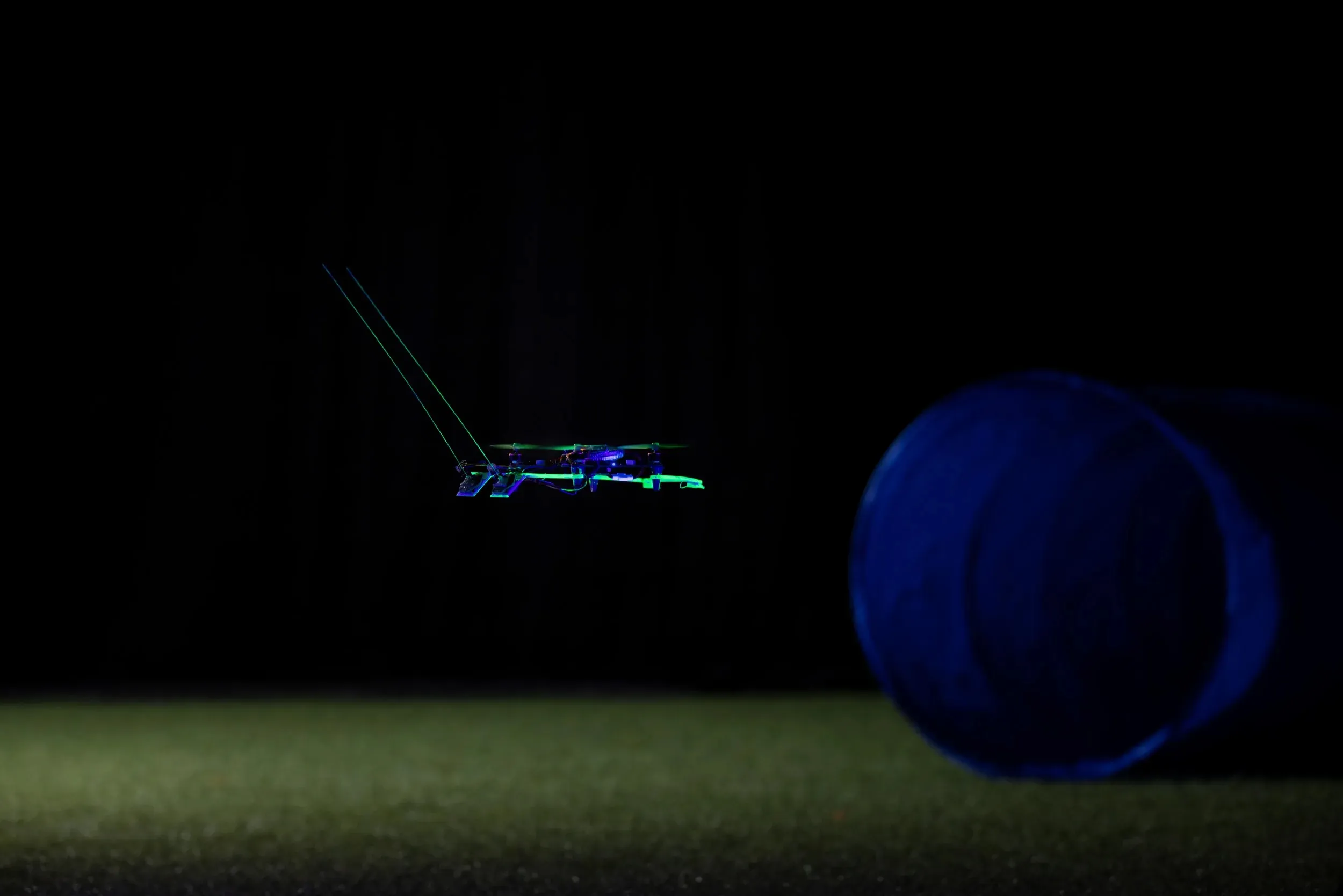
Now, a research team at Delft University of Technology in the Netherlands—drawing inspiration from the whiskers of nocturnal animals—has developed a lightweight, tactile sensor for drones to navigate even when they can’t “see.” Some nocturnal animals, like mice and to some extent cats, can explore their surroundings using just the sensations of the environment around them on their whiskers, enabling them to move without vision. The research team wondered whether drones could do the same.
In the world of drone development, tactile navigation is a novel concept that comes with its own challenges. “For tactile sensing to work on drones, it needs to be lightweight, low-latency, and low-power,” Salwa Hamaza, a professor at Delft University of Technology, explained in a press release . Luckily, nature already did some of that innovating.
Source link