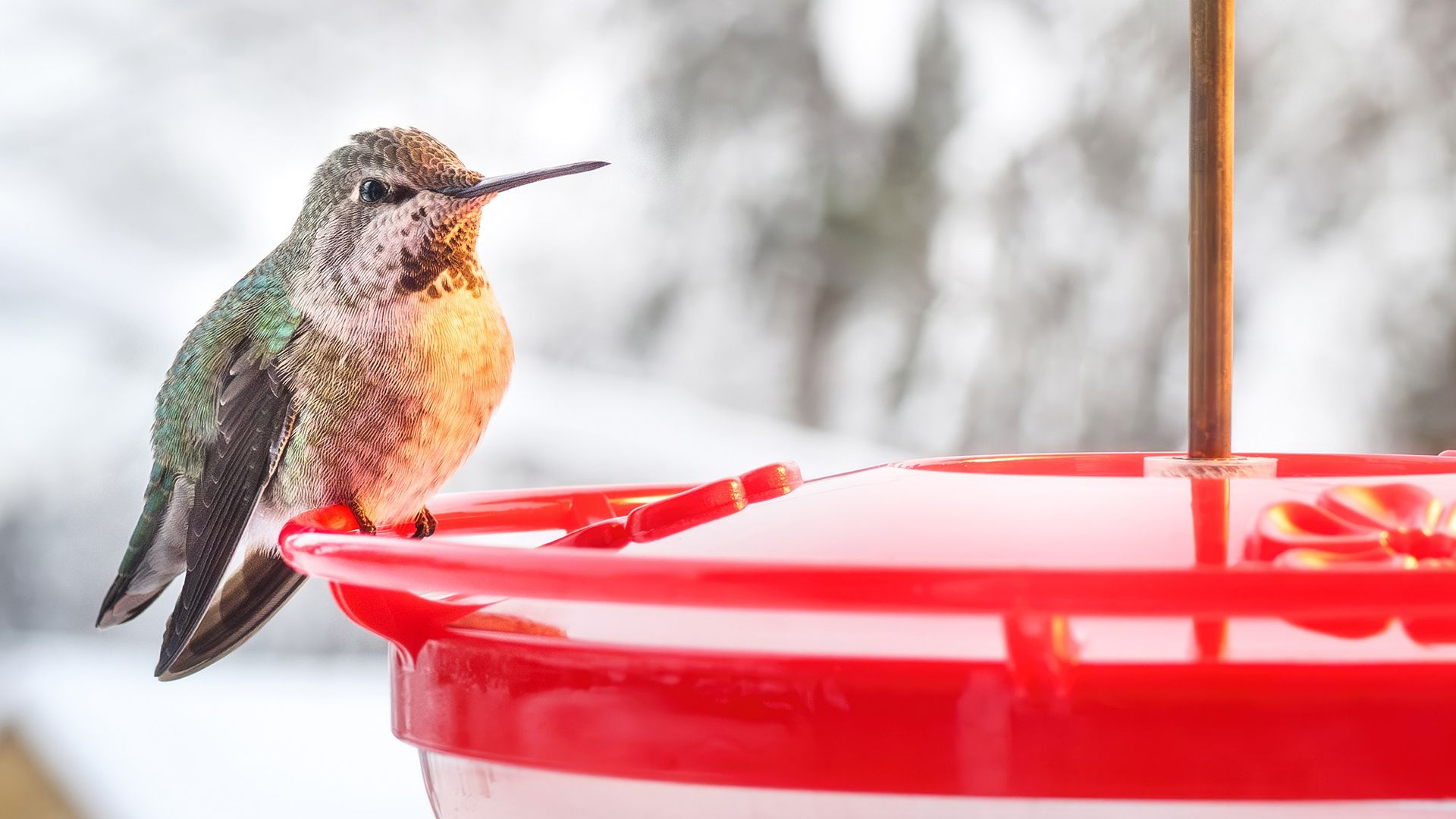
If you love watching hummingbirds visit your yard, you may wonder whether to keep your hummingbird feeder filled with nectar through the winter or take it down until spring.
My initial thought was that keeping a hummingbird feeder up through the colder months would stop these beautiful birds from migrating, but is this really true?
During the summer, hummingbirds can be spotted across North America, but most head south to migrate after the breeding season.
I assumed hummingbirds migrate to find rich-nectar flowers and tiny insects that keep them fuelled, but the truth has more to do with daylight.
Hunger alone doesn’t make them fly south. Their internal biological clocks recognize changes in daylight hours, triggering hormonal shifts that drive them south. Only those not strong enough to make the flight get left behind.
While most of these tiny creatures fly south to warmer climes in Mexico or Central America, some stay behind. According to the American Bird Conservancy, Anna’s Hummingbirds tend to remain along parts of the West Coast, while you might spot the Ruby-throated Hummingbird across certain sections of southern Florida.
Photoperiodism is how hummingbirds, and other living plants and animals, react to changes in daylight hours. According to ScienceDirect, shifting daylight cues trigger seasonal behaviors like bird migration.
Healthy hummingbirds will head south as daylight hours decrease, but strugglers will hold back. Leaving your feeder out for two more weeks after their fellows have flown can help them catch up and build the strength to migrate.
Source link