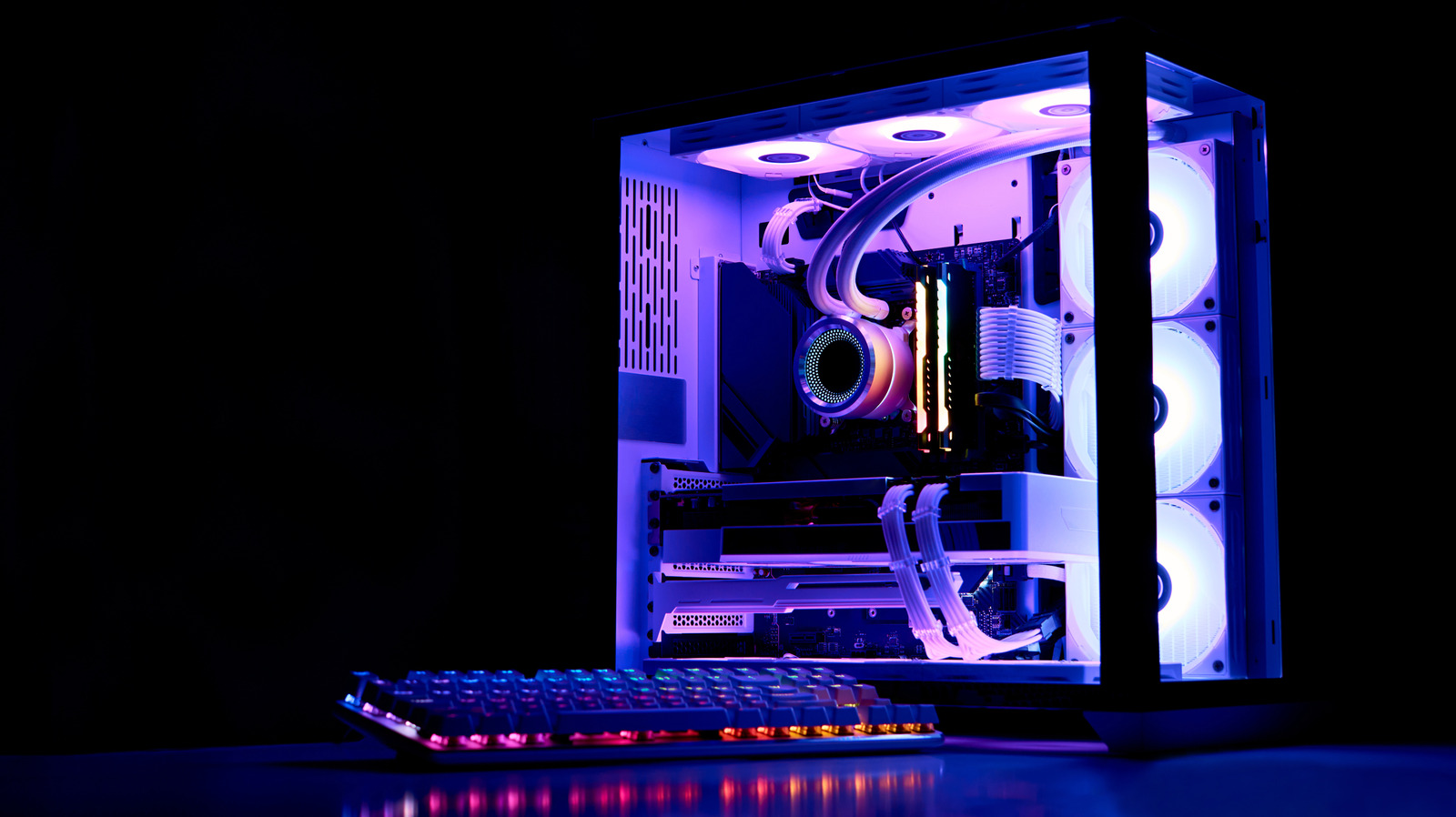
Liquid-cooled PCs are all the rage, but you can't leave all that water sitting in your rig forever.
If you want to improve your PC's cooling systems, liquid coolant is a method worth considering. In a coolant system, stored water is pumped around hot PC components, absorbs the heat, carries it back to the radiator and dissipates it. While this is a pretty effective way to cool down a PC, it does require a good deal of maintenance — and that includes the occasional coolant replacement.
If you're one of the many consumers who have decided that a liquid-cooled PC is worth it, you're probably already versed in the many hurdles that come with mixing tech with water. In addition to looking for leaks, grime and general wear, you'll also need to keep an eye on how long you've had the same coolant in your machine. Sorry, coolant doesn't last forever — and you'll need to constantly replace your PC's supply. Luckily, it's not too tough of a task to determine when a refill is needed.
The issue with coolant over time isn't necessarily one of evaporation dwindling the supply, although excessive use will evaporate a little water if you're using softer tubes. The primary issue is the slow breakdown of any coolant being put under active strain. Notably, the corrosion inhibitor compound within coolant will be eaten away with time; once that compound is used up, all that liquid will start to corrode the mechanical innards of your PC.
Source link