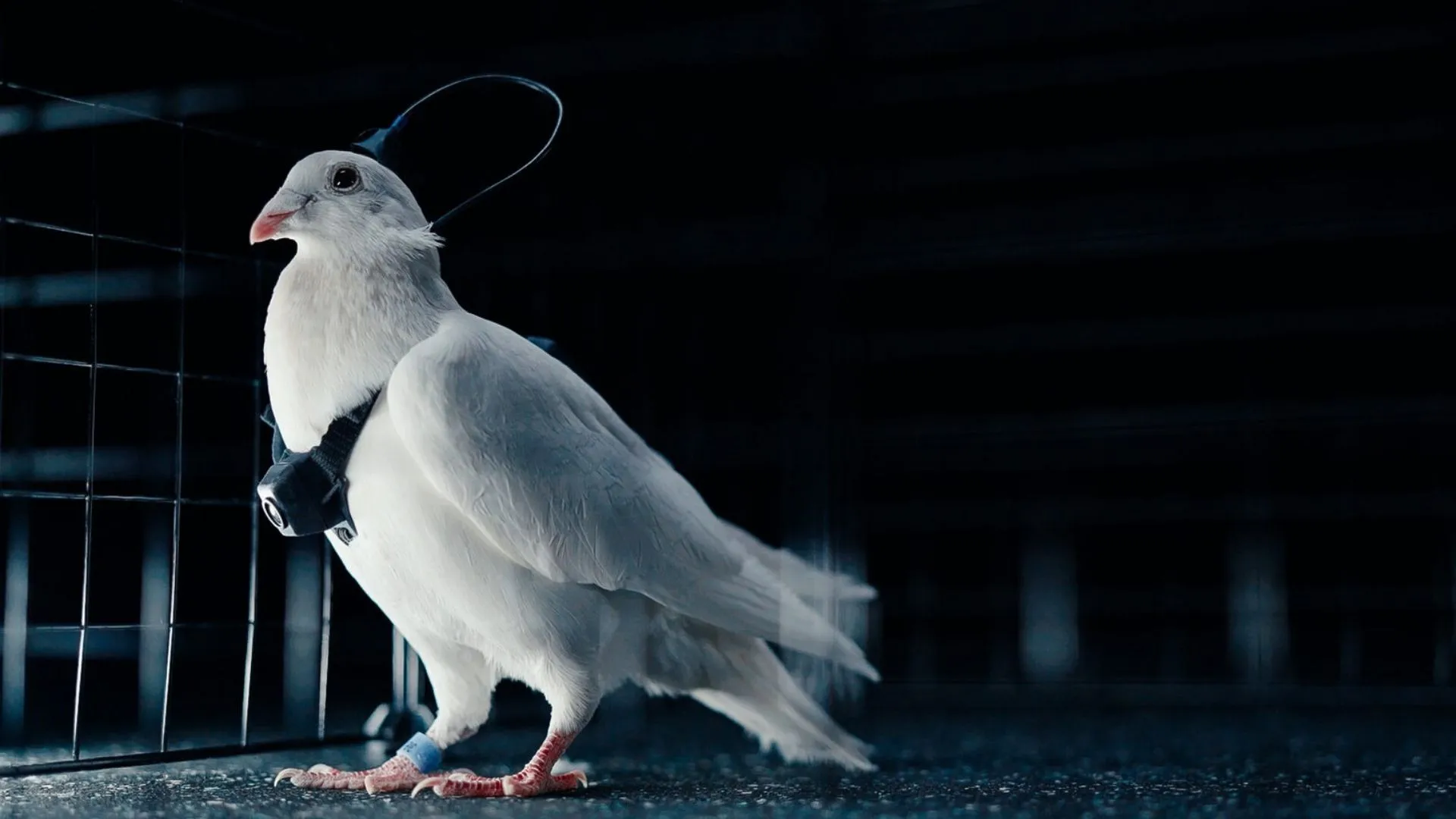
A Russian technology startup wants to turn ordinary pigeons into remotely guided surveillance platforms. Neiry has begun accepting commercial orders for its brain-implanted birds, which carry cameras and electronic flight-control equipment.
The startup calls them biodrones and pitches the service for aerial photography and infrastructure inspections. Its system combines implanted neural electrodes with a compact electronic unit strapped to each bird. Neiry claims operators can influence flight direction from more than 62 miles away. The birds can also follow routes uploaded before takeoff.
Each biodrone carries biocompatible electrodes implanted in specific brain regions. A backpack-like unit connects the electrodes to an electronic control system. Operators send electrical signals that encourage the birds to change direction.
The system can also guide pigeons through predefined routes without continuous manual input. Neiry says the birds need no conventional flight training. They can perform basic flight maneuvers through commands.
A camera mounted on each pigeon’s chest captures images of the ground. The birds retain their natural ability to navigate around obstacles. That could offer an advantage in environments where mechanical drones struggle with complex surroundings.
Neiry reports more than 100 outdoor flights during its testing program. Its biodrones have reportedly collected over 1,000 images. The longest recorded flight exceeded 10 hours.
Neiry sees opportunities in inspecting power lines, pipelines, and gas distribution networks. The birds could also support environmental observation and aerial surveys. Their ability to fly through restricted areas could attract customers seeking alternatives to conventional drones.
The company’s claims about operating under fewer flight restrictions remain independently unverified.
Source link