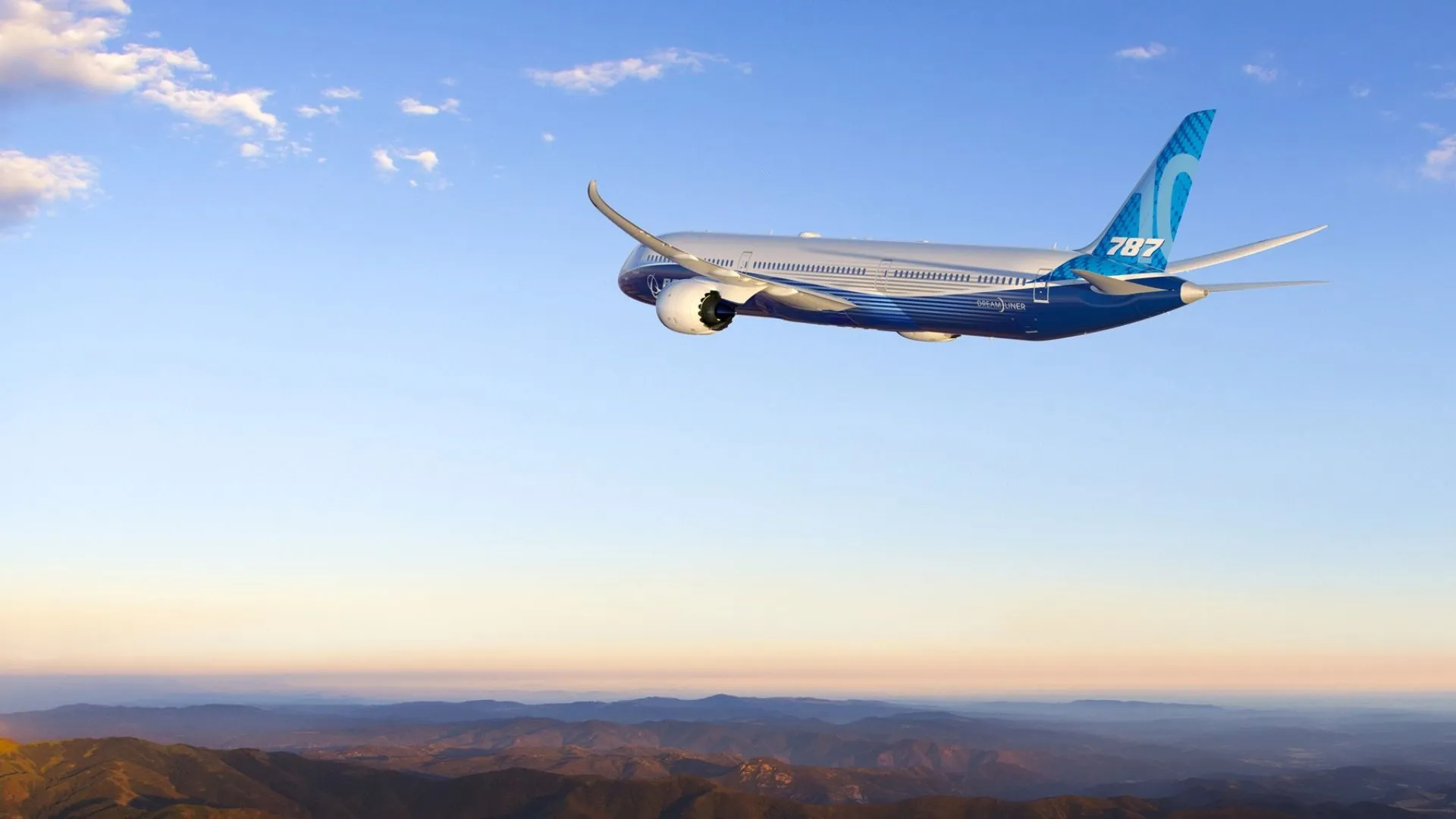
A newly published study by a China-based researcher has claimed that certain General Electric (GE Aerospace) engines on Boeing 787 Dreamliners are developing premature cracks in their high-pressure turbine blades.
According to the South China Morning Post, high-pressure turbine blades in certain GE engines have been reported to develop cracks after as few as 1,000 flight cycles.
These engine cracks do not make the planes immediately unsafe, but increase repair costs and strain airline operations — all while U.S. aerospace companies face heavy global criticism over manufacturing quality.
As of August 2025, about 417 GEnx engines (15% of the global fleet) were operating with Phase 2 or Phase 2+ blades. The airline experienced five engine removals tied specifically to these HPT blade defects.
Writing in the September issue of the Chinese aviation journal Aviation Maintenance & Engineering, Xia Xiaofeng, an engineer with Xiamen Airlines, detailed how first-stage HPT blades in GE’s Phase 2 and Phase 2+ engine configurations are developing premature thermal fatigue.
Operating under extreme thermal and mechanical stress, these blades often develop radial cracks between cooling holes within 1,000 flight cycles. Over time, these cracks can expand and connect, eventually causing metal fragments to break away inside the engine.
Cracks can surface within about 1,000 flight cycles, creating missing metal between cooling holes and forcing five recorded engine removals in one fleet.
While the early wear doesn’t make engines immediately unsafe, airlines face rising maintenance costs and operational strain from frequent inspections and part swaps before safety limits are breached.
Source link