Humanity depends quite a bit on orbital infrastructure—like those GPS satellites careening around 12,550 miles (20,200 kilometers) above sea level—much more than it did back during the Apollo era. We’re only now really learning what the engine burns of a multistage rocket powerful enough for a Moon mission can do to those devices busy communicating through our planet’s upper atmosphere.
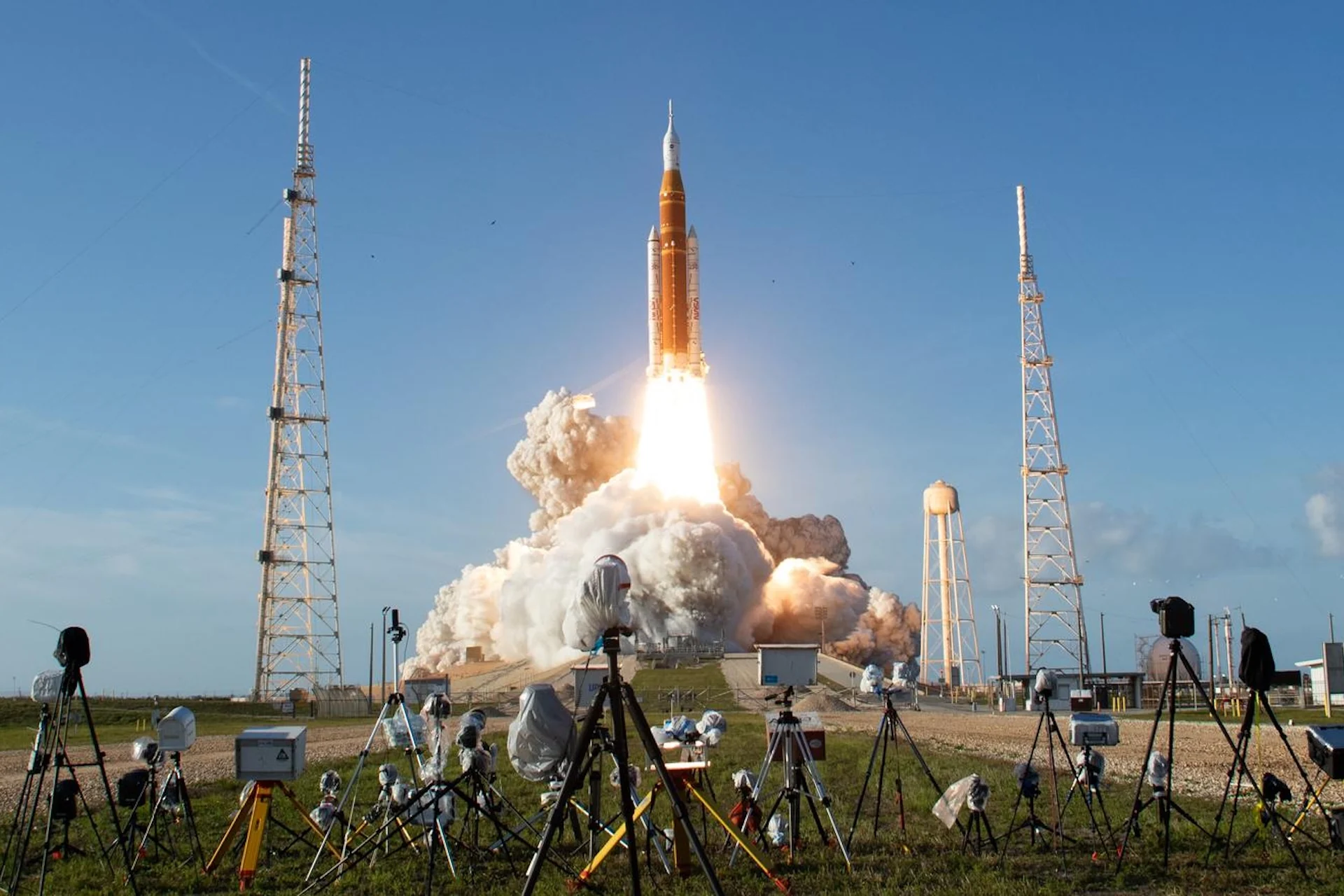
The answer, evidently, is that these spacecraft launches can tear serious holes in our ionosphere, lowering the electron density across patches of this energetically charged layer of atmosphere and confusing ground-based GPS receivers below (albeit briefly). That’s the finding from researchers at Taiwan’s National Cheng Kung University, who found that the historic launch of NASA’s Artemis 2 last April generated three sets of “traveling ionospheric disturbances” disruptive enough to produce GPS errors several meters off target.
“This is the first time a single space mission produced three instances of ionospheric disturbances over the same region during successive orbit maneuvers,” according to the team’s new study, released as a preprint via ESS Open Archive while it awaits peer review.
And the creation of these temporary gaps in electron cover is not merely an academic curiosity, according to study coauthor Charles Lin, a professor of Earth science at the university where he focuses on space weather and ionosphere modeling. For someone, someday, the consequences could become a matter of life or death.
com.
Source link