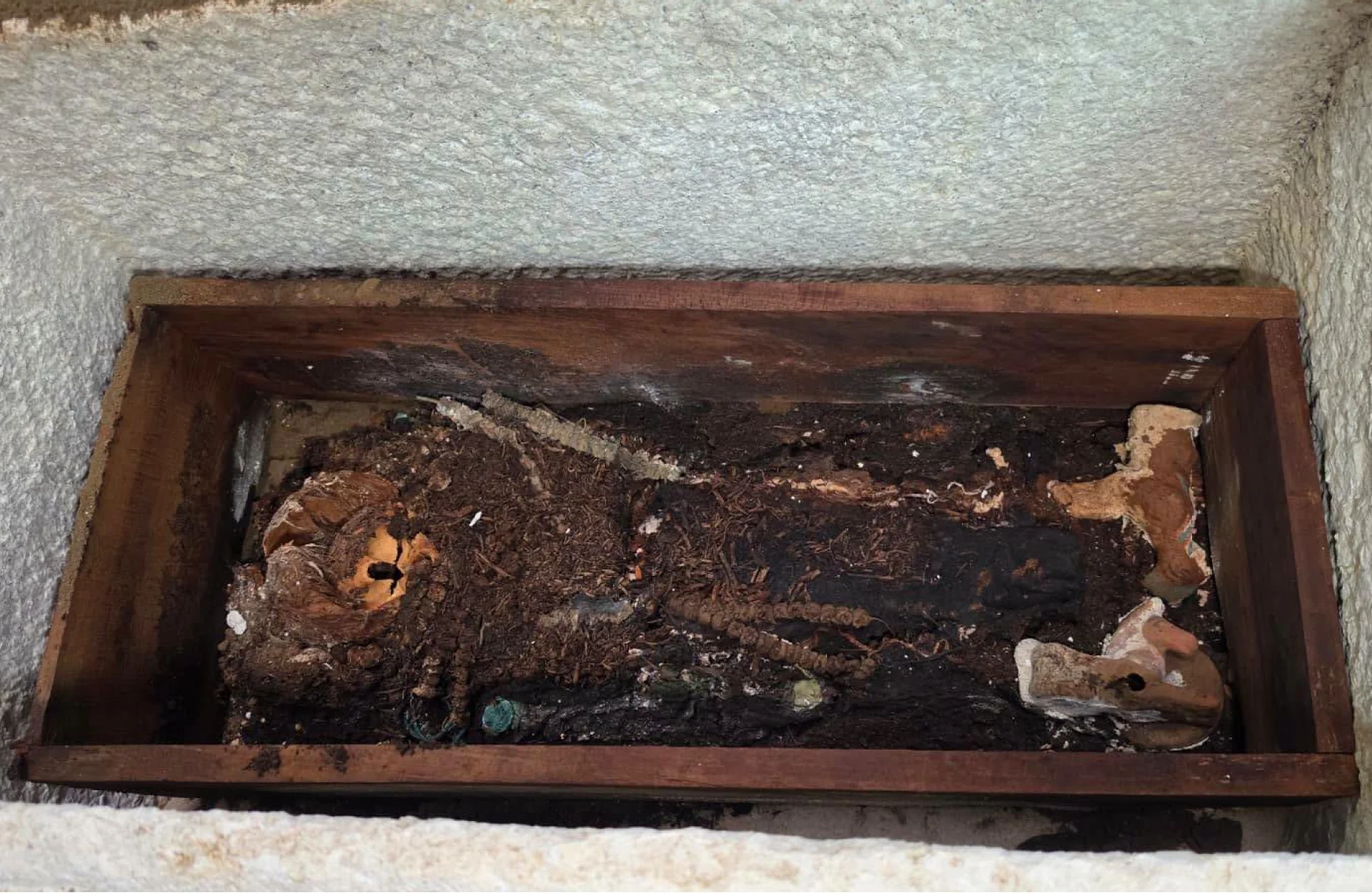
In a rare find, archaeologists lifted a Roman-era sarcophagus out of the ground. When they opened the wooden coffin inside it, they encountered what may have been a heartbreaking moment from thousands of years ago.
Inside the coffin were grave goods archaeologists don’t find too often in ancient graves: clay toys, including a rooster-shaped rattle; flower garlands; and two bullae—amulets given to male Roman children for good luck and protection. Although a statement on the discovery does not clarify whether the child’s remains survived, evidence collected thus far points to a child’s burial near the Graeco-Roman city of Tomis between the 2nd and 3rd centuries CE (translated via Google).
Constantin Băjenaru and Cătălin Nopcea, archaeologists with the Museum of National History and Archaeology Constanța, Romania, were part of the excavation team.
“Although we are still at the beginning of the documentation, we consider this discovery to be important, primarily due to the intact preservation of the sarcophagus,” said the museum. The “untouched preservation of the funerary inventory [provides] precious information regarding Roman-era funerary practices in Tomis,” it added.
The evidence is mixed on the degree to which Romans valued the youngest members of their society. , wrote in a blog post earlier this year that legal sources from ancient Rome suggested a child’s “social value” increased with age, and this was reflected in the length of the mourning period. For instance, mourning was allowed to a limited extent for children younger than three years, whereas babies who died before turning one weren’t supposed to be mourned at all.
Source link