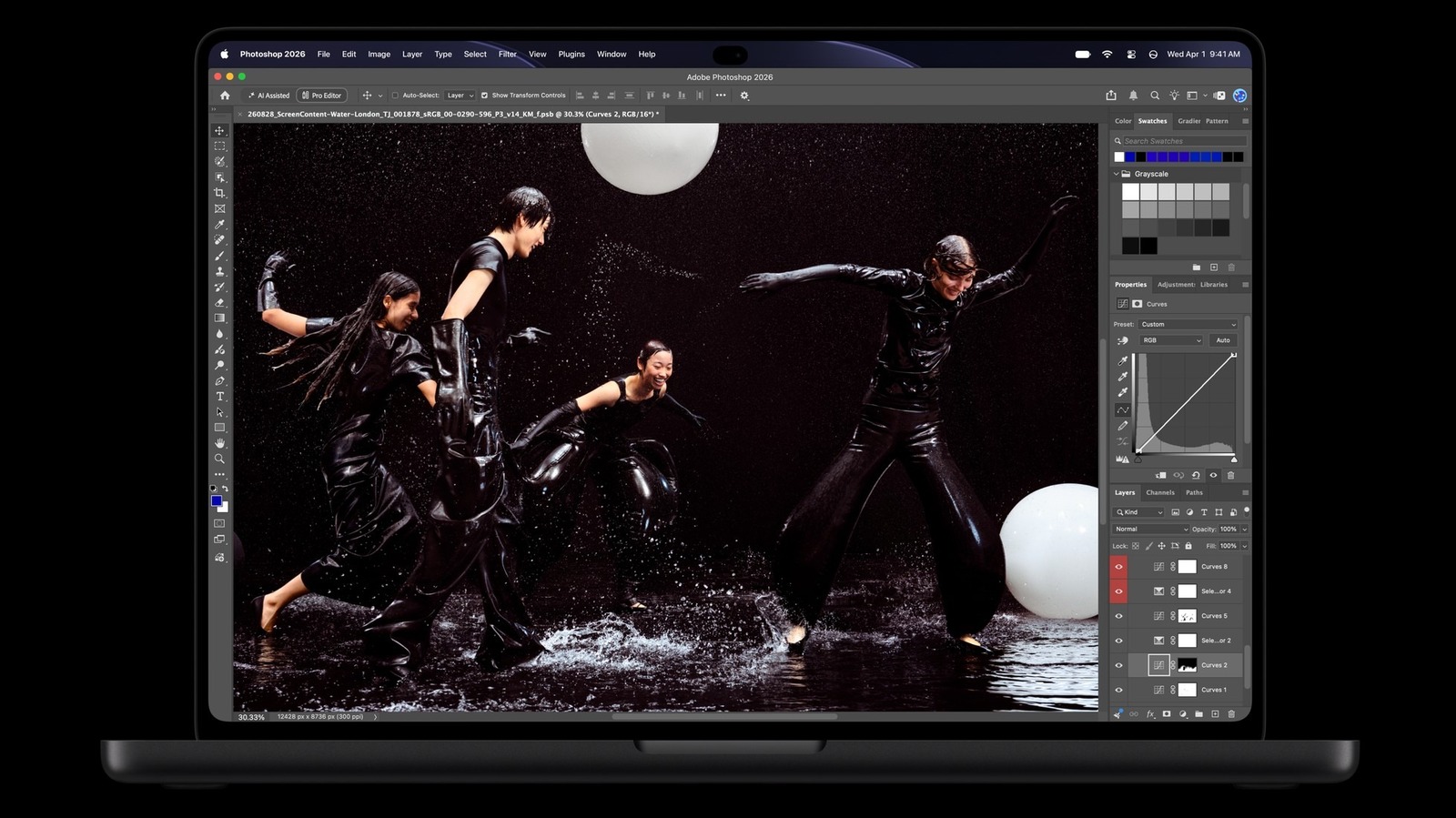
The displays offer high brightness, contrast and color accuracy and even adapt to pixel usage.
With all the fuss about Apple finally releasing a touchscreen MacBook Pro, you may have forgotten about the new model's other key display technology: OLED, or what Apple calls PROLED XDR. It's typical of Apple to change a standard tech term to a cringy marketing-focused name, but in this case, the "PRO" designation appears to be justified.
The new MacBook Pros are squarely aimed at photographers, artists and video editors who can justify the high price for a high-quality touch display. To appeal to those folks, Apple didn't just integrate a touch feature and OLED display and call it a day. Rather, it built what looks like one of the best pro laptop displays ever, with high brightness and contrast, excellent color accuracy and even a display engine that adapts to a pixel's age.
For the new models, Apple used tandem OLED technology (first employed on the M4 iPad Pro) that stacks multiple organic layers into a single display panel. Judging by an Apple graphic in its press release, it appears to use a triangular pixel arrangement and not a striped RGB OLED system that can offer sharper text (we've reached out to the company for clarification on that).
There are several key benefits to tandem OLED tech, namely high peak HDR brightness, a lower burn-in risk and a longer panel lifespan. It's also brighter and more color-accurate when viewed from an angle. At the same time, it retains and even improves the primary benefit of OLED displays: extremely high contrast.
Source link