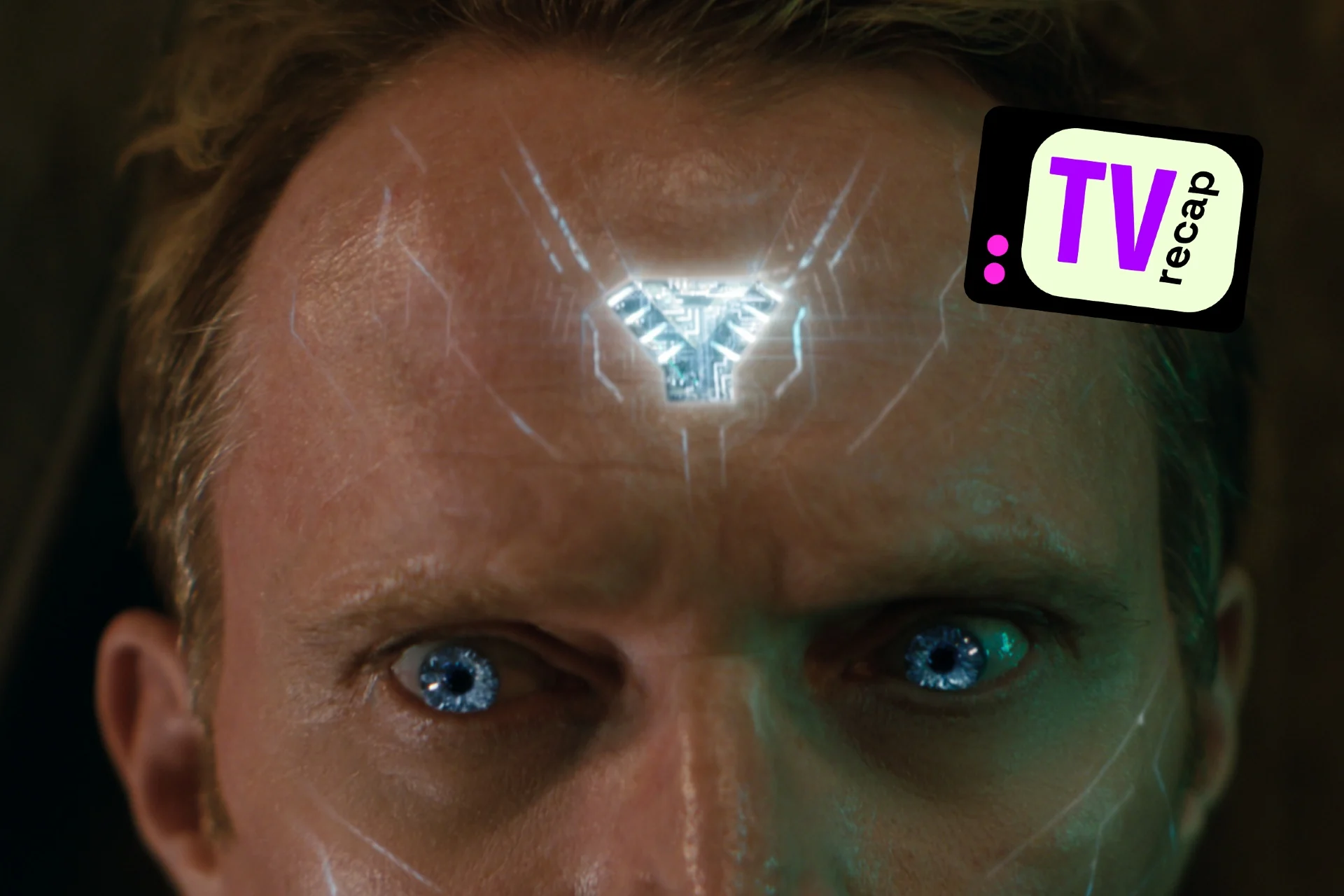
VisionQuest episodes five and six, “Firewall” and “Deadlock,” are, on the surface, quite different from one another. “Firewall” is all talk, no action; “Deadlock,” in contrast, is one of the most action-filled episodes we’ve seen so far. But, together, they paint an intriguing picture of an atypical Marvel TV series that might just be something special.
“Firewall” is the second episode in a row in which Paladin gets minimal screen time (he doesn’t appear at all in episode four, “Malware,” and shows up only briefly here), and it’s tough not to equate the character’s diminished presence with VisionQuest‘s noticeably sharpened focus. No disrespect to Todd Stashwick and Diane Morgan; a better enforcer and guy-in-the-chair duo I truly cannot imagine. But from the beginning, Paladin’s storyline, and specifically the mystery surrounding the identity of his client, has had a distinct “I’m only here to tie VisionQuest to the overarching Marvel Cinematic Universe” vibe.
And, look. ” I’d like to believe him! I really would. He’s clearly capable of creating great television; against all odds and common sense, Matalas told a remarkably affecting and thematically consistent story across four seasons of 12 Monkeys . But—to butcher Matalas’ words while echoing his sentiment—the MCU isn’t that kind of storytelling machine. It is simply not designed to contain works with strong, individual thematic identities because they all have to eventually work together as part of a larger whole.
Source link