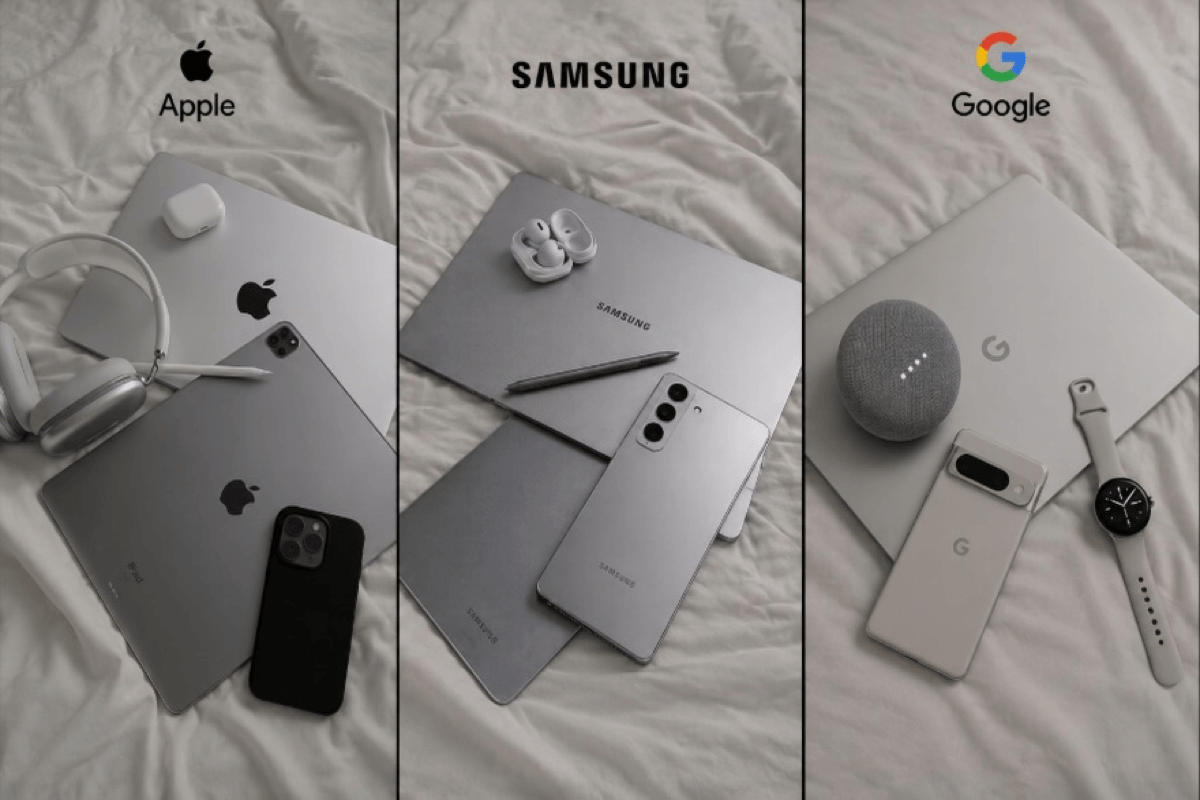
Apple, Samsung and Google are competing to make their devices work better together. From smartphones and tablets to laptops, earbuds and smartwatches, each company offers a connected ecosystem. Apple is known for the close integration among the iPhone, Mac, iPad, and Apple Watch.
Samsung combines Galaxy phones and tablets with Windows laptops, Galaxy Buds and SmartThings. Google brings Android, Pixel devices, Chrome, Google Home and its growing range of connected products.
But a good ecosystem is about more than having devices from the same brand. It also depends on how easily users can share files, switch between devices, and manage everyday tasks.
Here we have you covered with what you get for each major ecosystem
The Apple ecosystem is arguably the most seamless when users own Apple devices.
Features such as AirDrop, Handoff, Universal Clipboard, and iCloud let users move between an iPhone, Mac, and iPad with minimal setup. You can copy an item on an iPhone and paste it on a Mac, while AirDrop makes sharing photos and files between Apple devices straightforward. Handoff also lets users continue supported activities on another device.
Apple’s strength is its consistency. Apple designs its devices to work together, and many features work out of the box without extra apps or manual setup.
Its Watch, AirPods, and Mac can complement an iPhone, from notifications and calls to audio switching.
However, this experience is most complete when users stay within Apple’s product range. Mixing in Windows laptops or Android phones can make some workflows less convenient.
Source link