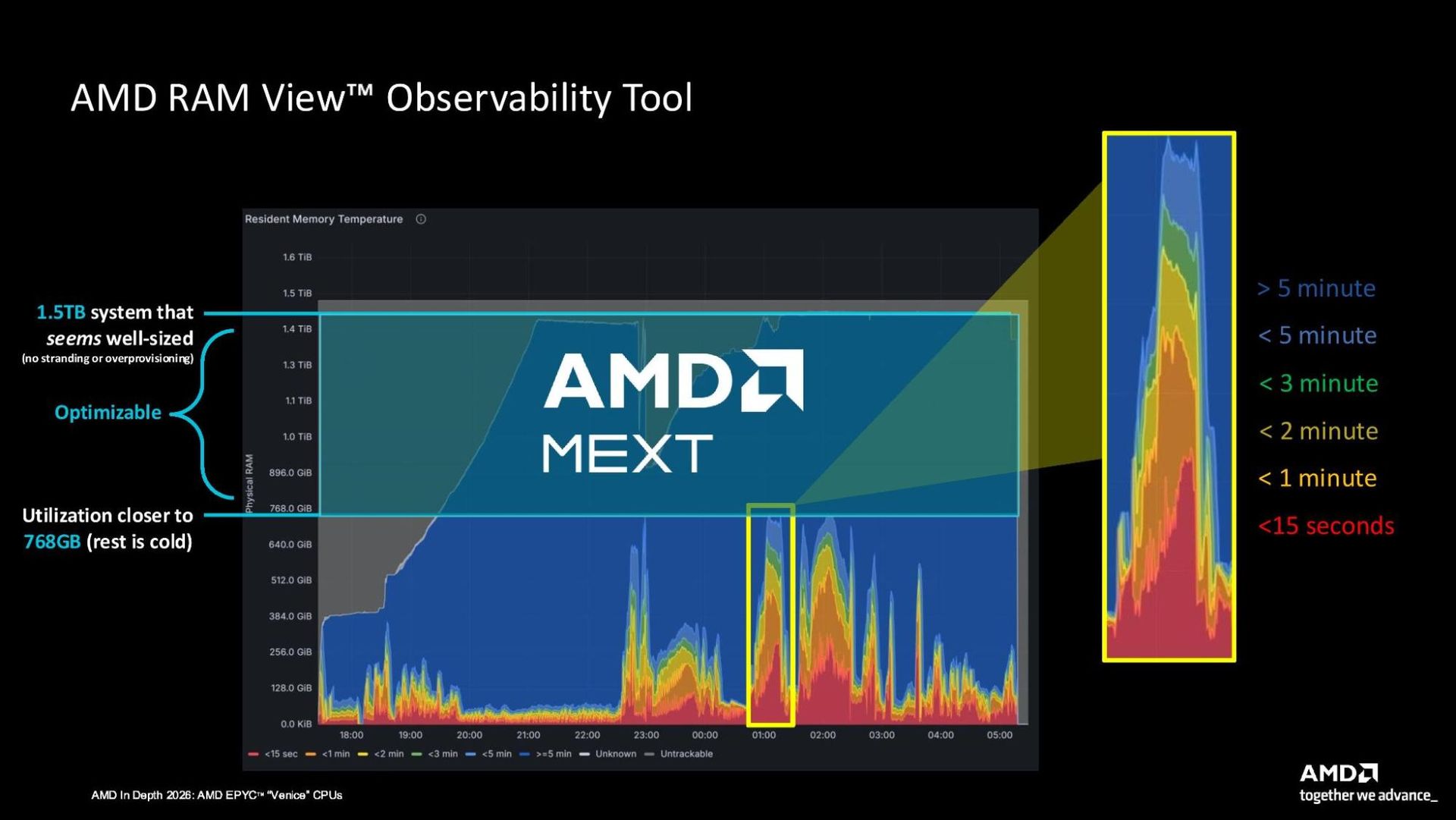
In June, AMD overtook the predictive memory engine known as MEXT, which claims to offer upwards of 99% of the performance of a system with full DRAM capacity while running with as little as 25% of the physical DIMMs. The technology offloads cold memory pages to flash storage and uses an AI model to serve pages before they’re needed, and AMD says it plans to extend the tech across a wide swath of its IT infrastructure next year.
The pitch behind MEXT seems too good to be true. According to AMD and MEXT founder Gary Smerdon, the technology can cut the physical DRAM required in a server by 20% to 75% depending on the application and performance target. That missing memory still registers as installed DRAM to the OS. Instead of DRAM, however, MEXT uses relatively inexpensive flash storage to offload cold pages, flying them back in as they’re needed with an AI model. In some of AMD’s internal workloads, such as Synopsys PrimeTime, the company says it’s able to achieve 95% of the performance of a full server while running at 50% DRAM capacity with MEXT.
AMD has deployed MEXT internally on 145 servers, which it says will expand to 2,000 servers next year. In addition, the company has announced a partnership with HPE to bring MEXT to customers. Currently, we’re in phase 1 of the rollout, with some EPYC Venice servers carrying a “MEXT Ready” badge and a dedicated NVMe drive or bay for the offload. Phase 2 brings MEXT licenses out to these servers, as well as the RAM View application.
Source link