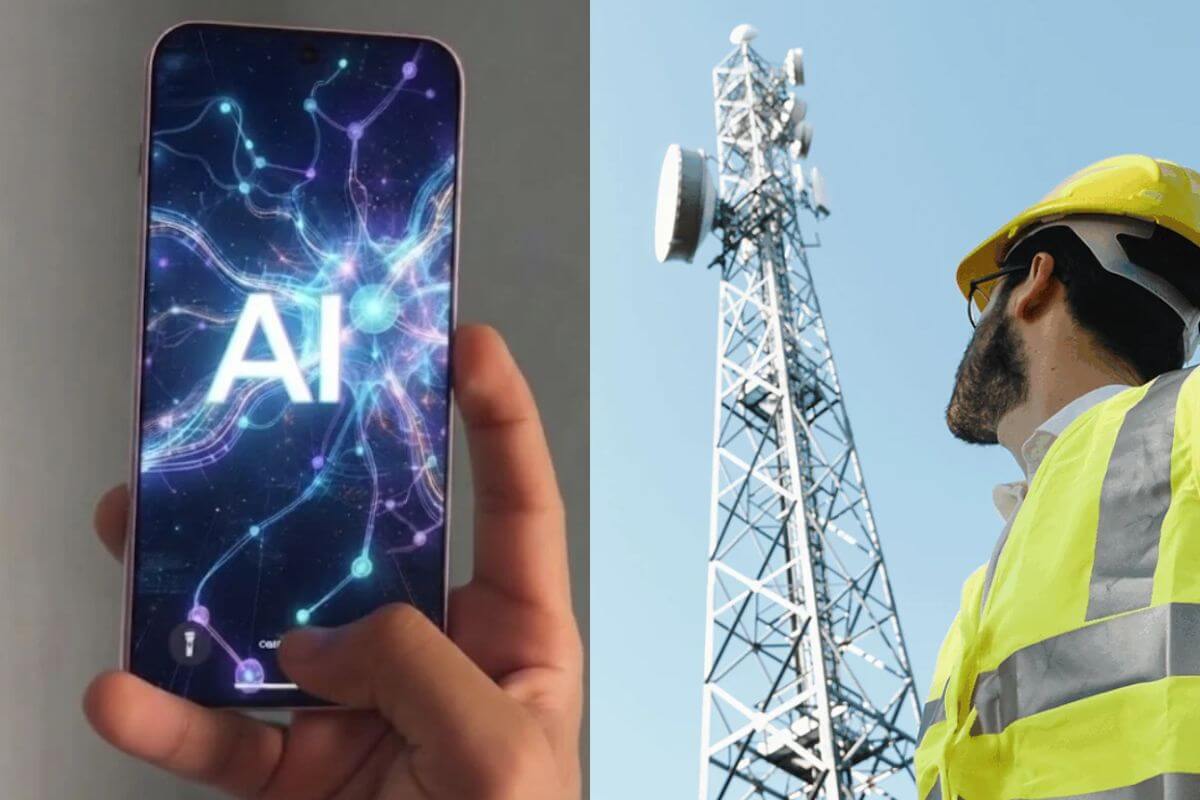
Artificial intelligence is creating new demands on India’s digital infrastructure. Telecom networks have traditionally handled more downloads than uploads. AI applications could change that balance as users share images, videos and voice clips with cloud-based models.
These interactions require networks to transmit data quickly and reliably. That could put additional pressure on uplink capacity and response times.
India’s 5G rollout provides a strong foundation, but it may still need further optimization.
For telecom operators, the challenge extends beyond network performance. They must also find ways to recover the cost of these investments.
India’s telecom networks could face new capacity challenges as artificial intelligence (AI) applications become more popular, according to a report Light Reading published on October 29, 2026.
The shift could require operators to improve upload speeds, strengthen fiber backhaul, and optimize their networks, even as they struggle to turn rising data consumption into higher revenue.
Traditional mobile internet usage, including video streaming, browsing, and social media, generally involves downloading more data than uploading.
However, AI applications that process images, videos, and audio in the cloud could increase demand for upstream data transmission.
According to Ericsson ConsumerLab research cited by Light Reading, daily multimodal AI use in India is projected to increase from 22% currently to 43% by 2030. The global forecast stands at 30%.
Multimodal AI allows users to interact with AI systems through different formats, including text, images, audio, and video. As these applications become more common, telecom networks may need to handle more varied traffic patterns and deliver faster responses.
Source link