Explore the future of retail with AI shopping. Understand how AI affects product visibility and decision-making for consumers.
This post was sponsored by Writesonic. The opinions expressed in this article are the sponsor’s own.
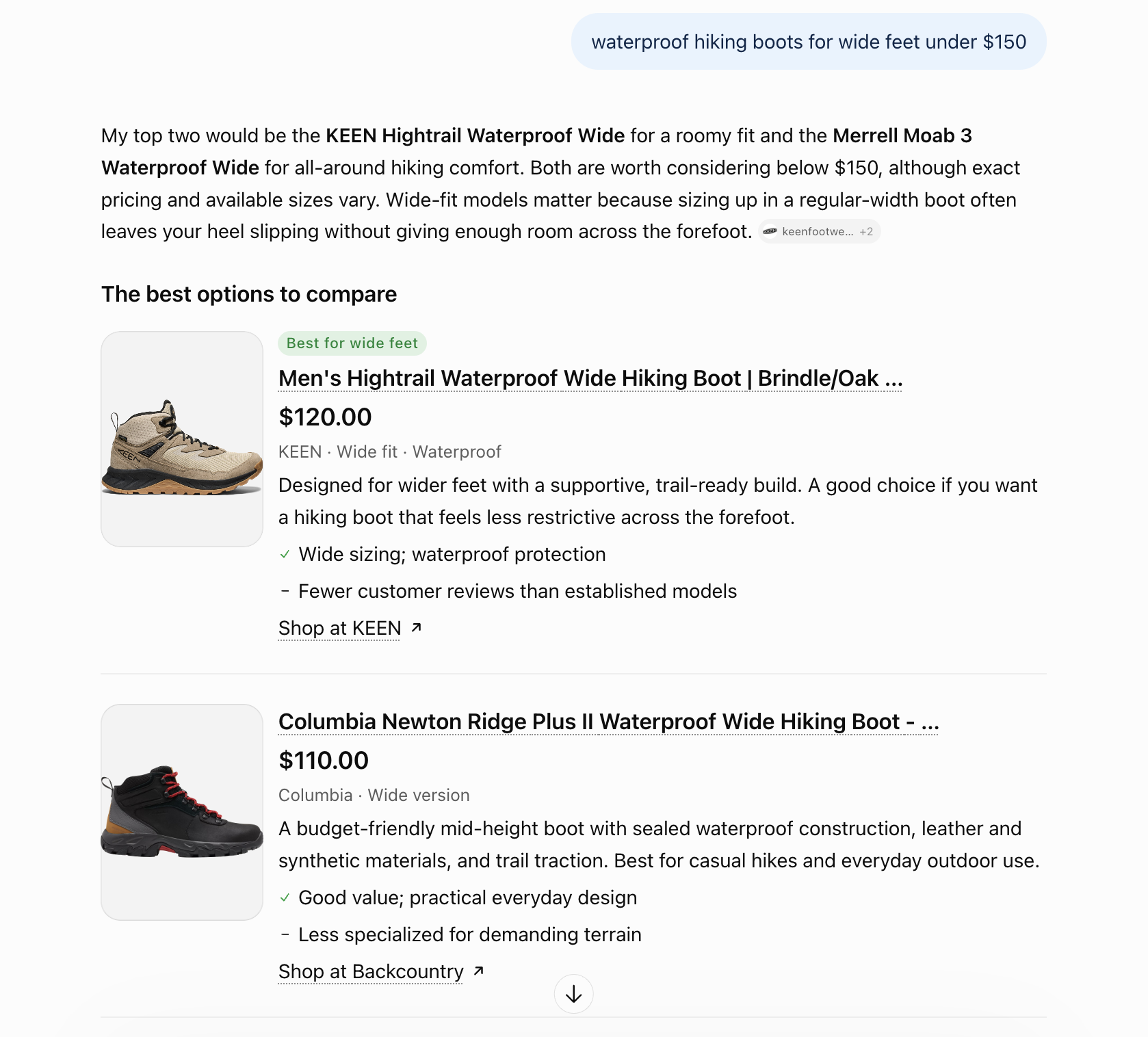
When shoppers ask ChatGPT or Google what to buy, answers often come back as product cards with prices, ratings, and “buy now” links. AI writes those cards from data spread across the web, but few brands know how those cards position their products.
That’s a risky blind spot to have heading into the holidays. Adobe forecasts AI traffic to US retail sites will grow 130% this holiday season.
AI shopping results usually go wrong in three ways. Your product doesn’t show up, it shows up with the wrong details, or a competitor or reseller gets the final click instead of you. The good news is that these errors trace back to product data you control.
This guide covers what these results look like, why they go wrong, and how to audit your own products.
AI shopping results are product recommendations that appear inside an AI answer. They’re usually triggered by a specific buying question, like “waterproof hiking boots for wide feet under $150.”
In March 2026, OpenAI expanded its Agentic Commerce Protocol (ACP) to cover product discovery. Merchants now share product feeds through ACP so their catalogs appear in ChatGPT.
Retailers like Target, Best Buy, and Wayfair are already integrated. Shopify merchants flow in through Shopify Catalog.
OpenAI dropped in-chat Instant Checkout in March 2026 and now lets merchants run checkout on their own sites.
Source link