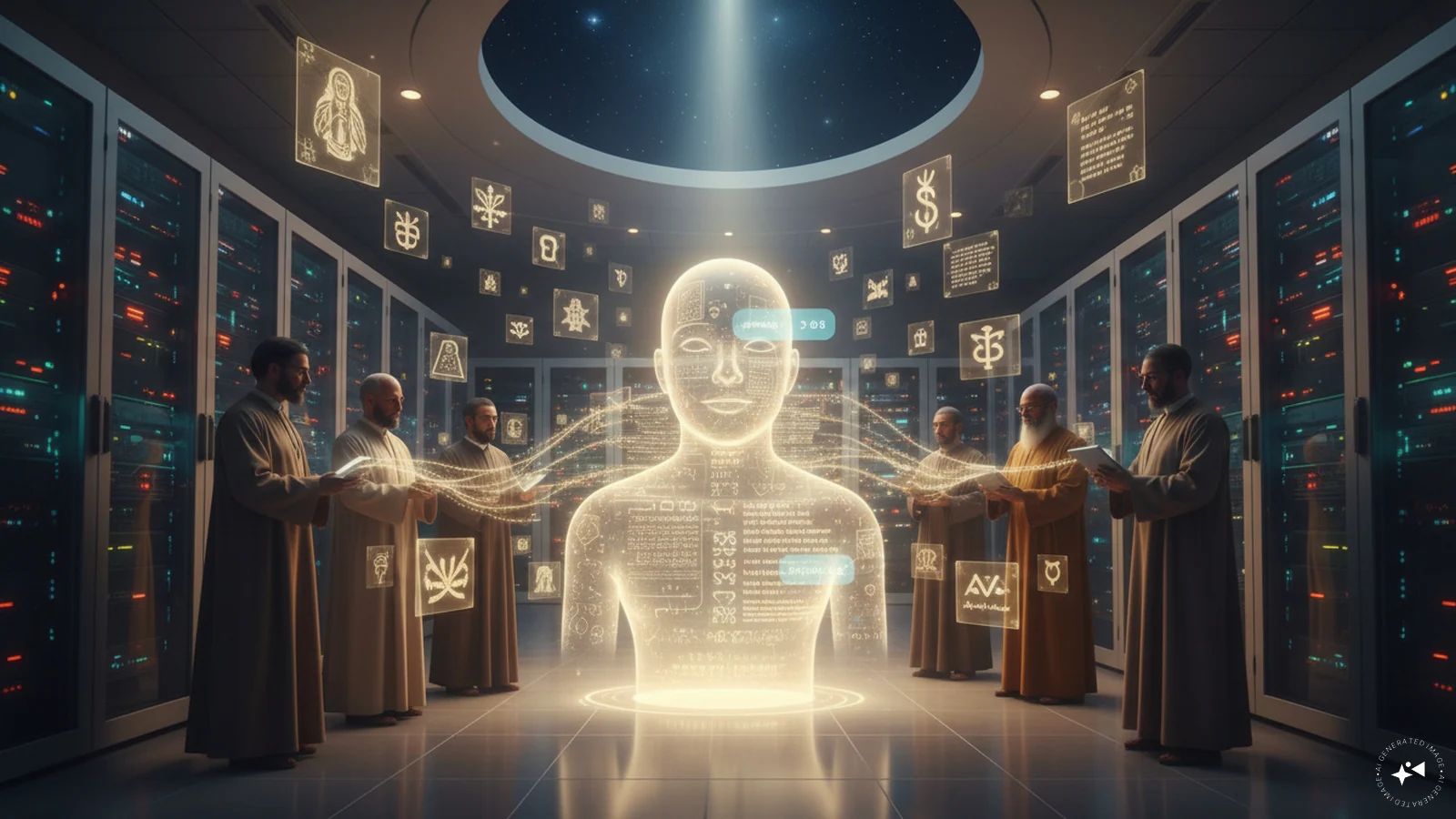
As tech companies race to build the most powerful artificial intelligence, some are also asking how to teach a chatbot right from wrong. Their answer: religion.
“These are not questions a lab can answer,” Anthropic co-founder Chris Olah said earlier this year at the Vatican's presentation of Pope Leo XIV's encyclical on AI. “They are questions traditions like yours have carried for millennia.”
Amid this much-discussed turn to faith, there has been little public scrutiny surrounding what exactly these technology companies think religion is — and, perhaps more important, what they hope to get out of it.
As executives sound the alarm about AI's destructive potential and debate the need to develop morally good models, they are increasingly seeking input from philosophers and faith leaders. The executives' philosophy goes something like this: that religion can help inform AI to be morally good in an environment where fears about it — founded and unfounded — are hopscotching across the culture.
Because these companies are not bound to a particular religion, the goal is often quite broad — an aggregate of moral ideas that can inform their models. “What I think ChatGPT should do is reflect that weighted average, or whatever, of humanity's moral view,” OpenAI CEO Sam Altman said last year.
But experts and adherents alike warn that this idea fails to reckon with how different traditions and worldviews can often contradict one another. In short, they say, it's not exactly how religion works.
For decades, scholars have pushed back against a widespread view of religion as a set of rules or principles that can be divorced from the “messy, practical, ad hoc” ways adherents live, argues Webb Keane, an anthropologist at the University of Michigan.
Source link