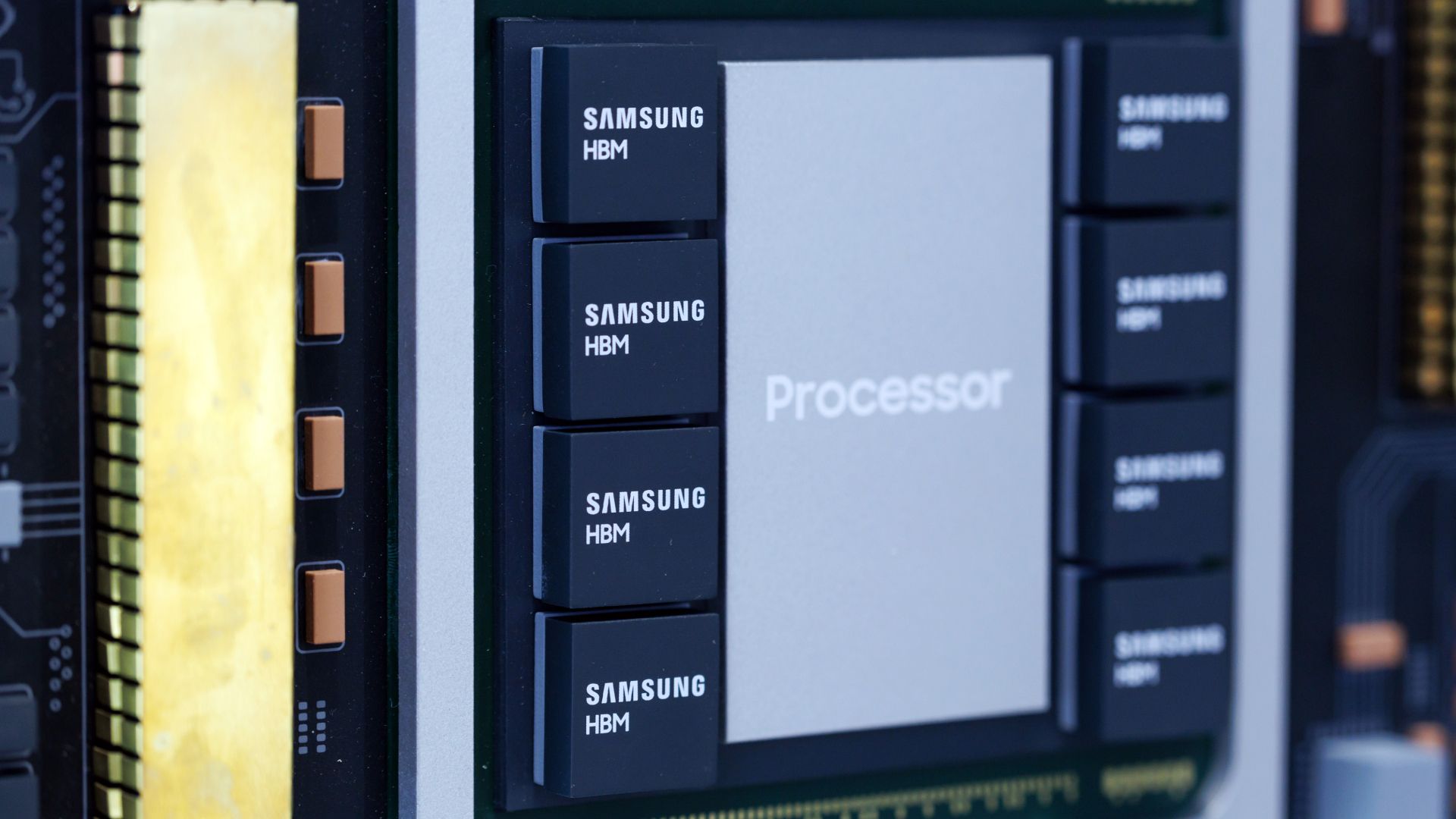
A memory smuggler has detailed how he gets export-controlled HBM chips from South Korea into China using a loophole. According to The Information, the smuggler owns a chip design firm that build cheap, low-performing processors that fall under the U.S. and South Korea’s export controls. They are then paired with expensive HBM from Samsung and SK hynix, that, on their own, are banned for export to China. But because export control rules only look at the performance of the server processor and not at the other components attached to it, this allows the HBM chips attached inside them to slip under the radar and make their way into China.
- While the U.S. flip-flops on chip sanctions, China is building its own chip supply market
- The state of China's decade-long semiconductor push
- Huawei Ascend NPU roadmap examined
- China's CXMT targets 30% DRAM memory market share by 2030 with sixth mega-fab
- China's latest round of rare-earth export controls explained
It’s not a risk-free operation, though. Once the mediocre processors with high-end memory chips land in Hong Kong and are smuggled across the border into Shenzhen in the luggage of commuters that cross between the two regions daily, they end up in workshops where technicians heat up the boards to soften the solder, gingerly lift the crucial memory chips, and discard the rest of the components. Despite having a high failure rate, the high price of HBM chips makes the procedure quite lucrative.
A Shenzhen-based chip broker has been making big money matching up suppliers such as the smuggler and companies that are desperate for HBM.
Source link