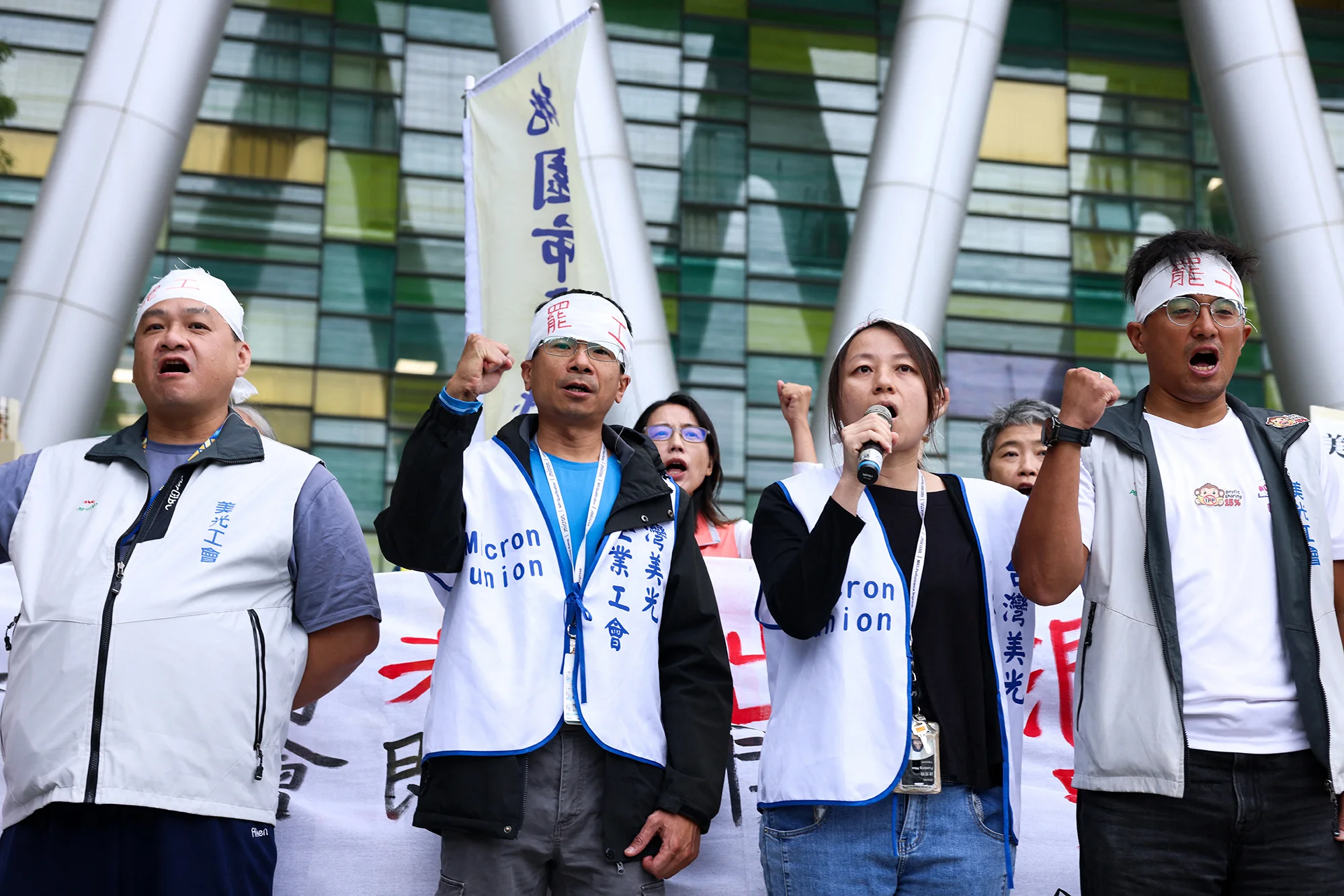
Labor disputes and unionization in Taiwan’s semiconductor industry highlight growing worker discontent over the unequal distribution of profits from the AI boom.
About a dozen workers at a Micron Technology plant in Taoyuan in Taiwan went on strike in October, the first in the island’s semiconductor industry, after their union and the chipmaker failed to reach an agreement on salaries and bonuses. Their one-day action, while largely symbolic, is a reflection of the growing discontent among laborers in the artificial intelligence industry over how profits are distributed.
The leading American memory chipmaker has posted record profits this year on the back of surging demand for AI chips. Unions representing workers at Micron’s facilities in Taoyuan and Taichung have been negotiating with the company for months for a profit-sharing agreement similar to those reached by employees at rivals Samsung Electronics and SK Hynix in South Korea.
“Making a profit is perfectly fine, but the rank and file should get a share of the profit instead of this unequal distribution between high-level executives and the rank and file,” Jerry Lin, president of Micron’s Taoyuan union, told Rest of World.
Making a profit is perfectly fine, but the rank and file should get a share of the profit.”Jerry Lin, president of Micron’s Taoyuan union
The global tech industry is heavily reliant on Taiwan’s semiconductor industry. Idaho-based Micron, the world’s third-biggest memory chipmaker, employs more than 15,000 workers in Taiwan. They produce over 60% of the company’s dynamic random access memory chips, used in AI servers.
Source link