For nearly a century, reading the upper sky has meant tying a box of sensors to a balloon, letting go, and kissing the hardware goodbye. And they only go up at fixed times. If a storm starts brewing between launches, nobody’s up there to see it.
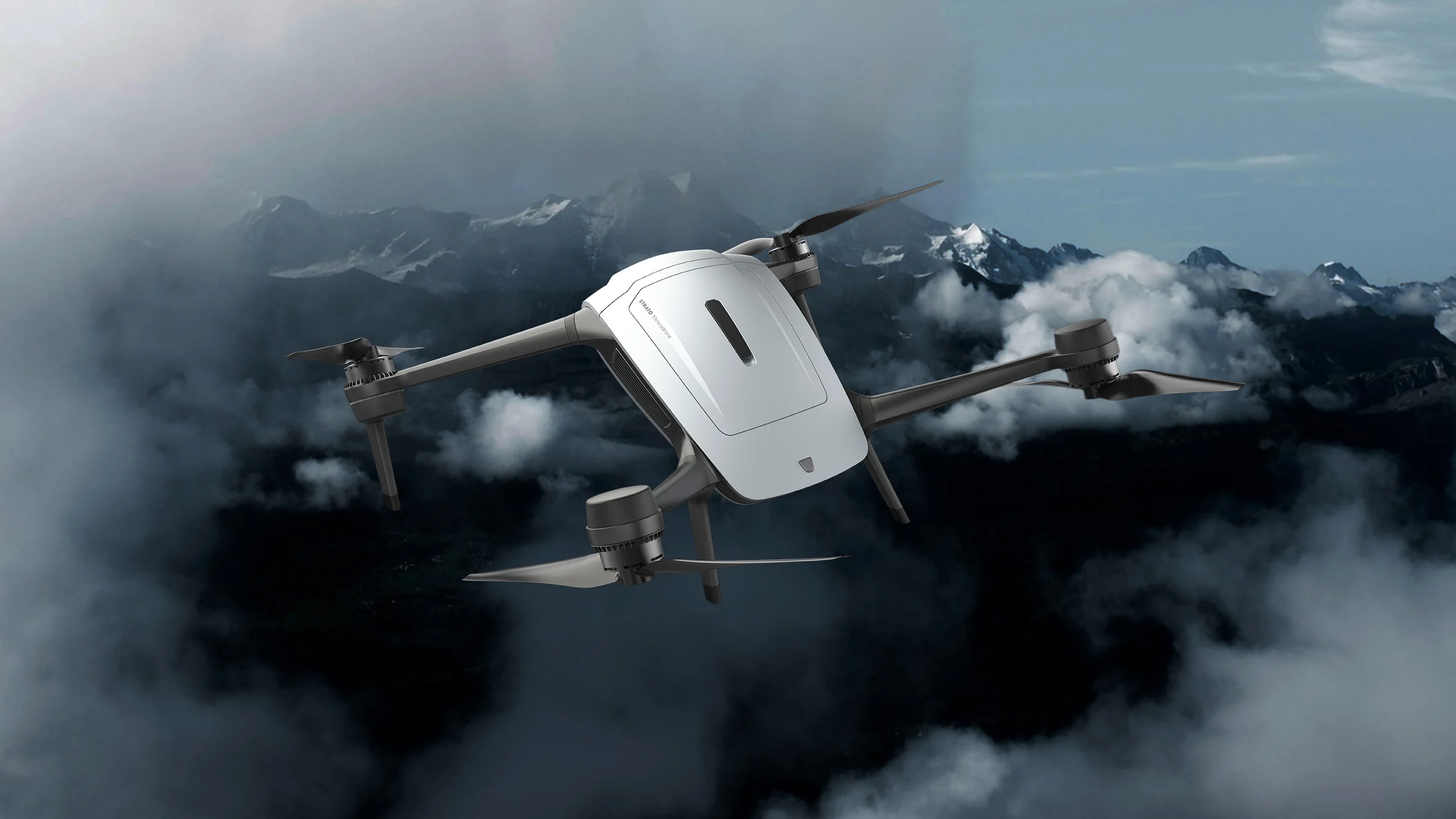
Meteomatics, a Swiss weather technology company, thinks we can get better weather data. It recently introduced Strato, a multicopter drone made to study Earth’s atmosphere. It is designed to reach higher altitudes of the troposphere—the part of the atmosphere where weather happens—than weather balloons, at a fraction of the price. And once its mission is complete, it returns to its launch site ready to go back up again.
A weather instrument you can fly over and over, wherever and whenever you need it, could change how we watch the sky and predict the weather.
According to Meteomatics, no drone before Strato could profile the atmosphere all the way from the ground into the stratosphere on demand.
As Strato climbs, it reads temperature, humidity, pressure, and wind at every altitude, building a sort of core sample of the air above us. Meteorologists call that a vertical profile. Until now, only a radiosonde, the instrument package that hangs from weather balloons, could collect that data.
Using a radiosonde has its flaws. Weather balloons need roughly 40 minutes just to rise to 12 kilometers, or about 39,000 feet. Additionally, 90% of weather balloons never return to the people who launched them, their radiosondes lost forever, essentially becoming pollution .
Source link