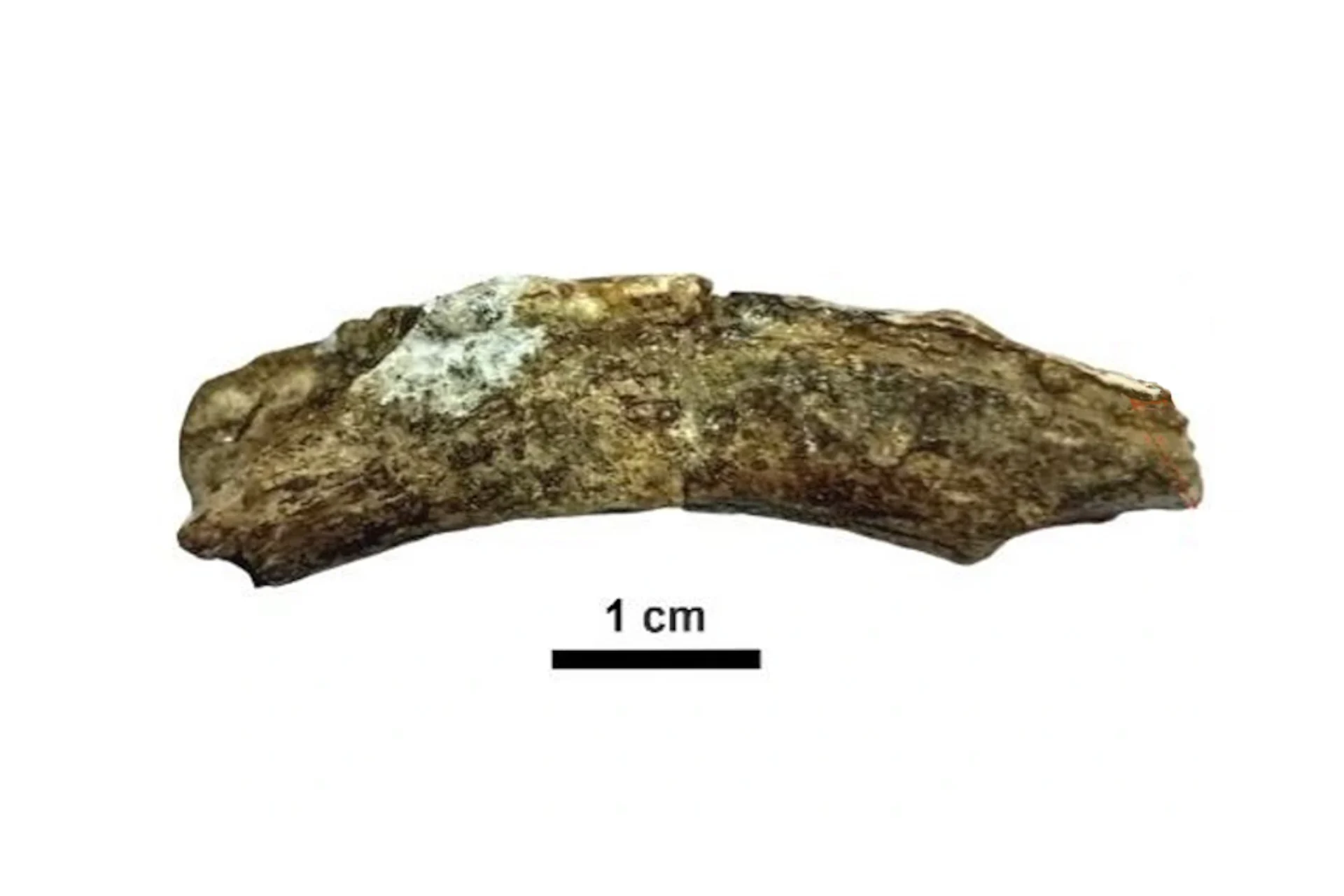
In 2004, geologist Pannipa Tian noticed something unusually cream-colored standing out from the dark veins of coal marbled through Bang Mark Pit, a coal mine in southern Thailand’s Krabi province. Initially, Tian “thought it was a bone,” as she told Agence France-Presse last Thursday. It was exactly the kind of find that the Thai–French Paleontological Expedition on Fossil Mammals in Thailand hoped to rescue before day-to-day activity on site damaged it for good. But it turned out this prehistoric fossil wasn’t a bone at all.
“I showed it to my supervisor, who told me it was a giant rat’s tooth,” Tian said.
Now researchers from Thailand, France, and Canada have determined that this tooth—a roughly 2-inch (5-centimeter) incisor fragment—and a large dark molar discovered that same day at the mine belong to a previously unknown species of giant rodent. Meet Yakamys sirindhornae, a whopping 66-pound (30-kilogram) member of the extinct Ischyromyidae family, a group of sometimes squirrel-like prehistoric rodents that reached their largest known size thanks to Y. sirindhornae itself roughly 33 to 35 million years ago.
“It tells a lot about the diversity of life in the past,” said Tian, who works for Thailand’s Department of Mineral Resources. Ancient rodents, she suggested, may have even first evolved in this region of Southeast Asia before fanning out across the prehistoric world.
Back when it lumbered around Thailand during the Late Eocene, Y. sirindhornae would have been roughly equivalent in size to a beaver but smaller than South America’s capybara, the largest living species of rodent known today.
Source link