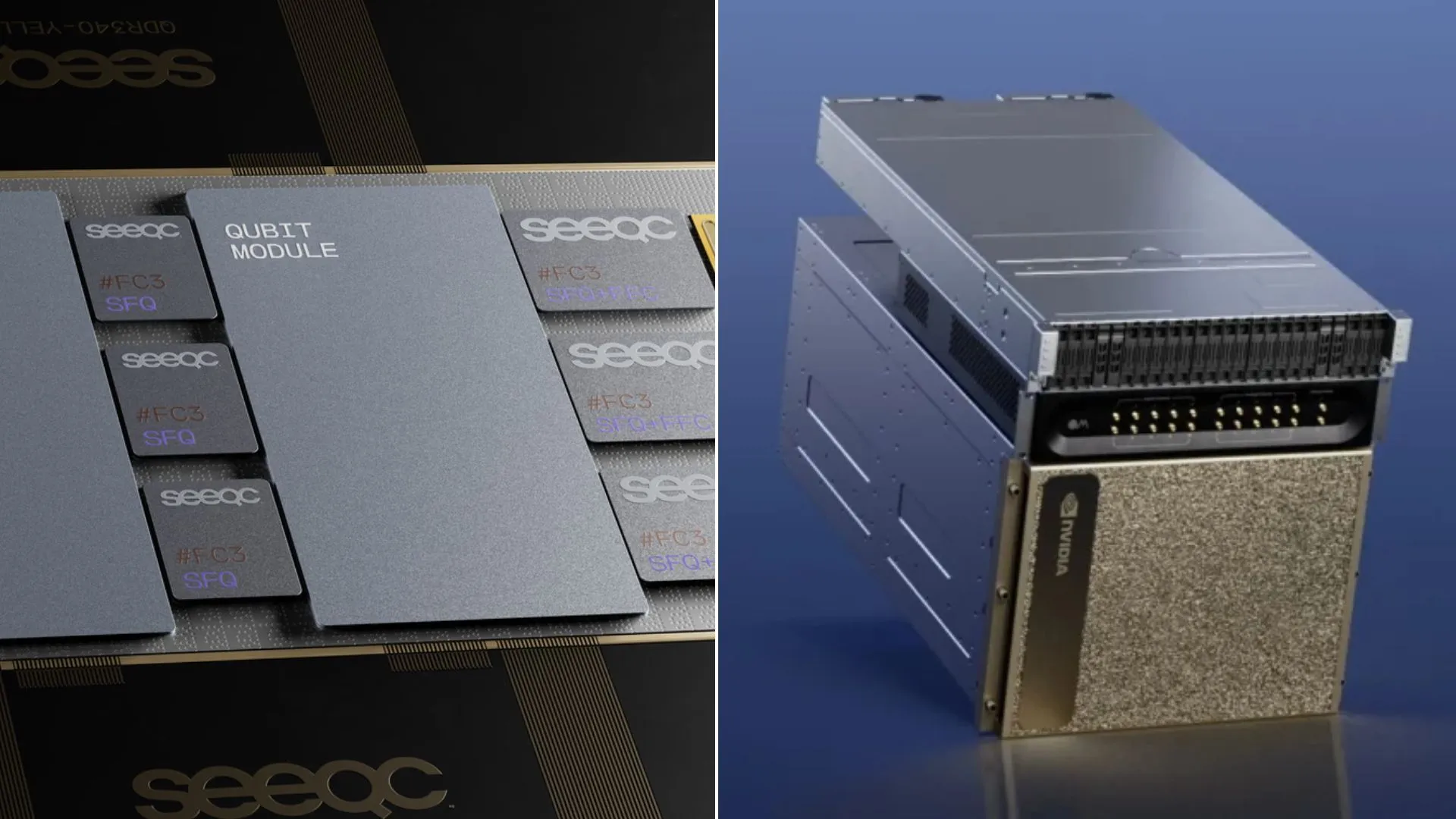
Quantum computers need to correct errors without slowing their calculations to a crawl. Now, quantum computing company SEEQC says it has demonstrated an architecture that improved two key quantum error-correction decoding metrics by approximately 50% by combining specialized chip-based processing with NVIDIA’s quantum computing software and GPU infrastructure.
The results combine SEEQC’s chip-based pre-decoder technology with NVIDIA Ising, an open family of AI models that includes tools for quantum error correction, and NVIDIA NVQLink, an interface designed to connect quantum processors with GPU-accelerated computing systems.
The demonstration used a simulated quantum processor and system architecture incorporating realistic decoder latency at scale. It compared the combined architecture with NVIDIA Ising operating as a standalone pre-decoder. SEEQC reported an approximately 50% reduction in decoding latency and improved logical error-rate performance.
The results could point toward a way to reduce one of the major bottlenecks in building fault-tolerant quantum computers: processing error-correction information quickly enough to keep increasingly complex quantum systems operating reliably.
Quantum computers use qubits, which can represent quantum information in ways that differ from conventional binary bits. However, qubits are highly susceptible to disturbances from their environment and imperfections in control operations. These errors can accumulate and undermine a computation.
Quantum error correction addresses this problem by encoding information across multiple physical qubits and using measurements to detect errors without directly measuring and destroying the encoded quantum information. Classical computing systems then process those measurements to determine which corrections are needed.
That classical processing stage is known as decoding. As quantum processors grow, the volume of information to be processed can increase substantially, putting pressure on the time and computing resources available for error correction.
Source link