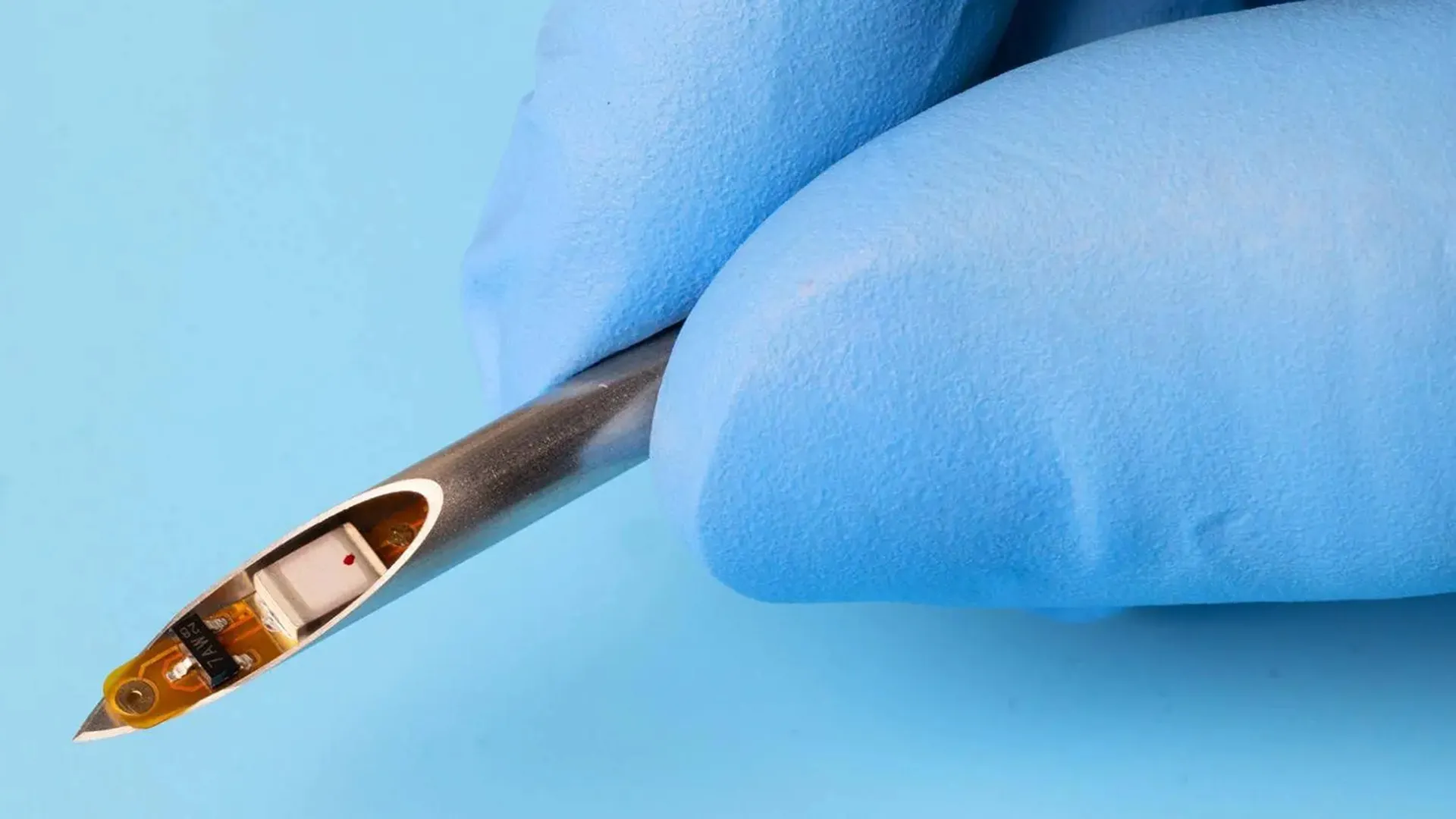
Georgia Tech engineers have developed a wireless networking system that lets tiny implants communicate through body tissue, potentially allowing sensors in one part of the body to trigger treatment somewhere else.
The Smart Wireless Autonomous Networking System, or SWANS, uses the body’s natural ionic conductivity to transmit electrical signals between implanted and wearable devices. The approach avoids conventional wireless technologies such as Bluetooth and near-field communication, which can struggle to transmit signals through human tissue.
The low-power technology allowed the researchers to build implants smaller than 3 millimeters, making them small enough to be delivered using a syringe rather than requiring surgery. The devices can communicate with other implants as well as an external wearable hub.
Researchers demonstrated the system in rats by creating a network linking sensors and neural interfaces across the body. When a sensor detected movement in a rat’s front paw, another device was automatically activated to stimulate a hind-leg muscle, producing a contraction that mimicked part of the animal’s natural walking motion.
SWANS works by sending electrical pulses through surrounding tissue. Each implant can be programmed to recognize pulses with specific voltages and durations, allowing the network to selectively activate individual devices.
The system could therefore separate where a biological signal is detected from where treatment is delivered.
“With our system, you can now place sensors in the best possible place to detect a biological signal and place actuators in the best possible place to perform a therapeutic action,” said Alex Abramson, the study’s senior author and an assistant professor at Georgia Tech.
Source link