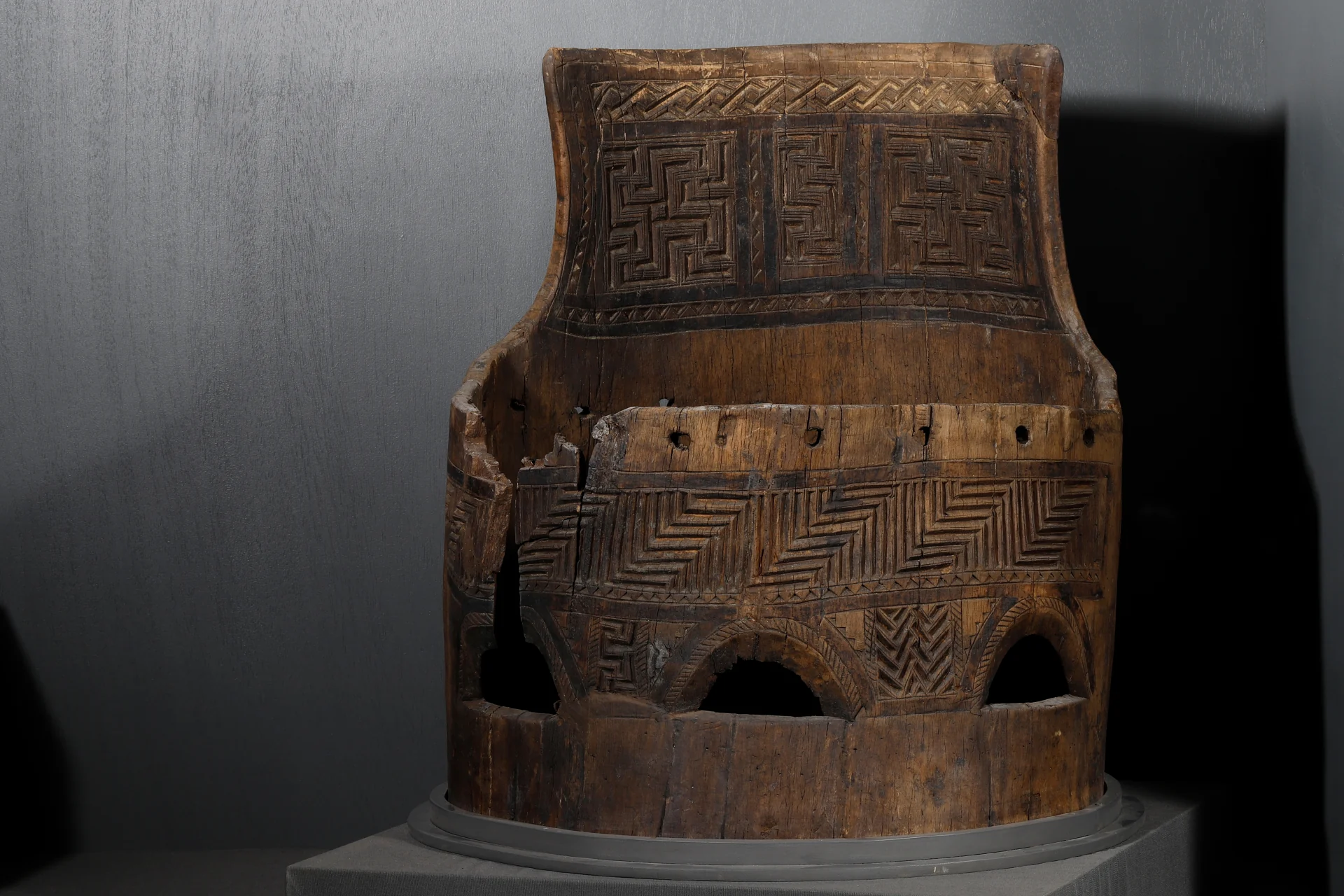
In the 1990s, archaeologists uncovered a cemetery near the Fallward settlement with burials dating from the late 3rd to the late 5th century CE, spanning the Late Roman Iron Age and the Migration Period. The Fallward cemetery preserved a rich collection of graves, burials, and artifacts—already a lot of information—but only recently did scientists examine the DNA of the people buried there.
In research recently published in iScience, archaeologists extracted DNA from 12 skeletal samples belonging to 11 individuals put to rest at Fallward. One particularly interesting individual was the man from “Grave 265,” who died around the second quarter of the 5th century CE. His final resting place was a boat holding numerous wooden and metal goods and a Roman military belt, with an ornate alder chair placed outside the vessel. Genetic analysis suggests his roots were in the Danube region—quite the distance from his final resting place. He also had a rare form of leprosy that hadn’t been found before in Central or Northern Europe.
“He is the first individual from this group to have been identified in Europe,” Daniel Myburgh, the study’s lead author and a doctoral researcher at Kiel University in Germany, said in a statement. Overall, the new findings demonstrate the complexity and mobility of humans—and pathogens, perhaps—in Late Antiquity.
According to the paper, the Fallward graves, located in what is now northwestern Germany, include roughly 200 cremation burials and 60 inhumation graves. Previous research suggests the settlement was founded during the 1st century BCE and gradually declined during the 5th century CE.
Source link