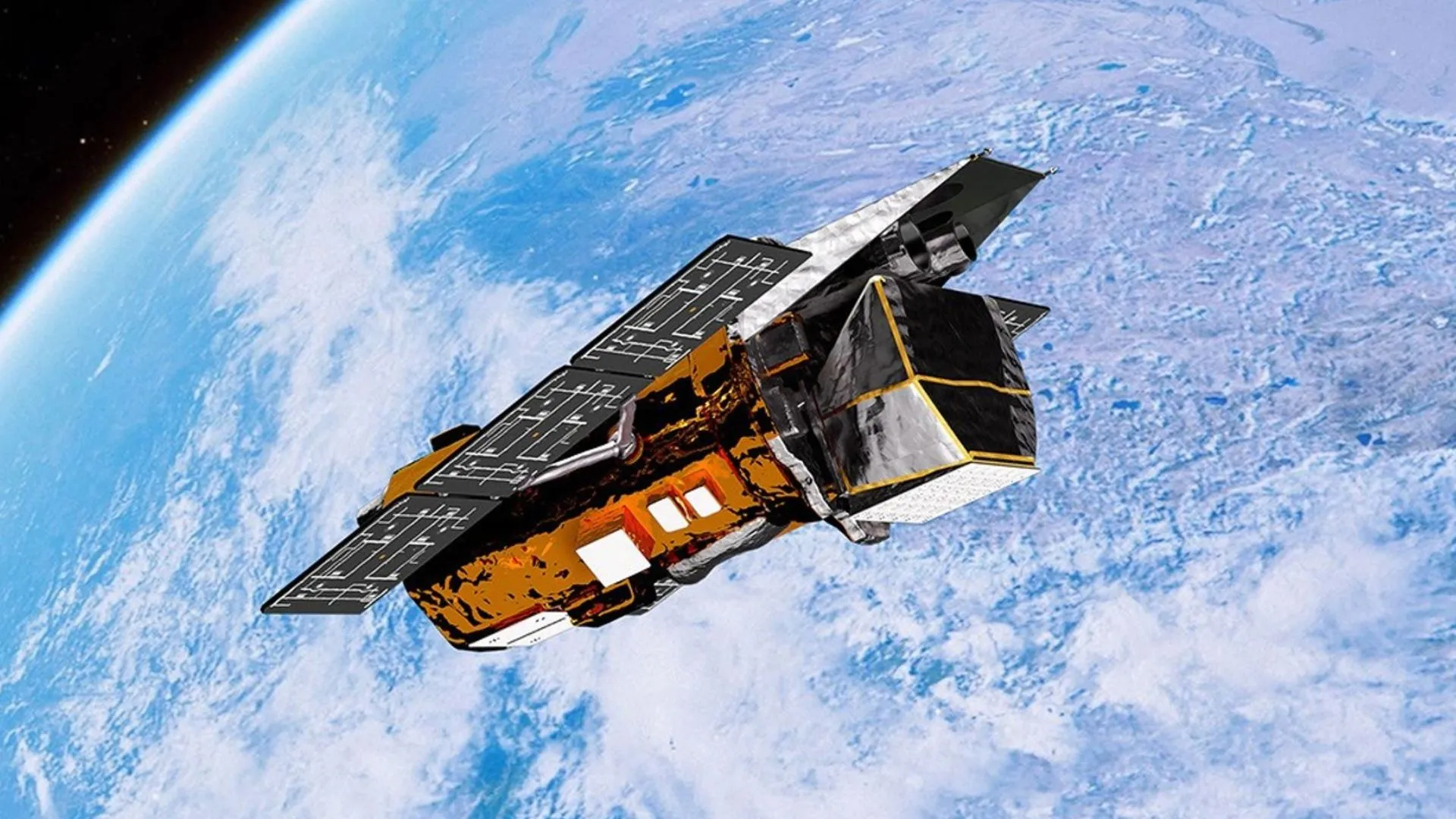
After more than 21 years watching some of the universe’s most violent events, NASA’s Neil Gehrels Swift Observatory has reached the end of its mission. The spacecraft is expected to re-enter Earth’s atmosphere in the coming weeks, but its scientific legacy is far from over. Researchers will continue mining its enormous archive of observations for years, potentially uncovering discoveries long after the telescope itself is gone.
NASA announced on October 23 that Swift had ended science operations after its orbit dropped too low for the spacecraft to reliably point its telescopes at astronomical targets. Its final observation took place on October 20, when it was orbiting approximately 171 miles (275 kilometers) above Earth.
The observatory was originally designed for a two-year mission. Instead, it operated for more than a decade beyond that planned lifetime, observing everything from distant stellar explosions to black holes and objects in our own solar system.
Launched on November 20, 2004, Swift was designed primarily to detect gamma-ray bursts (GRBs), brief but extraordinarily energetic flashes associated with some of the most powerful events in the universe.
These bursts can last from fractions of a second to several minutes. Their fleeting nature makes them hard to study. Astronomers must locate them quickly and turn other telescopes toward the source before the light fades.
Swift was built to do exactly that. Its Burst Alert Telescope detects gamma-ray bursts and determines their positions, allowing the spacecraft to rapidly turn its X-ray and ultraviolet/optical telescopes toward the event. NASA says the observatory could typically redirect its instruments within about a minute.
Source link