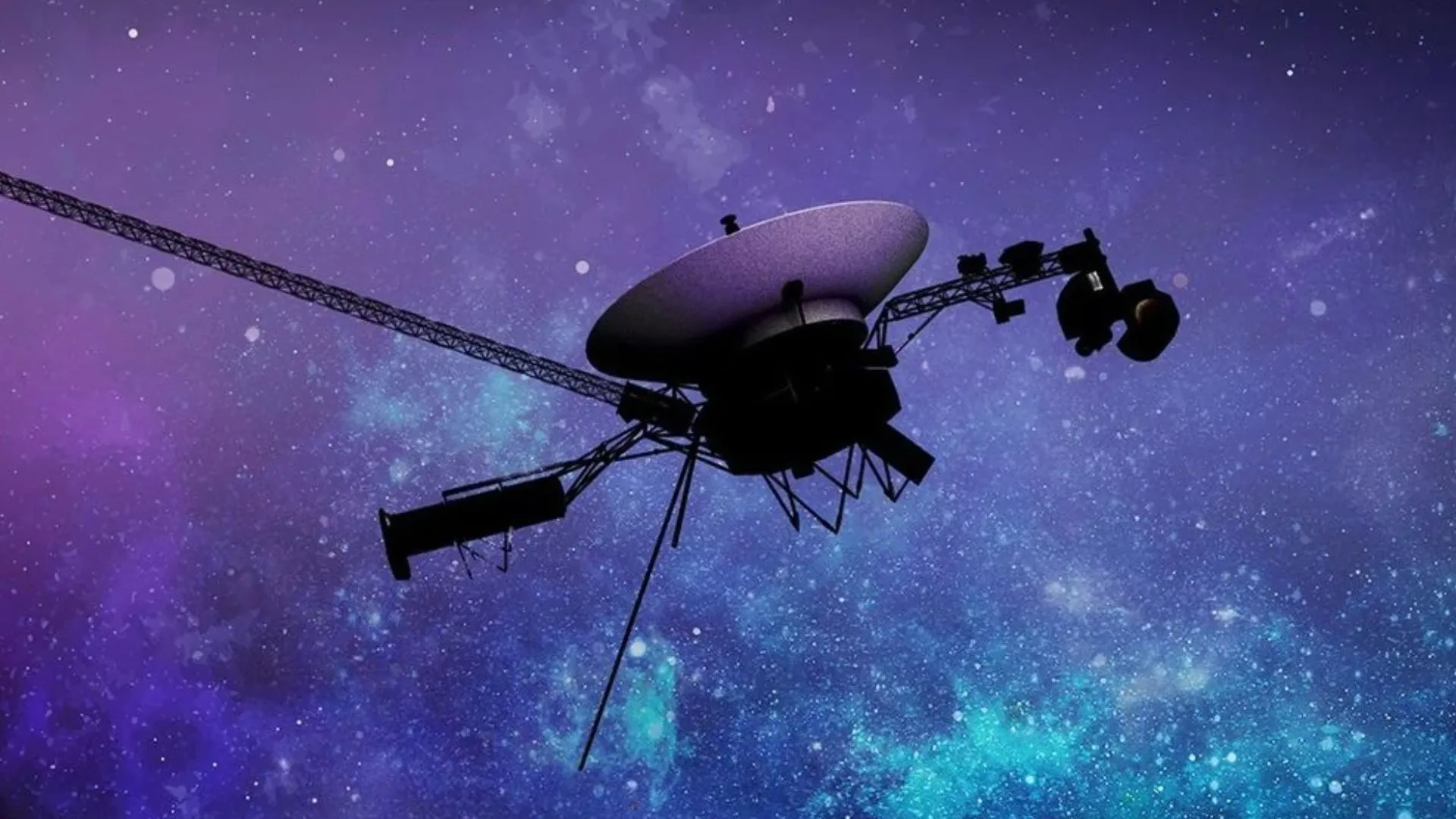
NASA briefly lost contact with Voyager 1 in mid-October after the nearly 50-year-old spacecraft stopped transmitting a detectable radio signal during two scheduled communications attempts. The signal returned on October 20, but engineers are still investigating what caused the interruption.
The incident comes just weeks before Voyager 1 is expected to become the first human-made object to reach a distance of one light-day from Earth, a point at which radio messages will take a full 24 hours to travel in either direction.
NASA’s Deep Space Network, a global system of large radio antennas used to communicate with distant spacecraft, failed to detect Voyager 1’s signal on October 18 and 19. The probe is now approximately 16 billion miles (24 billion kilometers) from Earth.
Communication resumed on October 20, about 48 hours after the interruption began. NASA says the team has maintained contact with the spacecraft since then.
Engineers are still trying to determine what triggered the communications loss. However, NASA has established that one group of Voyager 1’s thrusters went offline during the incident, prompting its backup thrusters to switch on automatically.
The spacecraft is programmed to respond this way when its onboard computers detect a potential problem with the active thrusters. This automated protection system can place the probe in a stable, safe configuration and pause normal operations while engineers investigate.
The spacecraft’s signal returned before the team sent commands to troubleshoot the issue from Earth.
“This is the first time we’ve seen the spacecraft do something like this, but we are also at a point in the mission where we have to expect the unexpected,” said Kareem Badaruddin, Voyager mission manager at NASA’s Jet Propulsion Laboratory.
Source link