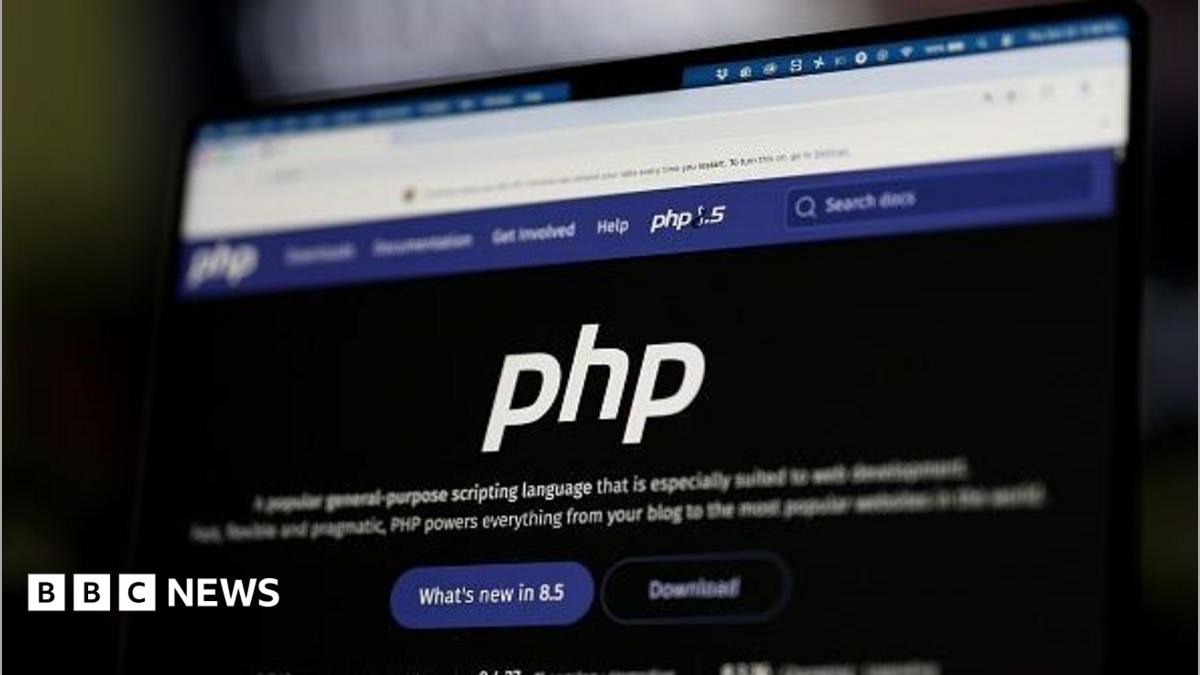
Cyber-security flaws were recently identified in the popular PHP programming language, which is used on a vast number of websites across the world
I once worked opposite a site where a shopping centre was being built.
We were warned there might be unexploded bombs from World War Two unearthed during the construction.
In the end, there were none, but procedures were put in place as a precaution and we all had to practice filing into designated safe zones inside our building.
The PHP story feels like the cyber equivalent of an unexploded bomb - I have never seen such a dramatic, public and global response to a cyber event that hasn't happened yet.
There has been no painful attack like the ransomware we saw knock out M&S and JLR in 2025.
But the potential threat is so serious that websites around the world have been taken down as a precaution.
Less than two months ago, 100 tech companies wrote an open letter warning the world to adopt a new level of cyber resilience in the age of AI.
It turns out we didn't have to wait very long to find out what they meant.
The weaknesses found in the PHP programming language, which is used by millions of websites, had been quietly resting there for years and are not easy to exploit.
One cyber security researcher told me he'd been up all night trying to do it as an experiment, but it was proving very difficult.
However, things that are very difficult for humans are increasingly very little trouble for AI.
Source link