
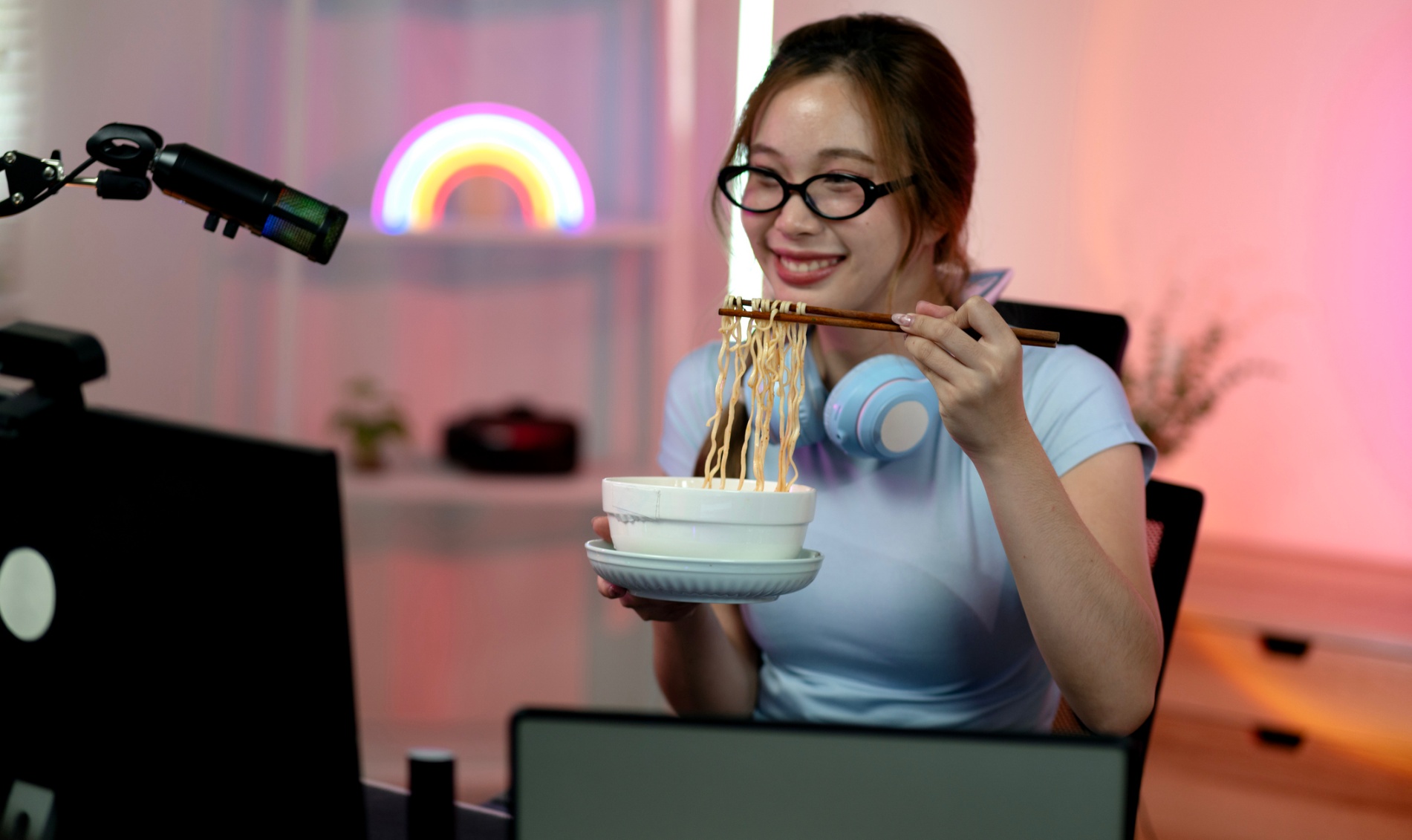
For over a decade, mukbang streams have been one of the internet’s greatest curiosities. In 2026, however, parents and tech companies are worried about imitable patterns of disordered eating within creator content, and those concerns are bringing changes to the mukbang category.
Mukbang, a Korean word that literally translates to “eating broadcast,” refers to live streams in which creators consume gargantuan quantities of food. In Korea, a nationwide loneliness epidemic is believed to be one of the main reasons why social eating content first got big. It didn’t take long, however, before the trend spread to other countries, gaining its own Twitch category in the process.
Ten years later, mukbang videos still do big numbers online, but numerous controversies have affected the genre’s reputation. It has been linked to health issues and even deaths, and it has been targeted by animal rights activists — which is how we got a PETA-sponsored vegan mukbang featuring the creator GloZell Green.
One of the most infamous stories involving mukbang content concerns Nikocado Avocado, who gained hundreds of pounds after repeatedly binge eating on YouTube. Cases like that one have convinced some mukbang creators to adopt more responsible eating habits, but that’s where the trouble with YouTube itself begins.
YouTube is in the midst of a multi-year quest to limit the amount of eating disorder content on its platform. It has cracked down on videos that feature imitable patterns of disordered eating, and has deranked those clips within its recommendation algorithm.
Source link