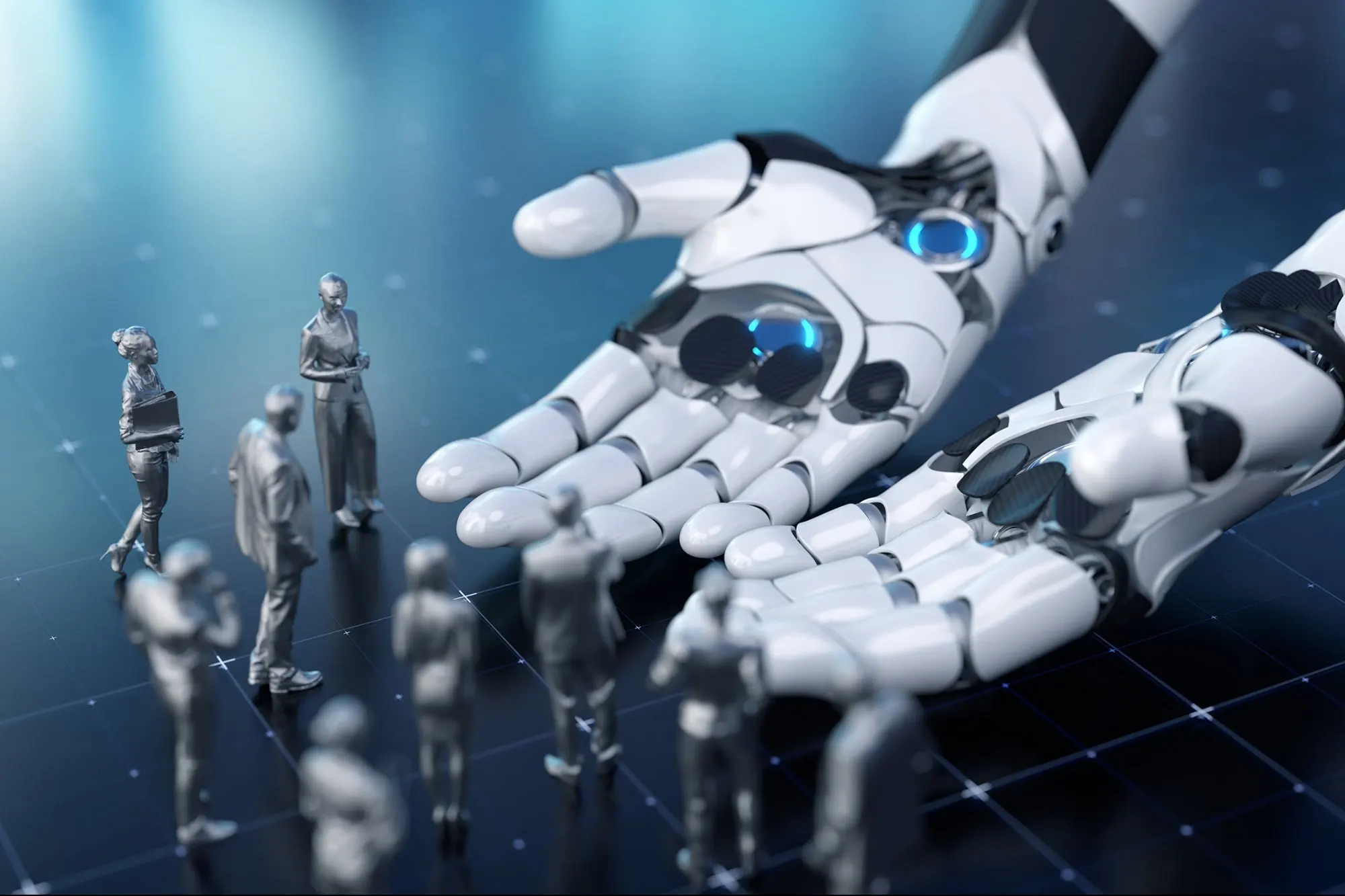
As AI accelerates how work gets done, the leaders who matter most will be the ones who double down on what technology can’t replace.
In 2026, automation is no longer something leaders are preparing for — it’s something they’re already managing. A Bain & Company survey found that 95% of U.S. companies now use generative AI, underscoring how quickly these tools have moved from experimentation to execution. That shift isn’t confined to leadership teams. Intapp’s 2025 Tech Perceptions Survey’s found that 72% of professionals use AI at work, up from 48% in 2024.
Yet the human side of work is telling a more complicated story. While employees who use AI daily report gains in productivity, pay and job security in PwC’s 2025 Global Workforce Hopes & Fears Survey, many employees say they feel worried about how AI may be used in the workplace going forward. Efficiency is accelerating. Confidence and clarity are not.
This tension is the leadership challenge of the moment. As machines take on more tasks, the qualities that define effective leadership aren’t becoming obsolete — they’re becoming more visible. Judgment. Empathy. Trust. The ability to steady people when the environment is anything but steady.
Technology may be scaling faster than ever. Human leadership is scaling in importance right alongside it.
Automation excels at process. Leadership exists for the moments when process breaks down. Entrepreneurs know this instinctively. Systems handle the predictable. People lead through uncertainty.
As AI absorbs more routine work, leaders are left with what has always been hardest to automate: making decisions with incomplete information, aligning teams during disruption and earning trust when outcomes aren’t guaranteed.
Source link