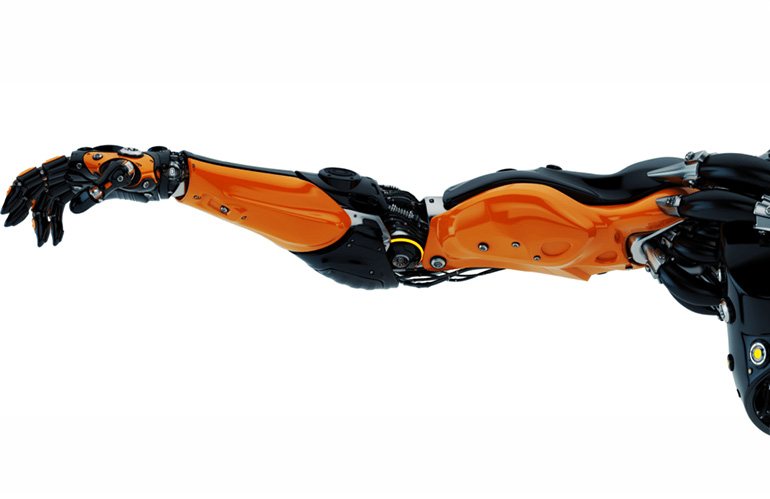
Timken Precision Drives offers a portfolio of motion technologies for humanoid developers. Source: Timken, Shutterstock
For engineers developing humanoids, the answer involves balancing torque, speed, stiffness, weight, positioning accuracy, and available space. Each joint presents its own requirements, and the right solution begins with understanding those demands.
That is the approach behind Timken Precision Drives, part of The Timken Co. Bringing together Cone Drive, SPINEA, CGI Motion, and Timken Encoders, the platform combines specialized engineering expertise and complementary technologies to help customers solve their motion control challenges.
The conversation starts with the application: What motion is required? What loads must the system support? Where is the current design falling short? And what needs to change to achieve the desired performance?
Developers of humanoids face different challenges across load-bearing joints, compact wrists, end effectors, and other moving assemblies. A system that meets the needs of one mechanism may require a different approach elsewhere in the robot.
Timken Precision Drives said it works with customers to evaluate those requirements and identify an appropriate path forward. That may involve a standard component, a modified design, or a custom solution that brings multiple technologies together.
Understanding the application early allows engineering teams to consider how gearing, motors, bearings, and position feedback will interact within the available space. It also helps guide decisions about reduction ratio, load capacity, allowable deflection, duty cycle, and service life.
Timken said its platform’s breadth gives engineers multiple ways to approach a motion challenge.
Cone Drive contributes strain wave gearing expertise for applications requiring compact packaging, high torque density, and zero-backlash positioning.
Source link