This article has been reviewed according to Science X's editorial process and policies. Editors have highlighted the following attributes while ensuring the content's credibility:
In an emergency, a human might someday ask a robotic assistant to fetch a wall-mounted defibrillator located down the hall. But if the robot has incorrectly labeled the defibrillator as a fire extinguisher in its stored memory, it may not know where to find the lifesaving device.
This robotic assistant could benefit from a new memory system created by MIT researchers. The system identifies entries in a robot's memory that might be wrong and corrects the descriptions of mislabeled objects.
In the future, this method could make household or industrial robots better able to perform complex, multistep tasks, such as clearing a dining room table or working alongside human collaborators to assemble a piece of machinery.
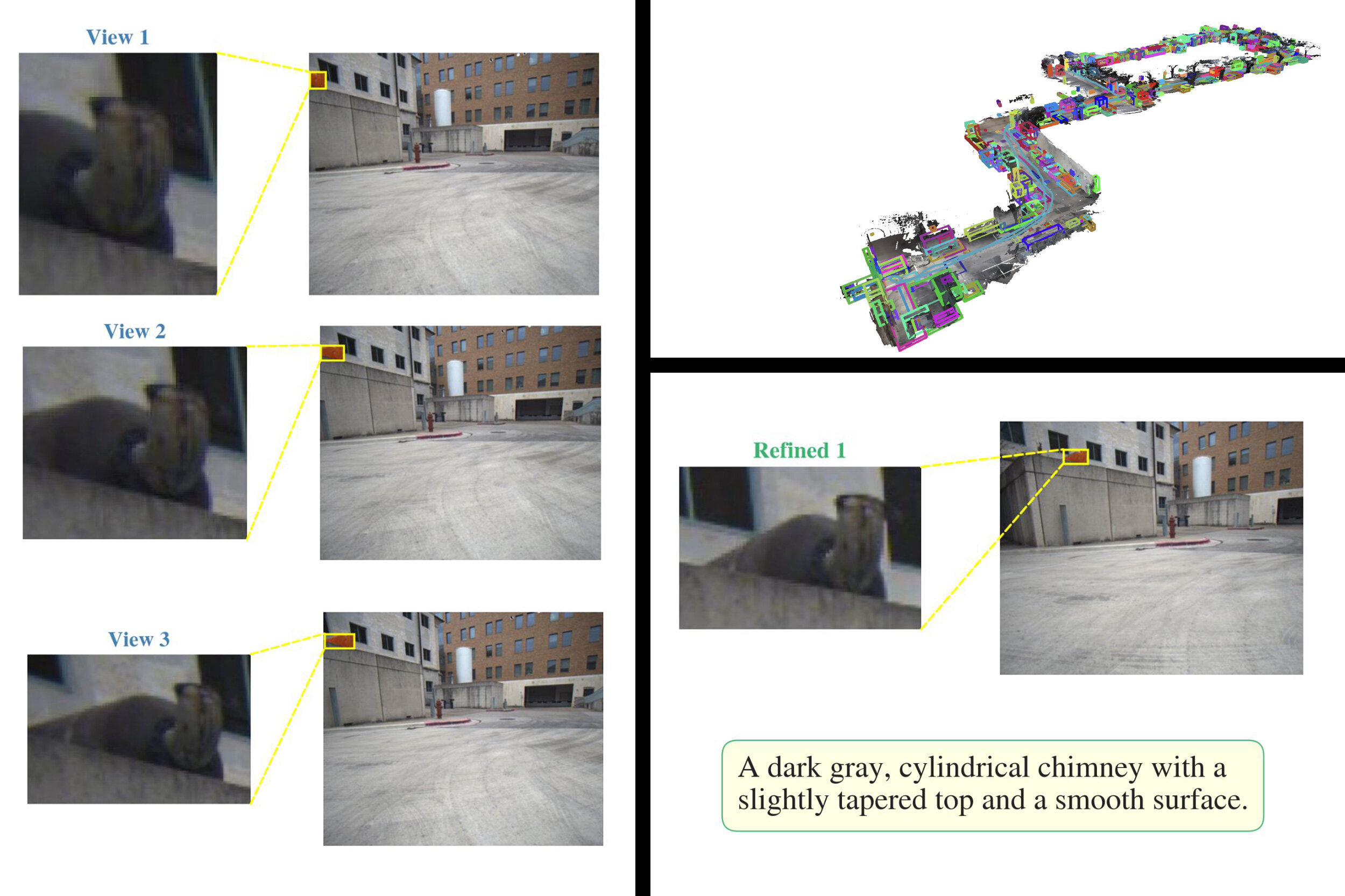
Called UQ-DAAAM (which stands for Uncertainty Quantification for Describe Anything, Anywhere, at Any Moment), the system compares multiple descriptions of the same object, seen from different viewpoints, to quantify the robot's uncertainty about what it saw.
It then selects additional views to reduce the uncertainty and combines these captions into a more accurate description of the object, which it saves to memory.
The researchers also employed a special technique to streamline this process so a mobile robot can continually update uncertain memory entries in real time.
When compared to baseline methods, UQ-DAAAM boosted the robot's confidence and improved the accuracy of its answers to questions about objects, their locations and when it saw them.
Source link