This article has been reviewed according to Science X's editorial process and policies. Editors have highlighted the following attributes while ensuring the content's credibility:
Everyday life throws a whole range of emotional experiences our way, from exciting and relaxing moments to tense or gloomy encounters. Each experience is shaped by what's present around us in the moment, the sensations our body is experiencing and our past experiences. This entire scene is set by the brain, which draws on these experiences of the past, organizing the information it gathers into mental maps that help us predict what might happen and respond appropriately to different situations.
In a recent study published in PLOS Biology, researchers investigated whether the human brain maps emotions using a coordinate system. They designed emotion-tracking experiments and behavioral tests in which participants watched changing facial expressions or read pairs of emotionally meaningful phrases, then judged changes in pleasantness or arousal. During these tests, researchers peeked into their brain activity using high-resolution functional MRI (fMRI).
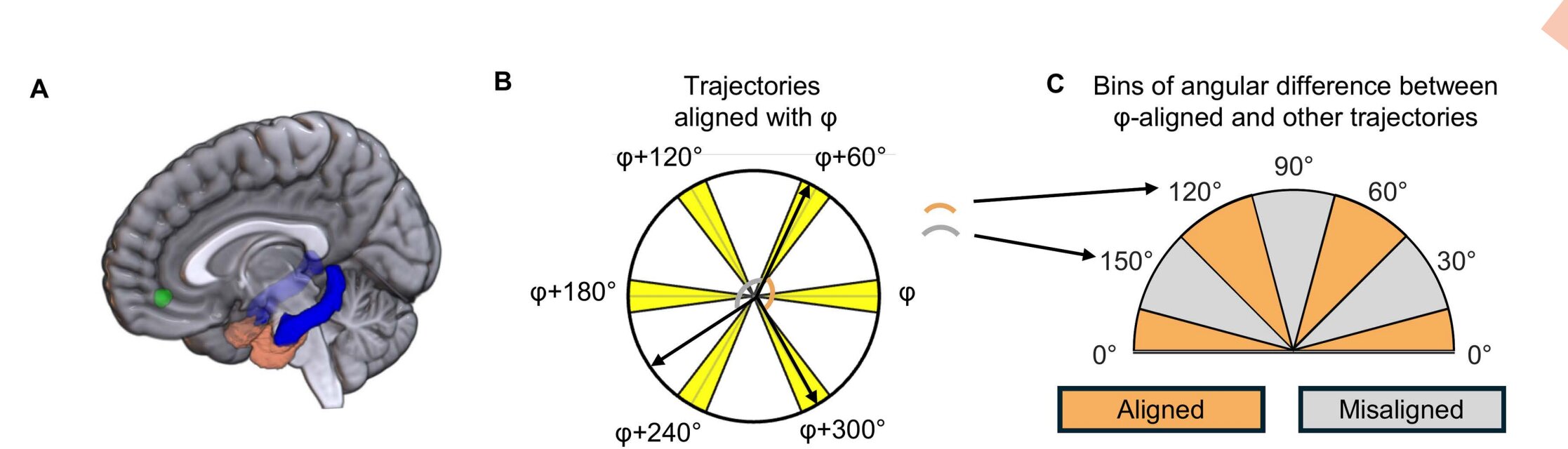
The scans revealed a distinct sixfold (hexadirectional) symmetry in the ventromedial prefrontal cortex (vmPFC)—the brain's emotion regulation, decision-making and self-control center—as participants tracked changes in emotion. The neural activity followed a geometric pattern, with brain patterns showing greater similarity when emotional paths aligned with the same 60° grid angles than when they did not.
This geometric pattern was not limited to one way of presenting emotions. Patterns estimated from responses to phrases were generalized to faces, and vice versa. This suggests the brain represented shared emotional meaning rather than simply responding to visual features.
Source link