
This article has been reviewed according to Science X's editorial process and policies. Editors have highlighted the following attributes while ensuring the content's credibility:
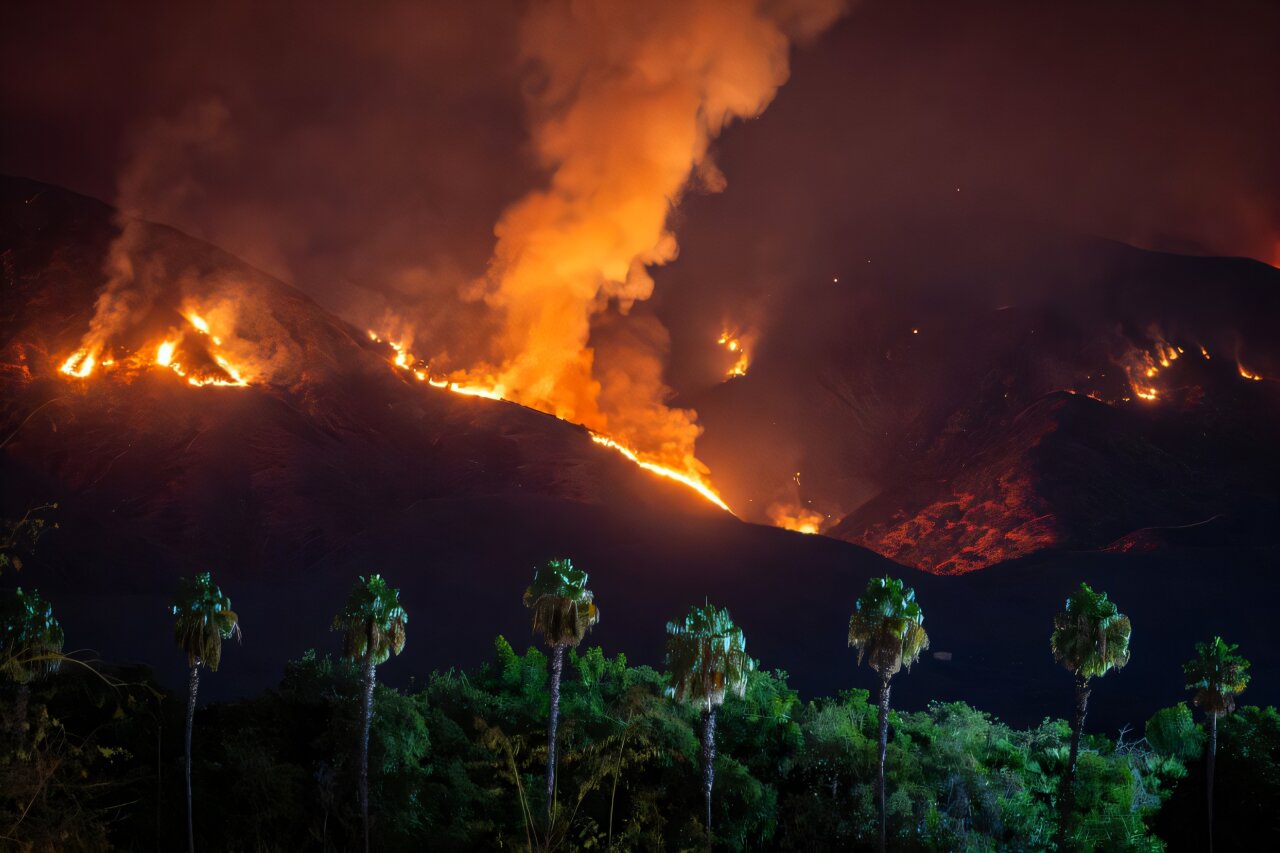
When the Palisades and Eaton wildfires tore through Los Angeles in January 2025, smoke blanketed the region and air quality plunged into the hazardous range. It was a vivid example of a growing problem: After years of improvement, wildfire smoke is pulling air quality back in the wrong direction, and fire season, once confined to hot, dry summers, now stretches across the year.
Fine smoke particles have been linked to lung disease, stroke, heart disease and cancer. But how they injure the cells lining our airways has been difficult to pin down.
Normally, the airway has two lines of defense. Sticky mucus traps inhaled viruses, dust and pollution, and tiny hairlike structures called cilia sweep that mucus up and out. Those cilia grow from cells in the airway lining, which sit packed together like bricks held by cement, forming a wall that keeps whatever the mucus doesn't catch from reaching the rest of the body.
Now, UCLA researchers have shown that wildfire smoke attacks both defenses at once, paralyzing the cilia and loosening the "cement" between cells. They also identified a cell signal that contributes to the damage and found that blocking it protected human airway tissue in the lab.
"People talk about the lung as a gateway," said co-senior author Dr. Brigitte Gomperts, a professor of pediatrics and pulmonary medicine at the David Geffen School of Medicine at UCLA and the associate director of translational research at the UCLA Broad Stem Cell Research Center.
Source link





