This article has been reviewed according to Science X's editorial process and policies. Editors have highlighted the following attributes while ensuring the content's credibility:
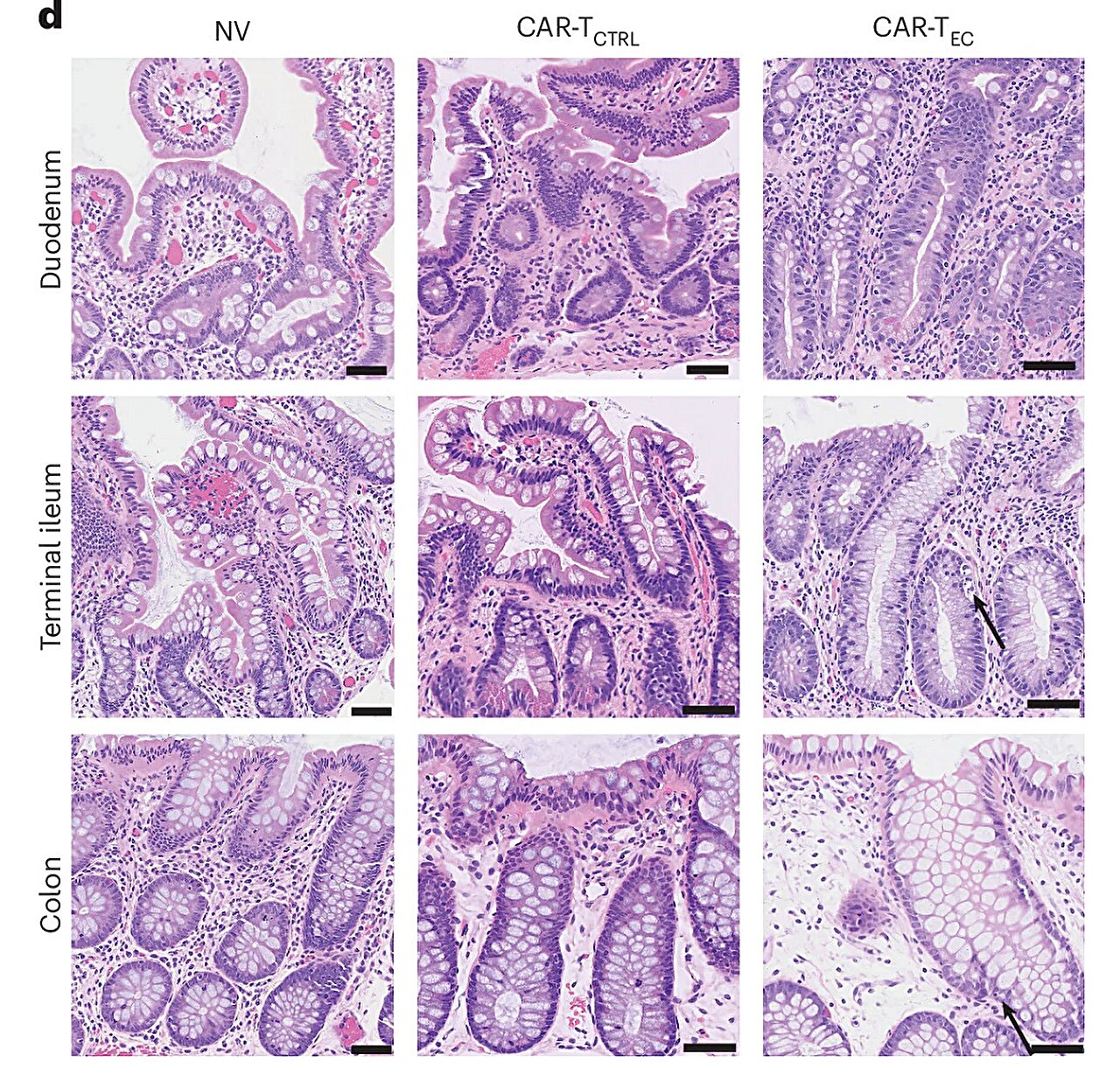
Researchers at the Icahn School of Medicine at Mount Sinai have identified biological mechanisms that may contribute to CAR-T cell-associated enterocolitis, a serious inflammatory condition of the intestine that can occur after a type of CAR-T cell therapy for multiple myeloma.
Published in Nature Medicine, the study found that CAR-T cells can persist in intestinal tissue long after treatment and that patients who develop enterocolitis experience widespread changes in the immune system within the gut. The researchers also identified inflammatory pathways that may offer potential treatment targets.
CAR-T cell therapy uses a patient's own immune cells, called T cells, that are genetically modified to recognize and attack cancer cells. A version of the therapy known as BCMA-directed CAR-T targets a protein called BCMA found on plasma cells, including the cancerous plasma cells involved in multiple myeloma. Some patients treated with these therapies develop persistent gastrointestinal symptoms, including diarrhea, abdominal pain, nausea and weight loss.
"CAR-T therapy has transformed outcomes for many patients with blood cancers, but as these treatments become more widely used, we are also learning more about their long-term effects on the immune system," said Saurabh Mehandru, MD, professor of medicine (gastroenterology) at the Icahn School of Medicine at Mount Sinai and corresponding author of the study.
"Our research provides the first detailed map of what happens in the intestine in patients who develop CAR-T-associated enterocolitis and identifies biological pathways that may be targeted therapeutically."
Source link