This article has been reviewed according to Science X's editorial process and policies. Editors have highlighted the following attributes while ensuring the content's credibility:
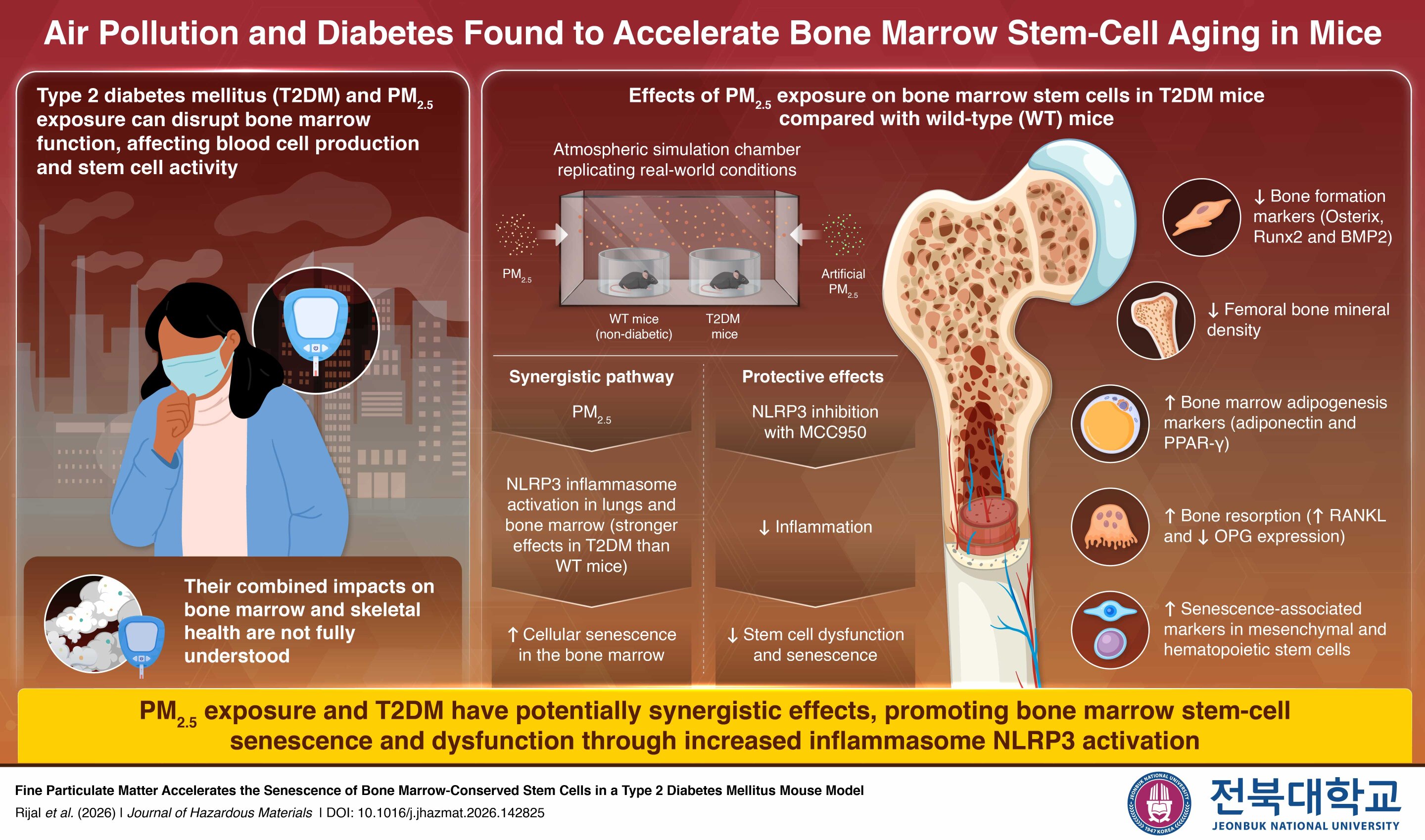
Air pollution affects health beyond the lungs. Fine particulate matter (PM2.5), tiny airborne particles that can enter the respiratory system, can trigger inflammation that affects other parts of the body. People with type 2 diabetes may be particularly vulnerable, as the disease can already impair stem cell function in the bone marrow, which produces blood cells and supports bone health.
Researchers led by Professor Sung-Ho Kook of the Department of Bioactive Material Sciences at Jeonbuk National University, Republic of Korea, found that PM2.5 exposure and diabetes had combined effects in mice, accelerating stem cell aging in the bone marrow and impairing their regenerative function.
The researchers linked these effects to activation of the NLRP3 inflammasome, a cellular system that triggers inflammatory responses. This activation was particularly pronounced in the lungs of diabetic mice. Their findings suggest that air pollution can affect organs beyond the lungs and worsen bone marrow stem cell dysfunction, with potentially greater consequences for people with diabetes.
"Our findings show that the harmful effects of air pollution may extend beyond the respiratory system to affect bone marrow stem cell function, and that people with preexisting metabolic diseases may be particularly vulnerable," says Kook.
5 in an atmospheric simulation chamber. The mice were exposed to a concentration of 50 micrograms per cubic meter for two hours per day over five days.
Source link