
This article has been reviewed according to Science X's editorial process and policies. Editors have highlighted the following attributes while ensuring the content's credibility:
Illnesses from Ebola virus and its relatives have about a 50% fatality rate in humans. The current outbreak in the Democratic Republic of Congo has already caused over 10,500 confirmed cases and over 5,130 deaths, according to the U.S. Centers for Disease Control and Prevention.
Ebola virus is a devastating pathogen. Like humans, bats can get infected with Ebola virus. So why don't bats get sick?
"Another puzzle," says lead author Erica Ollmann Saphire, Ph.D., MBA, LJI professor, president and CEO, "is why humans do get so sick. And why the worst cases can have the strongest inflammatory responses. These are strong immune responses, but they're not working well."
In a new Cell study, La Jolla Institute for Immunology (LJI) researchers, working in collaboration with Princeton University professors Aartjan te Velthuis, Ph.D., and Clifford Brangwynne, Ph.D., and UC San Diego professor Gene Yeo, Ph.D., MBA, share a key reason why humans are especially vulnerable to severe Ebola disease.
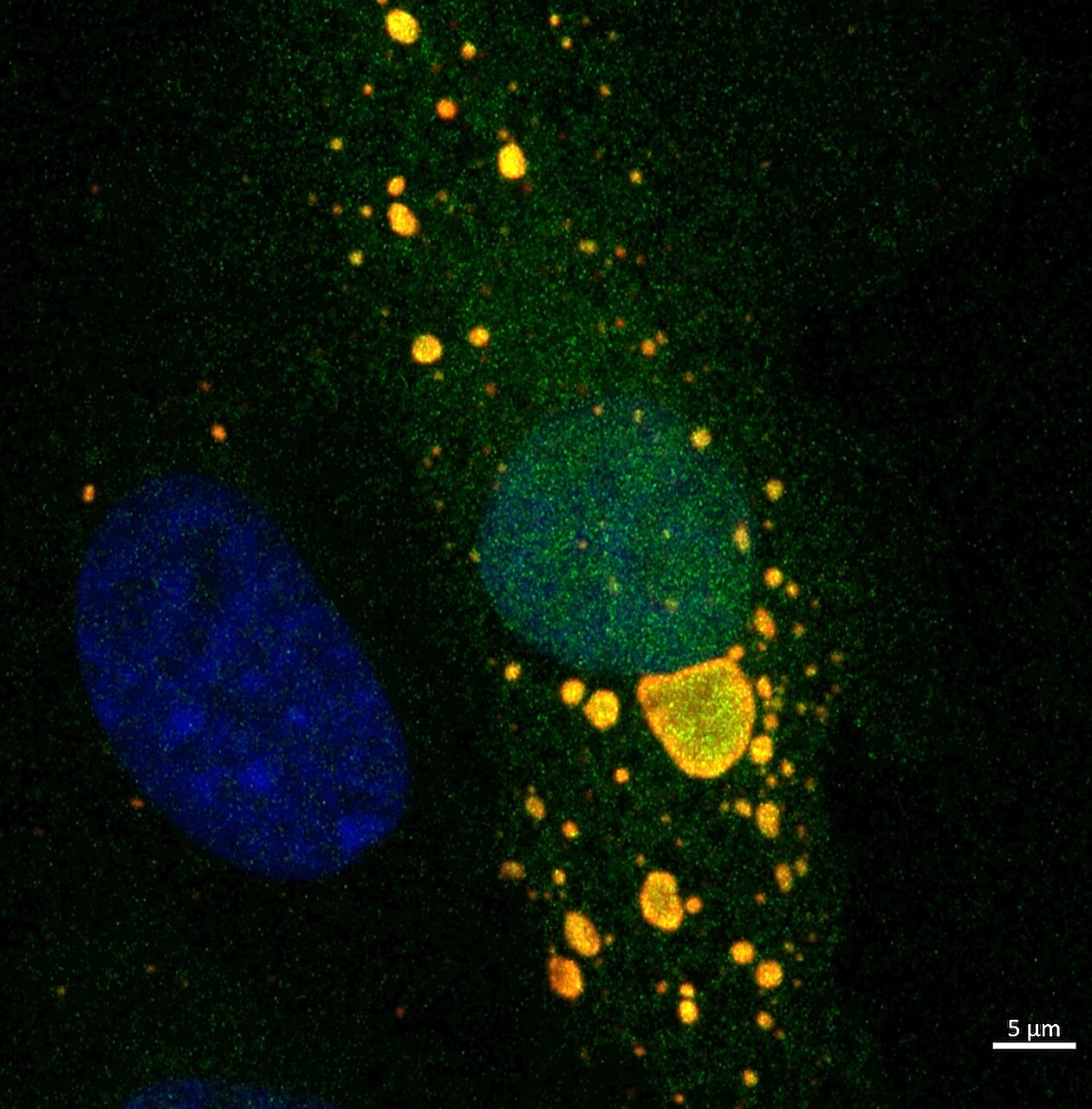
It may come down to viral "nests." Ebola virus builds protected, bubble-like "nests" inside host cells, technically termed membraneless condensates. The virus harbors its own viral mRNA inside these compartments.
What the researchers found, using a technique called spatial transcriptomics, is that Ebola virus also traps human cellular mRNA molecules inside these nests. When Ebola virus traps certain human mRNAs, the human immune system loses its ability to control dangerous inflammation.
Source link





