This article has been reviewed according to Science X's editorial process and policies. Editors have highlighted the following attributes while ensuring the content's credibility:
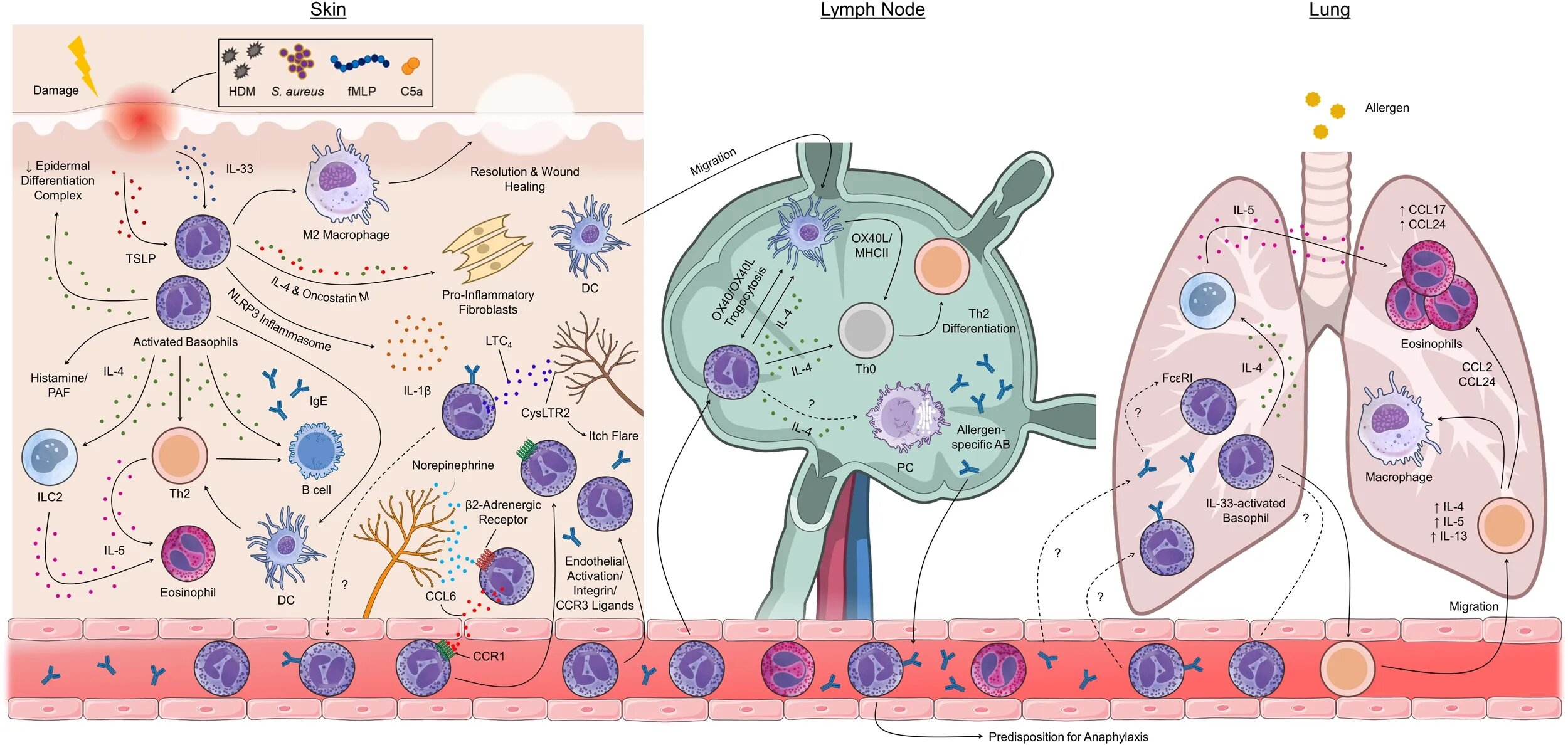
People with eczema often develop allergic asthma during the course of their lives. The reason for this is still largely unclear. Two publications from Friedrich-Alexander-Universität Erlangen-Nürnberg (FAU) now turn the spotlight on certain immune cells, known as basophils, as the link between skin and lung conditions.
In a study published in Allergy, the researchers suppressed the production of basophils while the irritated skin was exposed to an allergen. Consequently, the resulting inflammatory reaction did not lead to hypersensitivity in the animals' lungs toward the same allergen. Their subsequent review article published in Frontiers in Immunology discusses the broader implications of these findings for asthma prevention.
Eczema, also known as atopic dermatitis, is one of the most common skin diseases. It usually begins during infancy or early childhood. The cause is not yet fully understood. However, allergens from animal hair, house dust or pollen can trigger flare-ups of the condition. "Atopic eczema disrupts the skin barrier, enabling substances from the environment to enter the body more easily," explains Dr. David Vöhringer, director of the Department of Infection Biology at Universitätsklinikum Erlangen.
As children grow up, they often additionally develop allergic asthma or food allergies. All these conditions are known as "atopic" diseases that are characterized by hypersensitivity of the skin or mucous membranes. "In medicine, the development of these diseases is often referred to as an atopic march," says Dr.
Source link