
This article has been reviewed according to Science X's editorial process and policies. Editors have highlighted the following attributes while ensuring the content's credibility:
A new study led by researchers at Liverpool School of Tropical Medicine (LSTM) has shed light on how antibiotic-resistant bacteria spread within rural communities in Malawi.
Escherichia coli (E. coli) is internationally recognized as one of the most serious antimicrobial-resistant (AMR) bacterial threats to global health, and it disproportionately affects low-resource settings like sub-Saharan Africa.
Cases of infection with drug-resistant E. coli are increasing, and few new antibiotics are coming through the drug discovery pipeline, so understanding transmission networks is vital to reduce the spread.
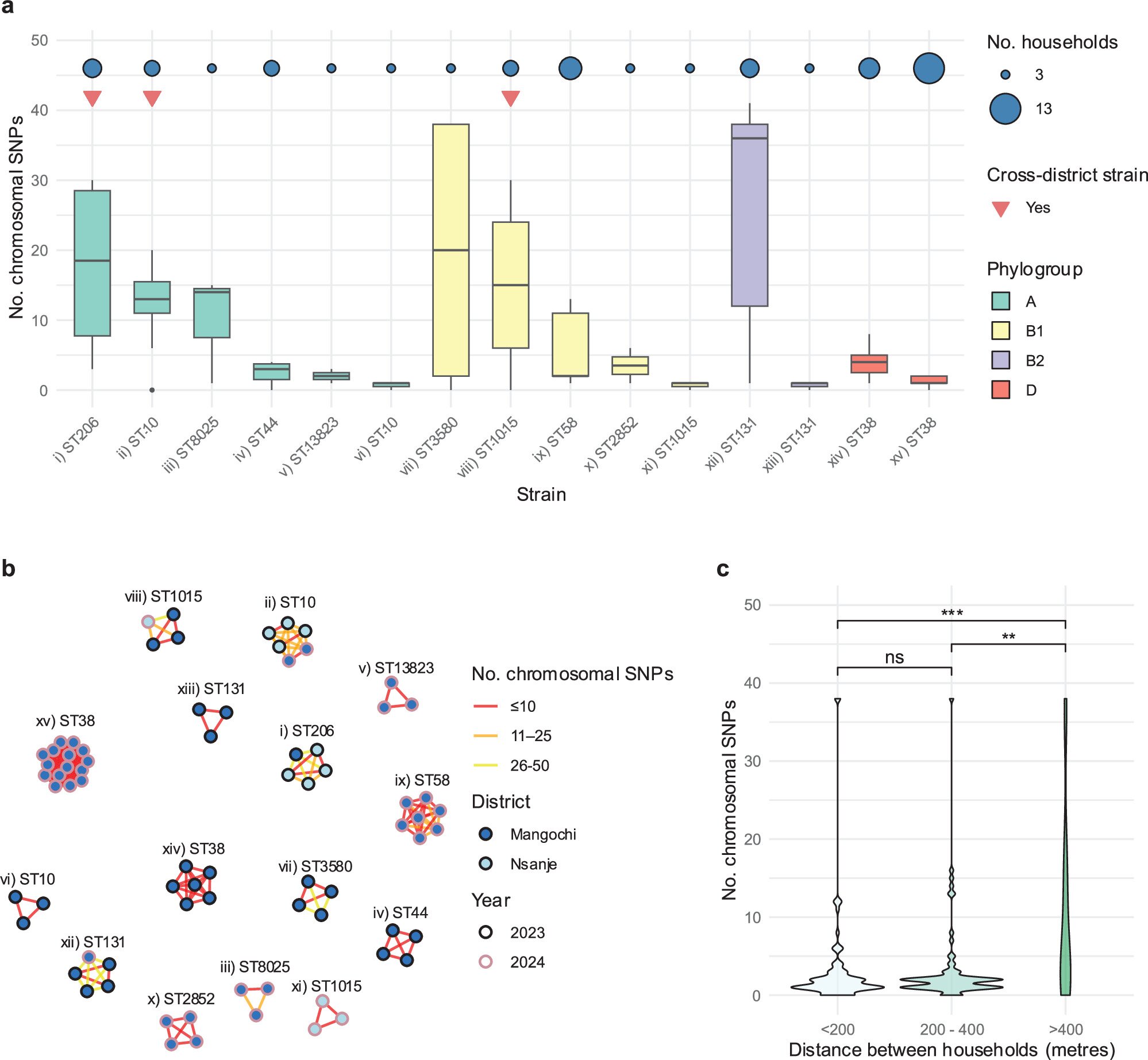
Published in Nature Communications, LSTM's study investigated how related the resistant strains of E. coli were within two rural settings in Malawi.
Dr. Angus More O'Ferrall, lead author, said, "This is the first study to map different strains of E. coli across households in rural areas of Malawi: there's a huge knowledge gap in this area. Our findings show that transmission networks often involve people living in neighboring households. Although the exact routes of transmission remain unresolved, contaminated water sources likely play a role. We also found links between strains circulating in rural villages and those previously detected in urban areas of the country.
"We know that sanitation infrastructures in these communities are responsible for spreading disease and urgently need to be improved, and we think that has a direct impact on the transmission of E. coli.
Source link





