
This article has been reviewed according to Science X's editorial process and policies. Editors have highlighted the following attributes while ensuring the content's credibility:
Uveitis, an autoimmune disease that causes inflammation in the eye, can cause blindness if not adequately treated. There is often no identifiable cause of uveitis, making it difficult to intervene before the disease progresses, but identifying the early changes in the disease could improve detection.
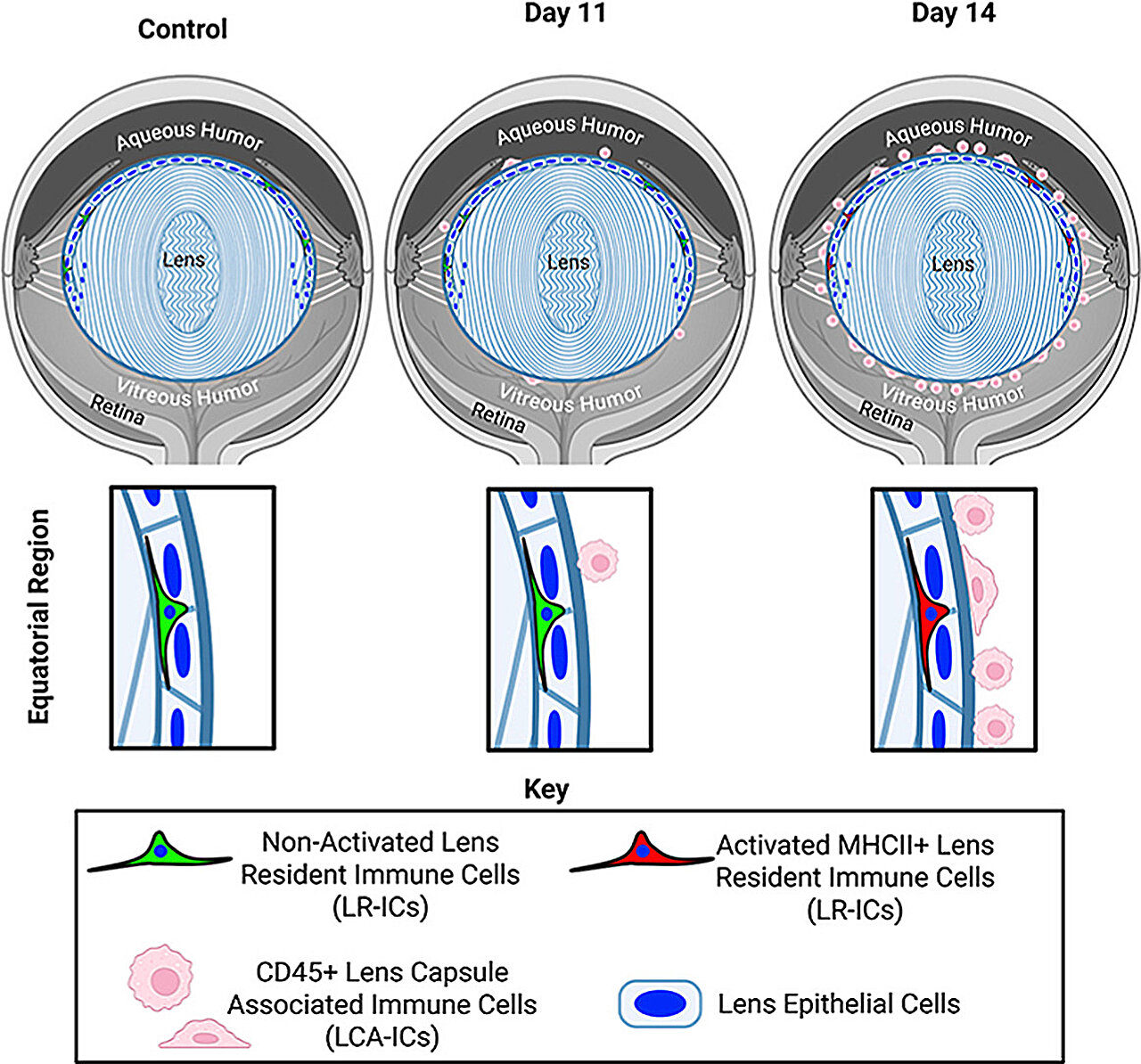
Researchers have observed that, during uveitis, immune cells called to the eye also associate with the lens capsule and remain associated with the lens even after inflammation disappears. These lens capsule–associated immune cells (LCA-ICs) may play a role in resolving the immune response.
There is also, however, a population of immune cells called lens-resident immune cells (LR-ICs) found within the lens. These cells are always present in the lens and act as first responders to injury and infection.
"But, we didn't know if the LR-ICs are involved in activating a lot of these responses or responding to inflammation in uveitis," says Sue Menko, Ph.D., a professor of pathology and genomic medicine at Thomas Jefferson University.
Generally, uveitis research focuses on the time period after clinical inflammation is evident. However, a research team led by Menko decided to investigate the early immune response following the induction of experimental autoimmune uveitis. The researchers used a technique called immunolabeling to look for markers of LR-IC activation and other immune cell activity prior to clinical inflammation.
The findings, published in The American Journal of Pathology , showed that markers of immune cell activation were present in a structure in the eye called the ciliary body before inflammation was detected in the lens.
Source link





