This article has been reviewed according to Science X's editorial process and policies. Editors have highlighted the following attributes while ensuring the content's credibility:
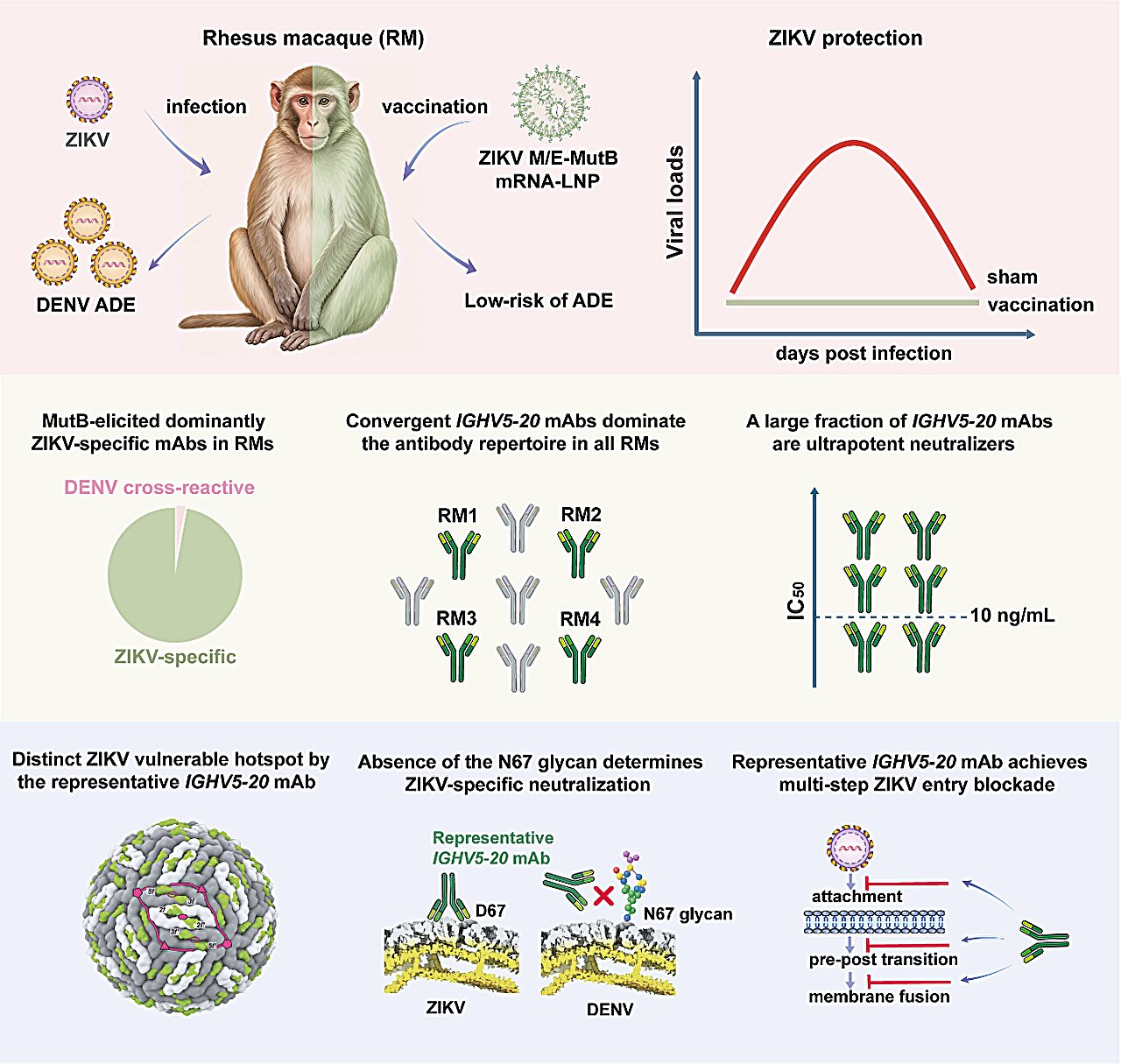
A fusion-loop-engineered vaccine against the Zika virus (ZIKV) has shown promise in a nonhuman primate model. The research was reported in Cell Reports Medicine on Oct. 7.
This type of vaccine modifies a region of the viral envelope protein known as the fusion loop to stimulate protective antibodies while reducing the risk of antibody-dependent enhancement (ADE), in which antibodies can worsen infection rather than prevent it. ADE is a major concern in flavivirus vaccine development. These findings lay a foundation for the further clinical evaluation of Zika virus vaccines.
The study was led by professors Dai Lianpan and George F. Gao from the Institute of Microbiology of the Chinese Academy of Sciences (CAS) and Dr. Lu Shuaiyao from the Institute of Medical Biology of the Chinese Academy of Medical Sciences.
ZIKV is a mosquito-borne pathogen that can cause neonatal microcephaly. Currently, there are no licensed vaccines available, and prior ZIKV immunity may increase the risk of ADE, which can exacerbate dengue virus (DENV) infection—representing a major hurdle for vaccine development.
Previously, the research team designed the fusion-loop-engineered immunogen MutB, which achieved maternal–fetal protection while abolishing ADE in murine models. However, given the substantial differences between the murine and human immune systems, it was unclear whether fusion-loop-engineered vaccines could elicit the desired immune response in humans.
To investigate the immune response elicited by the vaccine, the researchers analyzed vaccine-induced B cells and found that more than 97% were ZIKV-specific.
Source link