
This article has been reviewed according to Science X's editorial process and policies. Editors have highlighted the following attributes while ensuring the content's credibility:
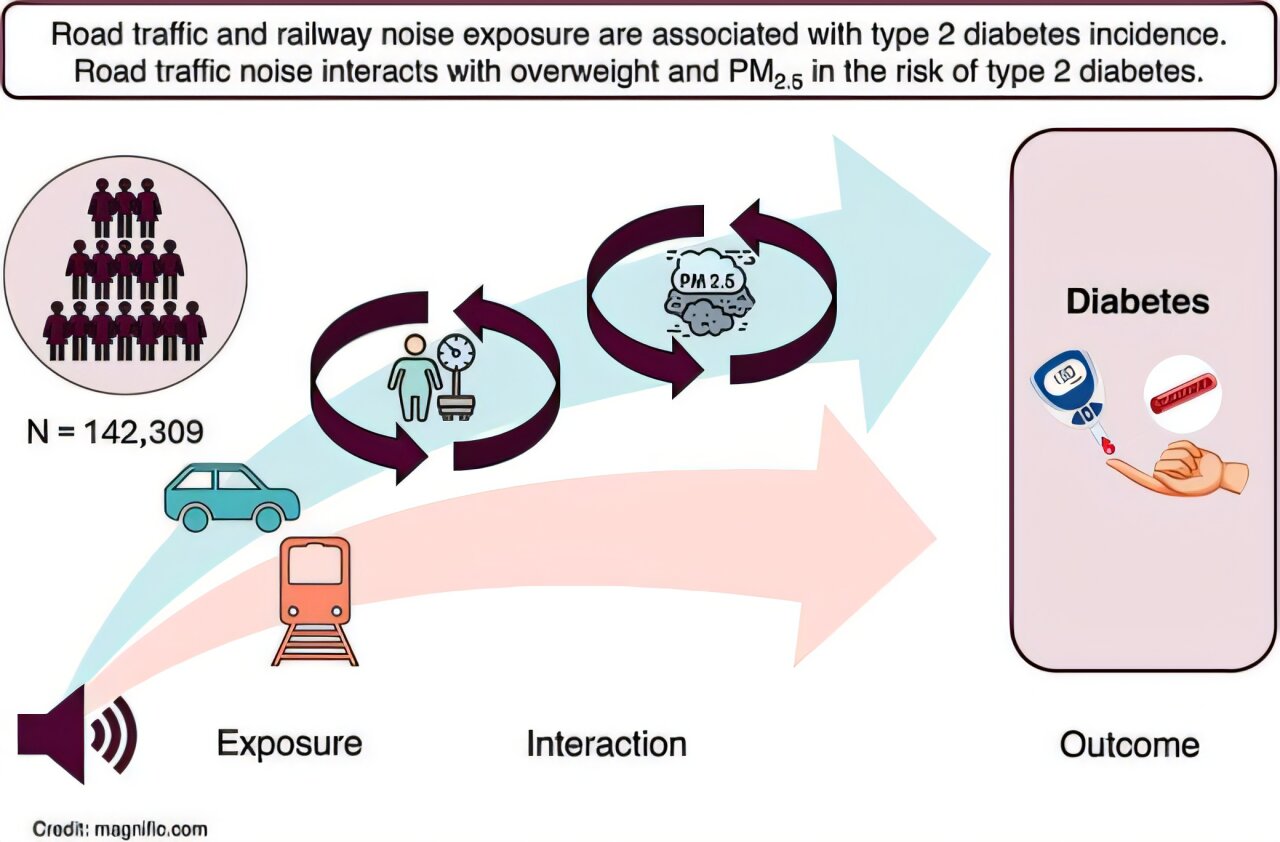
Long-term exposure to noise from road traffic and trains is linked to an increased risk of type 2 diabetes, even at relatively low noise levels. This is shown in a large Scandinavian study involving researchers at the Institute of Environmental Medicine (IMM) at Karolinska Institutet, published in the journal Environmental Health Perspectives.
The researchers analyzed data from more than 142,000 people in eight Swedish and Danish population studies. The participants' home addresses were used to calculate long-term exposure to noise from road traffic, railways and aircraft. During a median follow-up of just over 20 years, 12,761 participants developed type 2 diabetes.
The results show that the risk of type 2 diabetes increased by 6% for every 10-decibel increase in road traffic noise. For railway noise, the corresponding increase in risk was 4%. The researchers took into account potential confounding factors including education, income, smoking, physical activity and air pollution.
"We saw an association between long-term exposure to both road traffic noise and railway noise and the risk of developing type 2 diabetes. Interestingly, the increased risk could be seen even at noise levels below 50 decibels," says Jessica Edstorp, a postdoctoral researcher at the Institute of Environmental Medicine, Karolinska Institutet, and first author of the study.
However, the researchers found no clear association between aircraft noise and type 2 diabetes. Relatively few participants were exposed to aircraft noise, making the results more uncertain.
Source link





