This article has been reviewed according to Science X's editorial process and policies. Editors have highlighted the following attributes while ensuring the content's credibility:
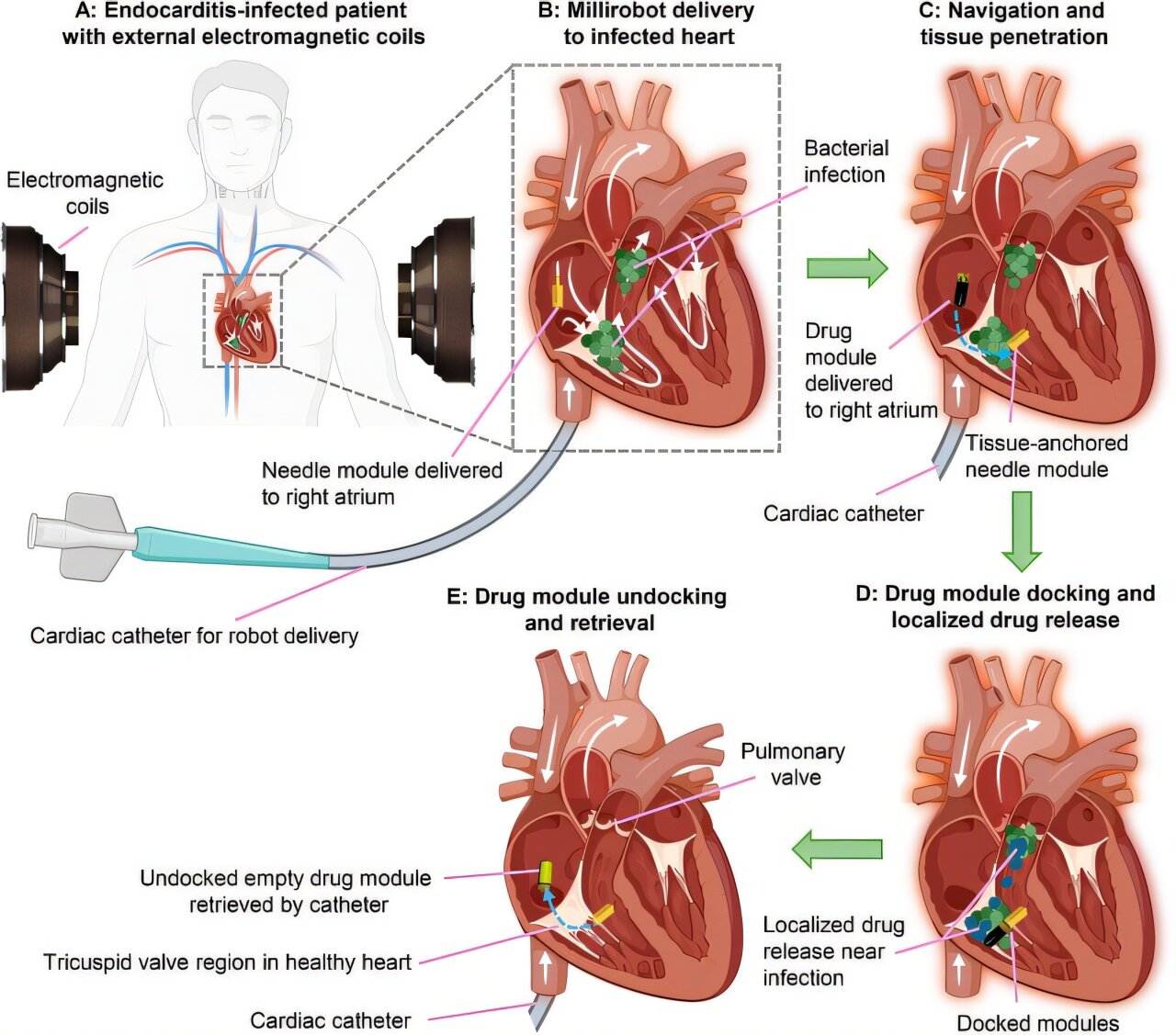
Johns Hopkins University engineers have created robots the size of a pencil tip intended to travel through the body to deliver medicine to infections inside a beating heart.
The bots, designed to replace risky open-heart surgery and ineffective IV drug therapy to treat life-threatening heart infections, could also be used to treat other hard-to-reach diseases, including cancer, less invasively and more precisely.
"With just a little pinprick, you insert a microrobot and do a procedure without infection or blood loss. And you don't need to have a surgeon operating it to get the drugs robustly, safely and efficiently to the right place," said senior author Axel Krieger, a medical roboticist known for creating robots that perform surgery without human help.
"There are a lot of areas beyond heart infections where this kind of targeted drug therapy and these kinds of steerable robots could play a major role. It's really the frontier of surgical robotics."
Each year, about 50,000 people in the United States contract endocarditis, a heart tissue infection. The typical treatment is a weeks-long course of intravenous antibiotics, which often fails because the drugs are too diluted by the time they reach the heart. Doctors are then left with two risky choices—prescribing more and higher doses of antibiotics, which can be toxic, or extremely risky open-heart surgery.
To get the drugs directly to the infected heart tissue, the team developed magnetically powered robots called "millirobots" because of their size—they're as wide as a pencil tip or a matchstick head and about as long as a grain of rice.
Source link