This article has been reviewed according to Science X's editorial process and policies. Editors have highlighted the following attributes while ensuring the content's credibility:
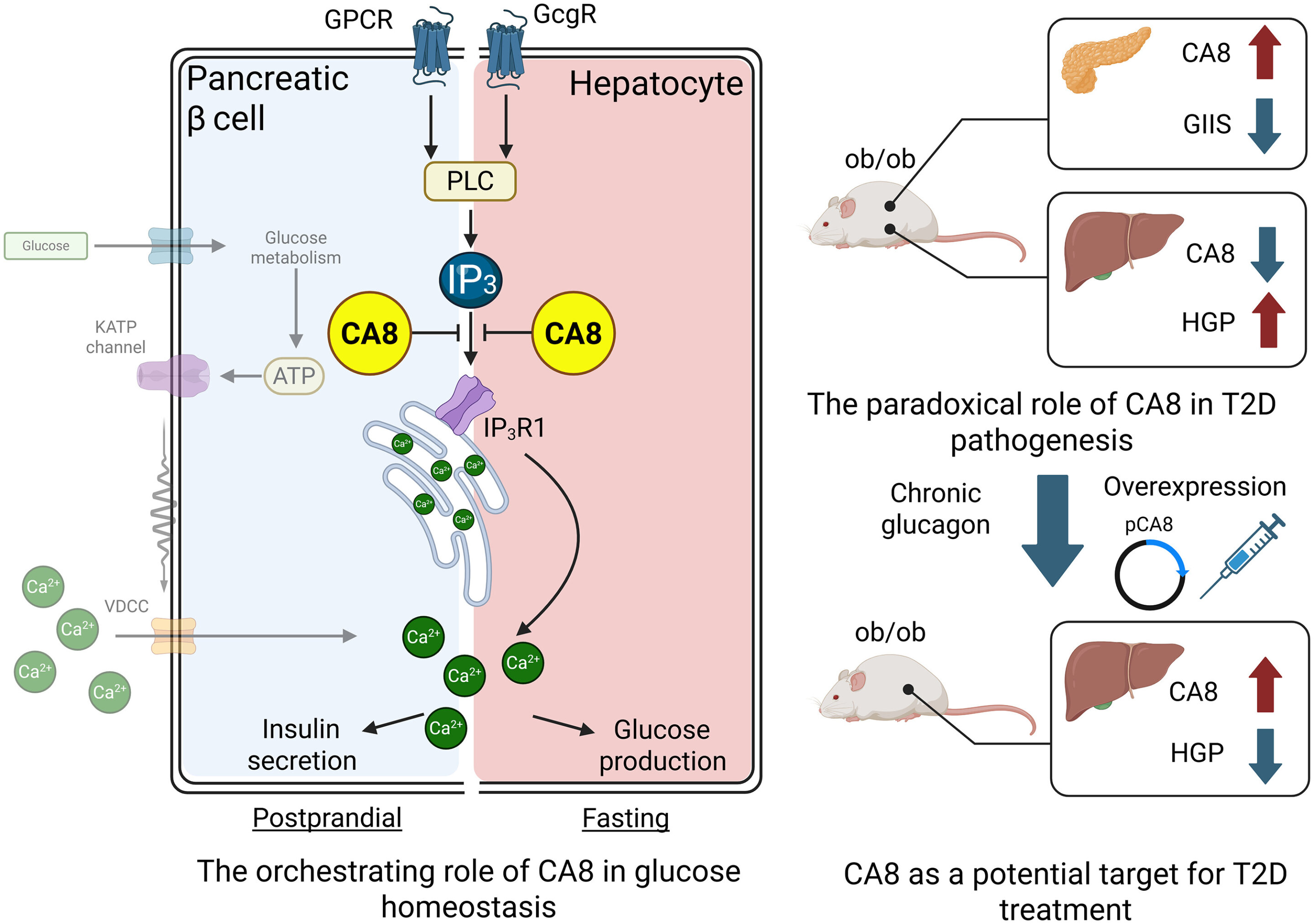
Maintaining healthy blood glucose levels involves striking a balance between the glucose produced by the liver during fasting and the insulin released from pancreatic beta cells after meals. In type 2 diabetes, glucose production goes into overdrive while insulin secretion becomes insufficient, a multiorgan dysfunction that contributes to hyperglycemia, or high blood glucose levels.
Intracellular calcium signaling is essential to both processes and could represent a crucial link between them, yet a common molecular regulator has yet to be found. While the protein carbonic anhydrase VIII—CA8—is known to bind to IP3R1, a calcium-release channel in the endoplasmic reticulum, and restrain calcium signaling in other tissues, this protein lacks the usual enzyme activity.
However, a team of researchers at Kyoto University found the protein to be enriched in pancreatic islets and hepatocytes and wondered whether CA8 might play a role in controlling metabolic functions in the liver and pancreas. The study is published in the journal Science Advances.
The team combined metabolic testing of Car8wdl mice—lacking functional CA8—with experiments on the mice's isolated pancreatic islets and liver hepatocytes. They measured insulin secretion, glucose production, calcium responses and gene expression, and then used pharmacological and genetic tests to assess whether the effects depended on IP3R1.
In further experiments, the researchers found that chronic exposure to glucagon, the very hormone that triggers glucose production, increased CA8 expression, which in turn reduced the response to further glucagon stimulation.
Source link