This article has been reviewed according to Science X's editorial process and policies. Editors have highlighted the following attributes while ensuring the content's credibility:
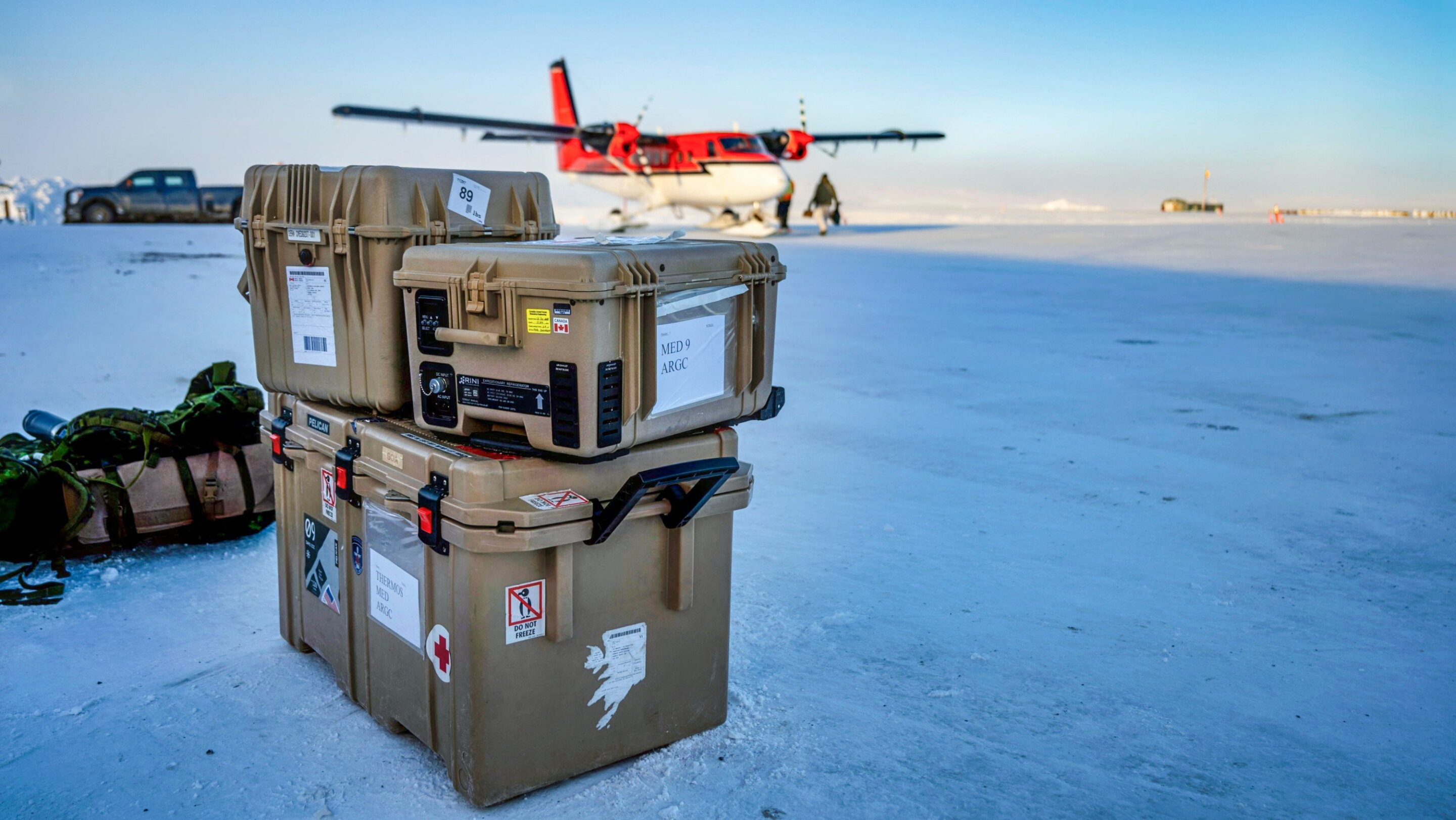
Getting blood products for transfusions to a battlefield in Canada's High Arctic is feasible but complex, according to newly published research in the journal Transfusion.
The Canadian military recruited Dr. Jason Acker, professor in the Departments of Laboratory Medicine and Pathology and Biomedical Engineering, senior research scientist with Canadian Blood Services and associate vice president of research integrity support for the University of Alberta, to help lead its northernmost deployment of blood products to date.
"What we've learned through conflict is that a fighting force that has access to blood will have a higher survival rate than a fighting force that doesn't," Acker says. "So blood becomes really as essential as bullets when it comes to deploying them to the front line."
"In remote settings like the High Arctic, medical evacuation to a hospital can take several hours, if not days, yet access to blood products is extremely limited or nonexistent, leaving both military and northern communities vulnerable if trauma or hemorrhage occurs," says co-first author Maj. Philippe Simon. "When it comes to bleeding, time is everything, and blood is the currency that buys us time until we can get the patient in surgery."
Acker has been part of previous military studies moving blood products in the extreme heat of the Middle East, as well as domestically, but this is the first time anyone has looked at the impact of northern conditions such as extreme cold, long flights, and even movement by snowmobile over Arctic terrain.
Source link