
This article has been reviewed according to Science X's editorial process and policies. Editors have highlighted the following attributes while ensuring the content's credibility:
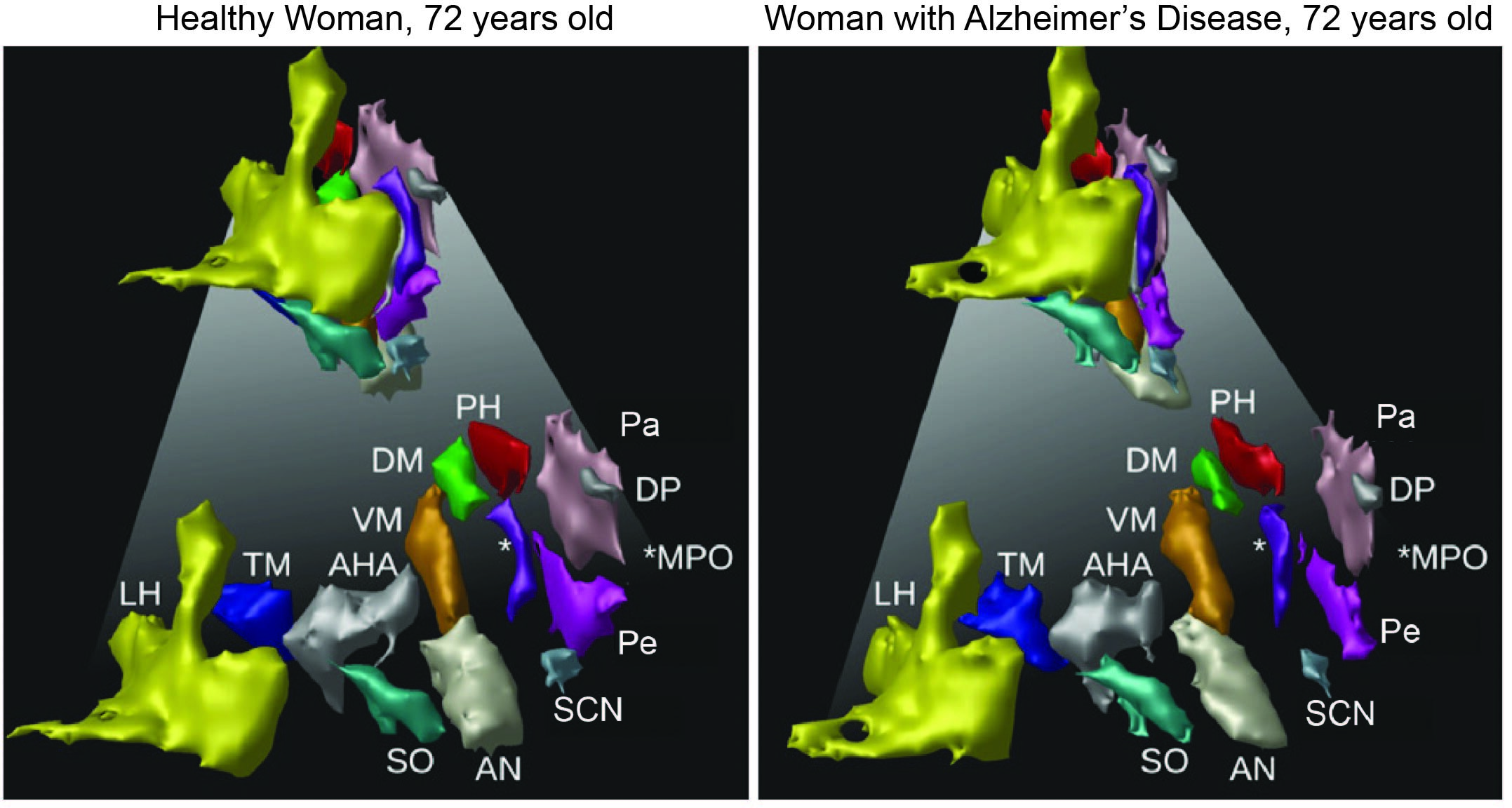
Alzheimer's disease is well known as a disease of memory. But long before memory fades, many patients have trouble sleeping, lose their daily rhythms and show changes in metabolism and stress hormones. All of these functions are regulated by the hypothalamus, a structure at the base of the brain. A new study from the Buck Institute for Research on Aging, published on Nov. 18, 2026, in Nature, shows that the hypothalamus is not a bystander in Alzheimer's. Its circadian and metabolic control centers show specific age-related changes in volume and gene activity early in the disease.
"Most of what we know about Alzheimer's comes from the hippocampus and cortex, because that's where memory is organized and lives," said senior author Ashley Webb, associate professor at the Buck. "But patients and families often report disrupted sleep, a change in appetite, or different responses to stress alongside memory changes."
Noting that recent studies even suggest that changes such as circadian disruptions may precede the development of other common clinical symptoms, Webb added, "We wanted to look directly at the part of the brain that controls those functions, and to do it with enough resolution to see which cells are changing with age and in the disease."
The hypothalamus plays a vital role in maintaining physiological balance; it regulates various bodily functions such as temperature, sleep rhythms, hunger, thirst and hormone release.
Source link





