
This article has been reviewed according to Science X's editorial process and policies. Editors have highlighted the following attributes while ensuring the content's credibility:
Physical activity and body temperature fluctuate throughout the day according to biological rhythms. In addition to the ~24-h circadian rhythms, these physiological processes display shorter rhythms with periods of several hours, known as ultradian rhythms. However, it remains unclear how these rhythms change with age and how those changes relate to the master circadian clock of the brain.
Researchers at the University of Tsukuba investigated gene expression patterns and cellular characteristics in the suprachiasmatic nucleus (SCN), the brain region that serves as the master circadian clock, in young and aged male mice. They also recorded locomotor activity and core body temperature in a separate cohort of mice at multiple ages from 3 to 21 months. Recordings were obtained under a 12-h light/12-h dark cycle and in constant darkness, which removes daily light cues and allows the examination of internally generated rhythms.
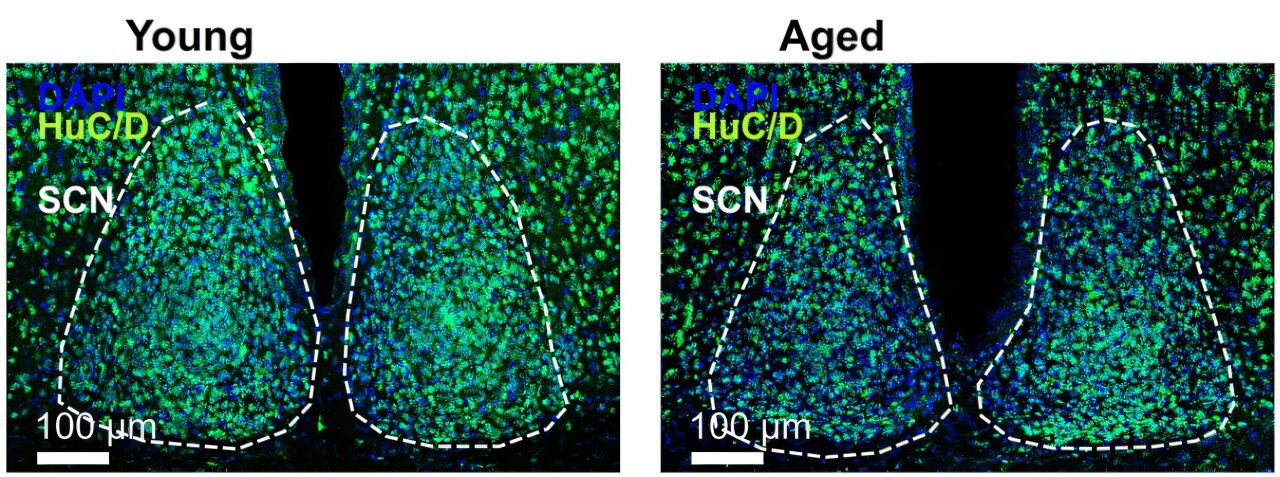
Results published in Communications Biology demonstrated that aged mice retained detectable rhythmic expression of selected clock genes and the ~24-h rhythms in activity and body temperature. However, the strength of shorter, 2- to 6-h rhythms in both activity and body temperature decreased with age. Moreover, activity and body temperature became less closely correlated in older mice. Within the SCN, aging was associated with increased expression of immune-related genes, changes in glial cells that support and regulate neuronal function, and reduced neuronal density.
These findings reveal that detectable daily rhythms can persist even as shorter rhythms and the coordination between activity and body temperature weaken.
Source link





