
This article has been reviewed according to Science X's editorial process and policies. Editors have highlighted the following attributes while ensuring the content's credibility:
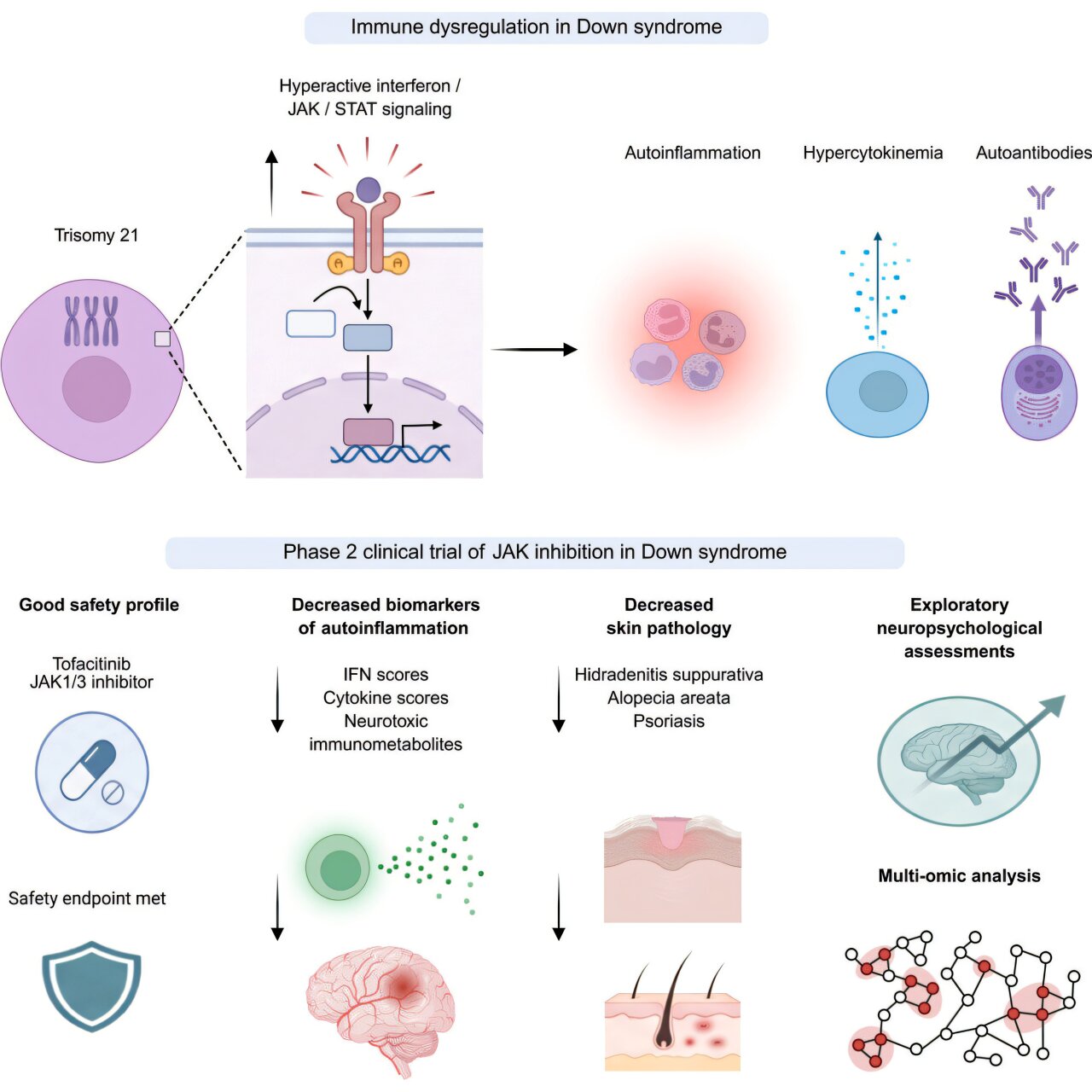
In a first-of-its-kind clinical trial, researchers at the Linda Crnic Institute for Down Syndrome (Crnic Institute) at the University of Colorado Anschutz found that a medication targeting immune overactivity in people with Down syndrome reduced underlying inflammation and was associated with improvements in inflammatory skin conditions, while opening new avenues for research on brain health and Alzheimer's disease.
The phase 2 clinical trial of tofacitinib, a medication known as a JAK inhibitor that blocks certain signals involved in immune responses and inflammation, was published in Cell Reports Medicine.
The findings provide important evidence that targeting underlying immune dysregulation may offer a new approach to addressing multiple health conditions associated with Down syndrome.
Down syndrome is caused by an extra copy of chromosome 21, which carries genes encoding several receptors for interferons, molecules that regulate immune responses. Previous research by the Crnic Institute established that this genetic change contributes to chronically elevated interferon signaling and widespread immune dysregulation. The new study tested whether reducing this excessive signaling could be a viable therapeutic approach.
The research team enrolled adolescents and adults with Down syndrome who also had inflammatory skin conditions, such as hidradenitis suppurativa and alopecia areata. Participants received tofacitinib twice daily for 16 weeks, with an optional extension to 40 weeks. The trial included extensive safety monitoring, dermatological evaluations, blood-based molecular analyses and neuropsychological assessments.
Source link





